
Milk Quality

Production of high-quality milk begins on the farm through good hygiene practices and maintaining healthy cows, enabling Irish dairy farmers to consistently meet premium milk standards.
High-quality raw milk must satisfy key parameters required by Irish cooperatives, including Total Bacterial Count (TBC), Thermoduric bacteria, Somatic Cell Count (SCC), absence of antibiotic and chemical residues, appropriate milk composition and freedom from sediment. Maintaining these standards is essential for both producers and processors, as milk quality influences product yield, consistency, market access and profitability. As a result, many processors now operate payment systems based on milk quality, offering bonuses or penalties depending on compliance with production standards. Excellent milk quality also benefits consumers by improving product safety, taste and overall quality, making the production of premium milk important across the entire Irish dairy industry.
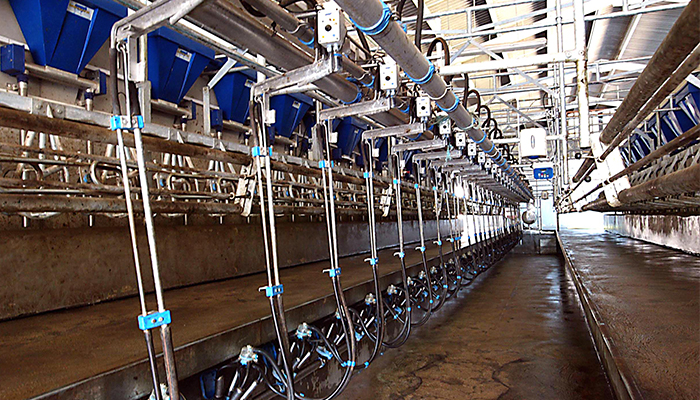
Total Bacterial Count
Total Bacterial Count (TBC) – is a measure of the total number of bacteria present in raw milk, indicating its overall hygiene.
EU regulations require TBC to be below 100,000 CFU/ml, with optimal on-farm levels under 15,000 CFU/ml. High TBC indicates issues with milking machine cleaning, cow cleanliness or milk storage temperature. TBC is a critical indicator of milk quality, farms with good plant and cow hygiene will have lower TBC levels.
Understanding TBC Results
| Bacterial Level CFU/ml | Significance | Action Required |
| 0 – 30,000 CFU/ml | Target result. Excellent milk quality, little bacteria present | Continue current milking and cleaning routine |
| 31,000 – 50,000 CFU/ml | Good quality milk but some bacteria are present | Check and improve current routines to decrease TBC levels |
| >50,000 – 100,000 CFU/ml | Fair milk quality bacteria are present | Investigate the cause and evaluate cleaning routine and bulk tank operation |
| >100,000 CFU/ml | Extremely poor milk quality, large numbers of bacteria present. Take immediate action to address the cause | Investigate the cause. Focus on bulk tank operation and milk cooling |
Thermoduric bacteria
Thermoduric bacteria are heat-resistant microorganisms present in raw milk that can survive standard pasteurisation, making them an important factor in milk quality.
While pasteurisation significantly reduces overall bacterial levels, certain groups such as Bacillus, Lactobacilli, Streptococcus and Micrococcus can withstand higher temperatures, often due to protective structures or spore-forming ability. As a result, these bacteria can persist if farm hygiene and equipment cleaning are not properly managed. As thermoduric levels can be influenced at farm level, strong emphasis is placed on teat preparation and effective cleaning routines.
Understanding Thermoduric Results
| Bacterial Level CFU/ml | Significance |
| 0-250 CFU/ml | Good milk quality, little or no thermoduric bacteria present |
| 250 – 500 CFU /ml | Some thermoduric bacteria present, investigate the cause |
| >500 CFU /ml | Large number of thermoduric bacteria present, investigate the cause immediately |
| >1000 CFU /ml | Poor milk quality, large number of thermoduric bacteria present. Take immediate action to address the cause |
Total Bacterial Count Vs Thermoduric bacteria
Total Bacterial Count (TBC) measures the overall number of bacteria present in milk and is an indicator of general farm hygiene, milking practices and milk cooling efficiency.
Thermoduric bacteria are a specific group of heat-resistant bacteria that survive pasteurisation and are mainly associated with poorly cleaned equipment and biofilm formation. Biofilms in milk lines are layers of bacteria that stick to the inside of pipes and equipment like a slimy coating, making plant cleaning difficult, increasing the risk of milk contamination with bacteria. Therefore, milk may have a low TBC but still contain high levels of thermoduric bacteria if sanitation procedures are inadequate.
| Total Bacterial Count (TBC) | Thermoduric Bacteria | |
| Definition | Total number of live bacteria present in raw milk | Heat-resistant bacteria that survive pasteurisation |
| What it Indicates | Overall hygiene, milking practices and milk handling | Effectiveness of cleaning and sanitation, especially of milking equipment |
| Source | Environment, dirty udders, milking equipment, storage conditions | Poorly cleaned equipment, biofilms, soil contamination |
| Response to Pasteurisation | Most bacteria are destroyed | Survive standard pasteurisation temperatures |
| Impact on Milk Quality | High TBC reduces shelf life and signals poor hygiene | Can cause spoilage and quality defects in dairy products |
| Control Measures | General farm hygiene, effective cleaning routine, bulk tank cooling | Teat preparation, effective cleaning routine, regular sanitation, bulk tank cooling |
| Co-op Testing Relevance | Key quality parameter for milk qualityIdeal result – 15,000 CFU/ml or below | Potential dairy product processing issuesIdeal result – 0-100 CFU/ml |
Microbial Contamination
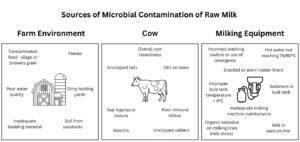
Microbial contamination of raw milk can originate from several sources within the farm environment, including the cow, housing conditions and milking equipment. The cow itself is a major source, particularly when teats and udders are contaminated with faeces, soil, bedding material or mastitis-causing bacteria. Poor farm hygiene, including dirty housing areas, contaminated water, dust and feed can further increase bacterial contamination levels. Milking equipment is another significant source, especially when milking pipelines, teat cups, bulk tanks and rubber liners are not cleaned and sanitised effectively, allowing bacteria and biofilms to develop. Inadequate milk cooling and poor milking practices can also promote bacterial growth and reduce overall milk quality.
Cow Hygiene
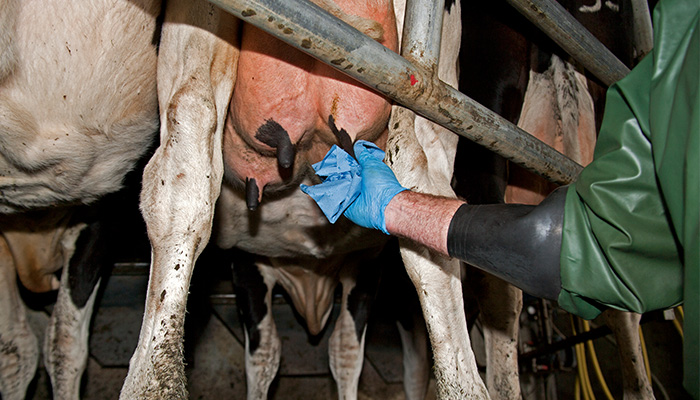
Raw milk will always contain bacteria as it is exposed to resident bacteria on teat surfaces and physical dirt on a cow’s udder. Therefore, correctly preparing cows teats before milking will minimise bacteria entering bulk tank milk. It is important to present a clean cow for milking. Clipping cows’ tails at least three times during lactation and removing excess udder hair helps reduce faecal contamination and dirty teats, particularly during indoor housing periods.
If teat disinfection is applied to cow teats prior to milking, ensure all product is removed before cluster is attached to prevent potential residues in milk. If teat disinfection is carried out, a list of approved Teagasc products can be found here: Registered-teat-disinfectant-products. Fore-stripping before attaching clusters also helps remove bacteria in foremilk and identifies mastitis early. Consistent, hygienic teat preparation reduces bacterial load at source, improving milk quality and lowers TBC in bulk tank milk.
Bulk Tank Milk Cooling
Milk is a nutrient-dense liquid providing all essential nutrients needed for bacterial growth. Milk leaves the cow at approximately 37°C and should be rapidly cooled using plate coolers and stored in a refrigerated bulk tank at ≤ 4°C. Under EU hygiene legislation (Regulation (EC) No 853/2004), raw milk must be cooled immediately after milking to reduce bacterial growth and protect milk quality. If milk is collected it must be cooled to 8°C or lower within 2 hours of milking. If milk is not collected daily, it must be cooled to 6°C or lower within 2 hours of milking. During transport to the processor, the cold chain must also be maintained so the milk temperature does not exceed 10°C on arrival at the processing plant. Maintaining milk at ≤ 4°C when stored in a bulk tank is important as bacteria enter a “lag phase”, where their growth is effectively stopped however, at higher temperatures bacteria continue to multiply rapidly, doubling in number causing TBC levels to rise quickly. If milk in a bulk tank is not properly cooled for 8–10 hours, bacterial counts could increase to over >1,000,000 CFU/ml. It is important to understand that milk cooling supports good hygiene practices but cannot replace proper hygienic milking conditions.
Milk Quality on the Starrett Family Farm
Milk Residues
Every dairy farmer responsible for milk production must be aware of the chemicals that can leave residues in milk, including detergents, disinfectants and antibiotics. Farmers are required to ensure that these residues are minimised or eliminated at all stages of production through careful management and strict adherence to best practice protocols.
Trichloromethane
The presence of Trichloromethane (TCM) (CHCl₃) in milk and dairy products became a major concern for the Irish dairy industry due to Ireland’s strong reliance on premium dairy export markets, particularly butter exports. Strict international limits on TCM residues created both food safety and market access risks, with elevated levels threatening Ireland’s reputation for producing high-quality dairy products. Since 1st January 2021 an industry wide decision lead by Ornua was made to move towards chlorine-free cleaning protocols and enhanced monitoring throughout the dairy supply chain. These measures have significantly reduced TCM concerns across the sector. Today, maintaining extremely low TCM levels remains a key priority, with target levels of 0.024 mg/kg in butter and 0.00124 mg/kg in milk. This reflects Ireland’s ongoing commitment to food safety, quality assurance, sustainable dairy production and the protection of valuable export markets.
How does TCM form?
When chlorine detergents encounter organic matter such as milk residues TCM is formed. This residue can transfer into milk during the milking process if equipment is not adequately rinsed or if chlorine products are overused. TCM is mainly carried in the fat portion of milk. As butter contains a high level of milk fat compared to liquid milk, TCM becomes more concentrated during butter production, leading to higher TCM levels.
Chlorate Milk Residue
Chlorate (ClO3-) residues in milk have become an important milk quality issue for the Irish dairy industry, particularly due to the sector’s strong export focus and the strict standards required for infant formula production. Research carried out by Teagasc has shown that chlorate mainly enters milk through the breakdown of chlorine-based detergents and disinfectants used for cleaning milking equipment and processing plants. Chlorate is considered a concern as exposure may affect thyroid function, especially in infants and young children. The exposure limit according to the WHO is set at 10 µg/kg bodyweight per day for adults and 3 µg/kg for infants. Since January 1st 2021, chlorine-based cleaning products have been prohibited on Irish dairy farms, with the industry adopting chlorine-free cleaning protocols to reduce residue risks. Introduction of chlorine-free cleaning significantly reduced chlorate detection rates in bulk tank milk while maintaining good microbiological milk quality. However, research also showed that chlorate residues can still arise from chlorinated water supplies, highlighting the importance of water quality management and correct cleaning procedures on dairy farms.
Antibiotic Residues
Antibiotic residues in milk production are a major food safety concern in the Irish dairy industry. Antibiotics are used to treat bacterial infections in dairy cows, particularly mastitis. Treatments often include antibiotics such as penicillin, amoxicillin, cephalosporins and tetracyclines to control infections. Milk from treated cows must be excluded from the main bulk tank during the required withdrawal period to prevent antibiotic residues from entering the human food chain. If contaminated milk is accidentally mixed with bulk tank milk, it can have serious implications for milk processors, often resulting in entire loads of milk being rejected and discarded, leading to significant financial losses and disruption within the dairy supply chain. Most importantly, exposure to low levels of antibiotics can contribute to antimicrobial resistance, where bacteria become resistant to treatment. This reduces the effectiveness of antibiotics in both veterinary and human medicine, creating a serious global public health issue.
Polyfluoroalkyl Substances
Polyfluoroalkyl Substances (PFAS)contamination in dairy products is an emerging issue of concern for the Irish dairy industry due to the persistence of these chemicals in the environment and their potential impacts on human health. In dairy production, PFAS can enter the food chain through contaminated water supplies, feed, food-contact packaging and fluoropolymer-coated processing equipment used during manufacturing. Studies have shown that PFAS concentrations differ depending on farming practices, processing methods, and product type, with higher levels often detected in processed dairy products such as cheese, butter and yogurt compared to raw milk. This is likely linked to fat content and concentration effects during processing. PFAS exposure has been associated with serious health risks, including cancer, immune system effects, endocrine disruption, and developmental impacts, particularly for infants consuming dairy-based products such as infant formula. There is currently no limit for PFAS in dairy products however the EU Drinking Water Directive has been set as 0.1 µg/L. Although Ireland currently follows EU-wide PFAS regulations, increasing monitoring and stricter controls may become important for protecting consumer confidence and export markets.
Iodine residues
Iodine is an essential trace element required for normal growth, brain development, reproduction, and metabolism in both humans and animals. Deficiency can result in impaired growth, developmental disorders, and reduced reproductive performance. Milk and dairy products are major dietary sources of iodine for humans, with recommended intakes of approximately 150–200 µg/day for adults and 40–90 µg/day for children, depending on age. In recent years, iodine levels in food have increased due to its use in food processing, animal feed supplements and iodine-based disinfectants such as teat dips. In dairy farming, iodine supplementation must be carefully controlled, as excessive dietary intake by cows can increase iodine concentrations in milk. Early lactation and winter-milking cows are particularly at risk due to high concentrate feed intake. Where an iodine product is used as a pre-milking teat disinfectant it must be ensured that it is wiped from the cow’s teat before cluster attachment. This prevents elevation of milk iodine residues exceeding recommended concentrations for human consumption.
On this episode of the Dairy Edge podcast, Raymond Ryan from Dairygold shares practical advice on maintaining high milk quality, including preparing milking equipment before calving, managing somatic cell counts early in lactation, and following consistent farm routines to achieve the best results.
Chlorine Free Cleaning
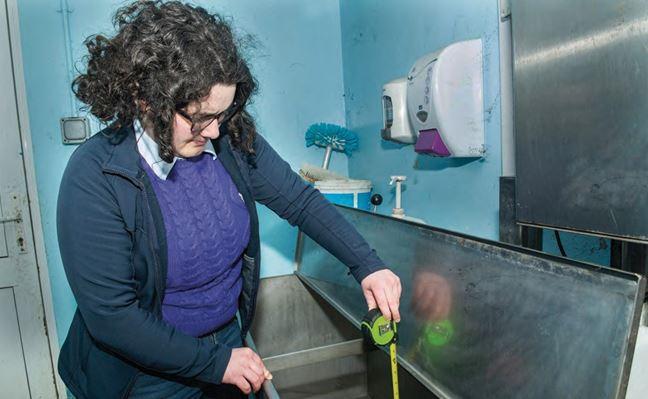
Modern dairy hygiene practices place strong emphasis on chlorine free detergents, hot water washes and adequate rinsing with water per milking unit. Teagasc have evaluated several chlorine free cleaning protocols which can be accessed here: Cleaning Routines. Maintaining the correct balance of water temperature, chlorine free products and circulation time is critical for achieving high standards of dairy hygiene to protect milk quality.
Removal of chlorine products has been replaced by the following:
- Higher caustic concentrations, 0.7% for hot water washing and 1% for cold water washing.
- Hot water is vital, starting temperature must be 75/80℃. It is recommended that a minimum of 7 hot washes are carried out per week. Less hot washes required when using powder as it contains higher percentage caustic compared to liquids (76% vs. 20%). Finish hot wash temperature should be 40/50℃. Wash cycles should be carried out for 8-10 minutes.
- Increased use of acid-based products such as phosphoric and nitric acids. Three descale washes per week is recommended. Or use new ‘ONE for ALL’ acid-based products which are chlorine free.
- Use peracetic acid in an additional final rinse as this will kill bacteria and is food grade safe.
- Recycling detergent for second wash still possible with powder routines but not an option with liquid products.
Chlorine Free Routines Summarised
- AM milking: Use an approved powder detergent at manufacturers rate in cold or hot water at 75/80℃ with a minimum of 3 hot washes per week with approximately 9 litres of solution per unit. PM milking: This can be retained for the PM wash and circulated for 8-10 minutes. Add peracetic acid at recommended rate to an additional cold water rinse.
- AM milking: Add an approved liquid detergent at the recommended rate in hot water (75/80℃) allowing for approximately 9 litres of solution per unit. PM milking: Add an approved acid cleaning product (phosphoric acid or an all in one products) at the recommended rate in cold or hot water (75/80℃) allowing approximately 9 litres of solution per unit.
- AM milking: Add approved liquid detergent on 4 occasions per week and an acid product on 3 separate occasions per week at the recommended use rate in hot water at 75/80℃ allowing 9 litres of solution per unit. PM Milking: Add an approved liquid detergent at the recommended rate in cold water. Include peracetic acid in an additional cold water rinse twice daily.
- AM milking: Add an approved liquid detergent at the recommended rate in hot water at 75/80℃ allowing approximately 9 litres of solution per unit. PM milking: Add an approved liquid detergent at the recommended use rate in hot water with 9 litres of solution per unit. *Replace liquid detergent with an acid product on at least two occasions per week*.
- AM milking: Add an approved acid “one for all” product at the recommended rate in hot water at 75/80℃ allowing 9 litres of solution per unit. It is recommended to replace this acid product with a detergent on two occasions per week e.g. Monday and Friday. PM Milking: Add approved acid “one for all” product at the recommended rate in hot or cold water with 9 litres per unit.
Important Factors for Each Wash Routine
- Only use approved products for cleaning milking plants.
- If using hot water washes it is critical to ensure starting water temperature is 75/80℃.
- Wash should be circulated for 8-10 minutes allowing the first 5 litres to go to waste.
- Hot water wash should end at temperature of 40/50℃.
- Circulation rate of chlorine-free cleaning agents is recommended at 9 litres/min/unit.
- Rinse plant with minimum 14 litres of water per unit immediately after each wash cycle.
- Peracetic acid may be left in the milking lines without rinsing, provided it is allowed enough time to fully evaporate before the next milking.
Learn More
- Listen: The Dairy Edge – Tips for ensuring milk quality standards are high
- Watch: Research Insights Webinar-The production of high quality milk for a competitive international market
- Read: Teagasc Daily – Don’t obsess about peak milk, obsess about grass quality to drive milk solids
- Read: Moorepark Open Day 2025 – Flexible milking strategies – How do 10 and 12 milkings per week affect dairy cow performance?
- Milk Quality Resources…
- Best Practice Guides…
- Milk Quality Workshops…
etc….