
07 May 2025
Set up a paddock system to get more from grass
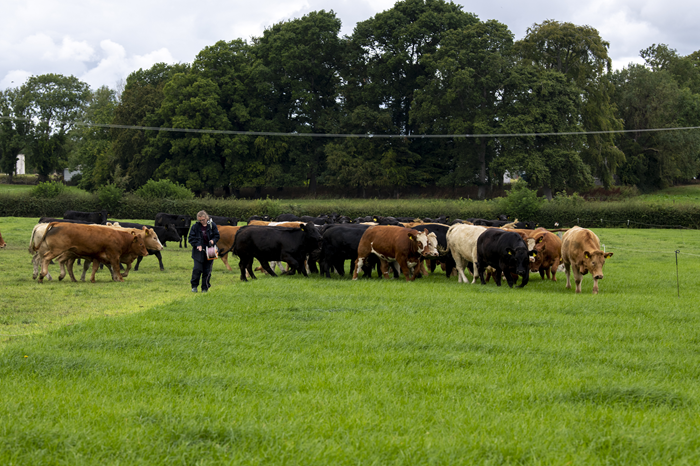
Looking to get a greater return from your grass? As conditions have finally become conducive for growth, Teagasc Beef Specialist, Catherine Egan shares key tips on setting up a paddock system.
Improving grazing infrastructure on farm allows for better control of grass, increased grass growth and improved animal performance. Cattle are easier to manage and become more docile, which is particularly important in a one-person operation.
On many drystock farms, there are too few paddocks per grazing group. As a result, cattle are grazing paddocks for too long. The productivity is then significantly reduced. In this scenario, farmers often find that regrowths are not protected and are continually grazed, thus hindering growth rates. On the other hand, cattle are grazing excessively high covers resulting in poor utilisation. As a result, fields have to be topped to clean off the heavy residual.
Dividing fields into paddocks need not be an elaborate or high-cost project. In the majority of cases, reels and poly wire can be used to temporarily split fields for grazing. Having adequate drinkers in fields is very important to allow subdivision.
1). Create a farm map with precise areas
The first step is to create a map of the farm. Ungrazeable areas, walls, ditches and hedgerows will influence where paddocks and farm roadways will go. Talk to your advisor about developing a farm map or use your own paper map, alternatively you can use the farm mapping software available through PastureBase Ireland.
2). Paddock size
The aim on beef and sheep farms is to grow grass in three weeks and graze it in three days. Three-day paddocks are the goal. A common question is: How large should paddocks be? As a rule of thumb, a group of 40 suckler cows and 40 weanlings grazing on free-draining, productive ground should be allocated a 2ha paddock. The plan is to have seven to eight paddocks per grazing group. Avoid creating long narrow paddocks to minimise poaching. Aim for a ratio of 2:1 so that paddocks are twice as long as they are wide.
3). Plan out drinking points when dividing fields
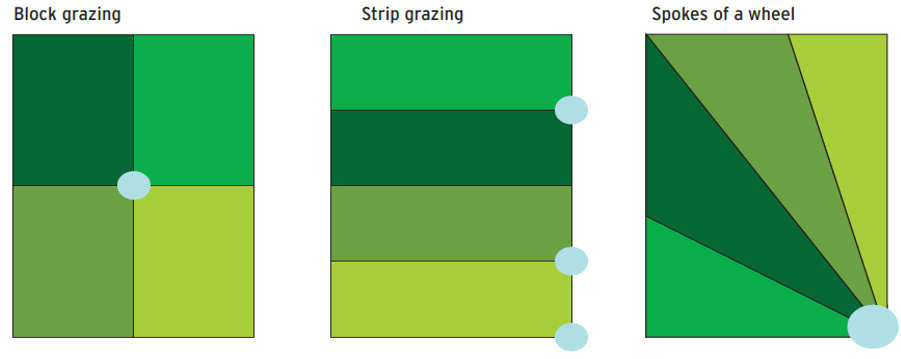
Trough location in the paddock is very important. Avoid locating troughs near gateways. Ensure to position water troughs in a central location in the field, which means each one can serve a minimum of two paddocks. Ensure the drinker is positioned on level ground and balanced with some hardcore where necessary. In some cases, splitting fields like the spokes of a wheel from the drinker will ensure that cattle continue to have access to water while getting regular allocations of grass. Alternatively, you could divide larger, square fields, into four, with one drinker serving many paddocks. This option is shown in Figure 1.
Figure 1: Paddock divisions
4). Farm roadways
Roadways allow more efficient access to paddocks. They enable easier movement and management of livestock around the farm. Roadways also allow for easier management of grass during difficult grazing conditions. Ultimately, farm budgets will determine which roadway type is chosen.
For further information, view the Teagasc Beef Farm Infrastructure Book here.
For more tips and grazing advice, subscribe to the weekly Teagasc Grass10 newsletter here.