
18 May 2022
Selecting a suitable fencer for your cattle fencing system
With rising costs, many farmers are considering implementing a paddock system or even putting up a few strip wires. Improving grazing infrastructure on farm allows better control of grass, increased grass growth and improved animal performance. Catherine Egan, Teagasc Beef Specialist has advice
Select an adequate powered fencer fit for purpose
Cattle are easier to manage and become more docile, which is particularly important in a one person operation. Grass utilised on farm can be increased by either growing more grass and/or improving the utilisation rate. An important step in setting up a paddock system is selecting the correct fencer which is too often overlooked. It should be determined by the area you need to fence and that you select an adequate powered fencer fit for purpose.
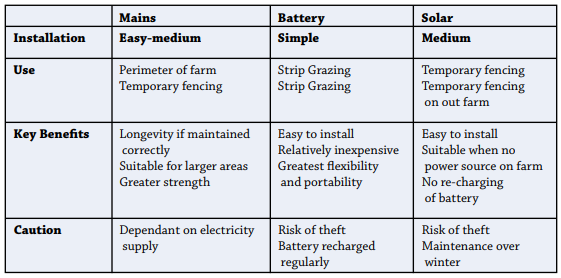
Fencer Types
There are three types of fencers:
Battery Operated
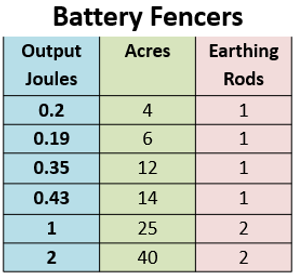
Normally used for temporary fencing such as strip grazing and back fencing. Operated by a 6volt battery. The output joule of the fencer determines the acres the fencer is suitable for as outlined below.
Mains Operated
Permanent power fencing main operated fences are normally used. Normally supplied by ESB supply.
Solar power operated
Obtain energy from the sun and charge a small battery, system mainly suited to out farm where there is no electric power.
How mains works
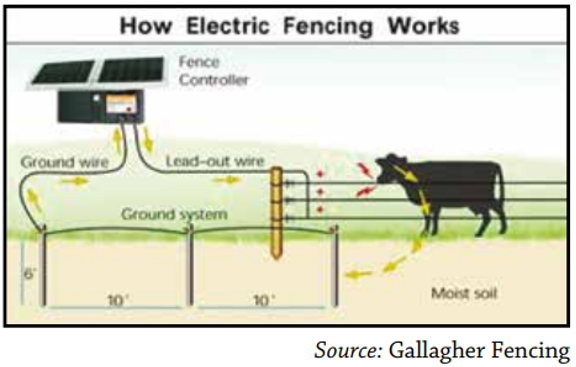
Fencer (Energiser) steps up volts to 8,000 to 11,000 volts approximately through a transformer. Each pulse lasts 0.003 of a second. The high voltage electricity is fed to the fence line wire. An earth lead is securely earthed into the ground by means of metal bar. When livestock touch the fence wire, the circuit is then completed giving a shock. Check the installation. Ensure the connections between fencer and fence are firm and with a good connection. If the wires are passing through a wall you need to make sure that they are properly insulated. If this is not done there is the possibility of power being diverted from the fence into the ground. All installations must be open circuit with the outgoing wire fully insulated to avoid shorts to earth. All joints and connections should be made simply, firmly and above all be very tight, using the correct joiners for the purposes and good quality insulators. Regular inspection of the line is essential of permanent fences. Weeds and branches touching the line should be removed. Avoid vegetation growth or other items touching the fence.
Earthing System
Without an earthing system for the fencer there would be no shock at the fence line. An earthing system works in much the same way as an aerial does for a radio but instead of collecting airwaves, the earthing system picks up electrons from the ground, which are transmitted with each pulse out along the fence line. The stronger the fencer the better the earth required. Electrical current passes through soil but does so more easily in moist or mineral soils than would be the case in dry stony soil.
Therefore before deciding how many earth bars are required, take three factors into consideration:
- The type of soil
- High power or low power fencer
- The load one can expect on the fence system and the length of fence.
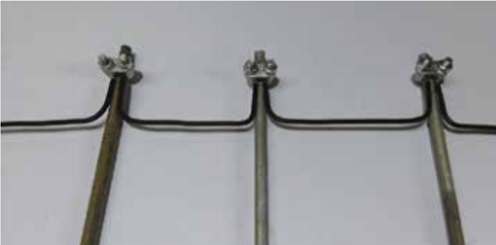
Earthing/Grounding rod
Use the proper type of grounding rod. In most cases, pipe or rebar can be used. The grounding rod needs to be made of galvanized steel and also needs to be at least four feet in length for best results. Using copper rods will diminish the overall effectiveness of the electrical fence system. In some cases, it may be necessary to add several grounding rods to the grounding system. In fact, the majority of electrical fence systems will actually require at least three grounding rods. These rods should be about 10 feet/3 m apart and should be placed at the start of the fence. Grounding rods can actually interfere with phone service as well as electrical lines that may be located on the farm. For this reason, it’s important to place grounding rods as far away as possible from utilities. This is especially true in relation to phone lines.
Mains Fence- Installation & Operating Tips
- Please read all installation and operating instructions carefully.
- Install indoors and out of reach of children.
- Do not install near combustible material, i.e. hay or straw. As there is a remote possibility that a lightning strike through the earth system could generate a fire risk condition.
- Any electrode connected shall be separated from the earthing system of any other circuit, and shall not be situated within a distance of 100m of any electrode used for protective earthing.
- Each fencer must have a separate earthing system.
- Never fit more than one fencer onto any fence.
- Every electric fence line and associated controller shall be installed so that it is not liable to come in contact with any power or communication apparatus or wiring, including an overhead power line, telephone, or radio aerial.
- Any electric fence or portion thereof installed along a public road or as a boundary line fence shall be identified by signs, clamped to the fence wiring or fastened to posts at suitable intervals.
- Never place earthing system for electric fence within 10 meter of a household.
- Never tamper with internal mechanism of fencer as they have the potential to be extremely dangerous
More information on electric fencing and fencing infrastructure can be found in The Beef Farm Infrastructure Handbook (pdf)
The Teagasc Beef Specialists issue an article on a topic of interest to Suckler and Beef farmers every Wednesday here on Teagasc Daily. Find more on Teagasc Beef here Teagasc provides a Local Advisory and Education service to farmers. Find your local Teagasc office here