
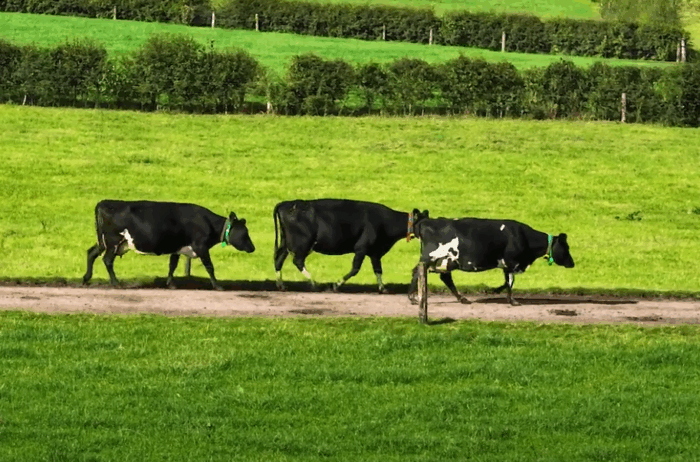
Lameness in dairy cows isn’t just an occasional or unexplained issue. It almost always results from specific conditions affecting the cow’s foot.
To coincide with the second video in a new series, developed by the Animal Health Ireland Hoof HealthCheck Technical working group, Ned Dunphy and Ger Cusack, Comeragh Vets, and Eoin Ryan of the School of Veterinary Medicine, UCD, focus on the most common causes of lameness and the risk factors that increase their likelihood.
The anatomy of the hoof
A dairy cow’s hoof consists of the wall horn, the sole horn, and the white line (the junction where they meet). The white line is a particular point of weakness, and many lameness cases begin here.
Common non-infectious causes
The most frequent non-infectious causes of lameness in Irish dairy cows are:
- White line disease: Caused by grit or small stones entering the white line, leading to painful inflammation.
- Sole bruising: Results from trauma to sensitive tissues beneath the sole, often due to hard or rough surfaces.
- Sole ulcers: Caused by internal pressure within the hoof capsule, usually on the outer claw of the hind feet.
These conditions often arise due to physical stress on the hoof, particularly in the weeks around calving.
Risk factors for non-infectious lameness
Several on-farm risk factors increase the chance of these conditions developing:
- Rough walking surfaces: Uneven, sharp or potholed roadways, yards and gateways can injure feet.
- Poor yard design: Inadequate turning space at the parlour exit and insufficient space in the collecting yard (>1.5 m²/cow recommended).
- Feed space: Cows need at least 600 mm (2 ft) each to prevent crowding and pushing.
- Inappropriate herding: Cows should be moved calmly, without sticks, dogs or quads, to avoid shearing forces on the hoof.
- Standing time: Long periods on concrete, especially post-calving, can increase the risk of sole ulcers.
Infectious causes
Two main infectious foot conditions cause lameness:
- Foul-in-the-foot (interdigital necrobacillosis): Caused by bacteria entering through broken skin between the claws, leading to swelling and severe pain.
- Digital dermatitis (Mortellaro’s disease): A contagious disease of the skin near the hoof. Many cows may carry it without showing signs.
Both conditions thrive in wet, slurry-covered environments.
Prevention measures
To reduce the risk of lameness, farmers should:
- Maintain good infrastructure: Ensure roadways and yards are well-surfaced and avoid sharp corners at parlour exits.
- Provide adequate space: Ensure proper cubicle numbers (at least 1.1 per cow), feed space and turning areas.
- Promote hoof health: Use gentle herding practices and reduce standing time, especially after calving.
- Improve hygiene: Run slurry scrapers frequently and keep yards and passageways clean.
- Footbath regularly: Disinfect cows’ feet to help prevent infectious conditions.
- Monitor and treat early: Early detection and prompt treatment are key to preventing worsening cases.
- Build good relationships: Work closely with your vet and hoof trimmer. They are essential to effective lameness prevention.
Watch the video
To see the conditions described and practical examples of prevention, watch the full video ‘Common causes of lameness in Irish dairy herds’ below:
This article is part of a five-part series aimed at improving lameness control on Irish dairy farms through practical, research-informed solutions.
Part one of the series, is available here: Why dairy cow lameness matters