
Preventing lameness starts from the ground up: well-designed and maintained farm surfaces, cubicles, and yards play a critical role.
To coincide with the third video in a new series, developed by the Animal Health Ireland Hoof HealthCheck Technical working group, Patrick Gowing, Teagasc Dairy Specialist, and Joris Somers, Veterinary Advisor at Tirlán, explain how farm infrastructure influences hoof health.
Roadways
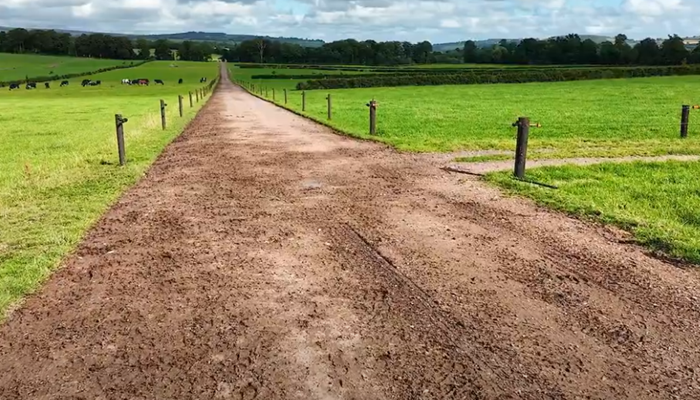
In a pasture-based system, roadways are central to lameness prevention. A width of at least 4 metres allows cows to move comfortably. For herds over 120 cows, add an extra metre for every additional 100 cows.
Surfaces should be smooth, compacted and free from sharp stones. Astroturf can be effective in high-traffic areas, but it must be laid on an even base. A camber of 3% to 8% ensures good drainage without becoming difficult for cows to walk on. Avoid bottlenecks, such as narrow entrances or sharp bends, and never position water troughs directly at paddock gates.
Collecting yards
Yard design must allow smooth cow entry and regular cleaning. Grooved concrete gives traction while remaining easy to scrape. Use a scraper or tidal wash to clean yards after each milking and consider installing a nib wall or step to reduce stones being dragged in.
Both square and round yards work, as long as cows can enter and exit without sharp turns. Maintain at least 1.5 m² per cow and avoid using backing gates to push cows. Instead, use them only to reduce the holding area.
Cubicle sheds
Underfoot hygiene and lying time are vital during housing. Cubicle passageways should be scraped multiple times per day. Clean, dry surfaces help prevent conditions like digital dermatitis.
Ensure there are enough cubicles. A 10% surplus is recommended, with comfortable bedding such as rubber mats or mattresses. More than 10% of cows lying in passageways or 20% perching in cubicles at night indicates cubicle space or comfort problems.
Cubicles should be correctly sized to suit the cow breed, allowing them to lie fully and rise comfortably. Avoid cul-de-sacs and provide at least 60 cm of feed space per milking cow, and 80 cm for dry cows.
Milking parlour
Efficient cow flow minimises standing time and reduces stress. Wide, straight exits and non-slip flooring are important. Use steps rather than slopes where level changes are needed and consider rubber matting to prevent injury.
Footbaths
Footbaths are a key tool in controlling infectious lameness. They should be positioned close to the parlour exit but not disrupt cow flow. Most herds manage well with a 3 m x 850 mm bath. Larger herds may need wider designs.
The solution should remain at 10–12 cm depth after the last cow passes and cows must not be able to avoid the footbath. Aim to use 1 L of solution per cow per passage. For ease, consider automated systems or designs that allow quick filling and cleaning.
Summary
A well-planned farm layout reduces the need for treatment by minimising lameness risk in the first place. Infrastructure matters. Roadways, yards, cubicle sheds and parlours all affect hoof health. The next article in this series will continue exploring structured approaches to managing lameness.
Watch the full video: ‘Lameness and farm Infrastructure’ below:
For more information, visit the Animal Health Ireland (AHI) website.
More from the series: Common causes of lameness in dairy herds
More from the series: Why dairy cow lameness matters