
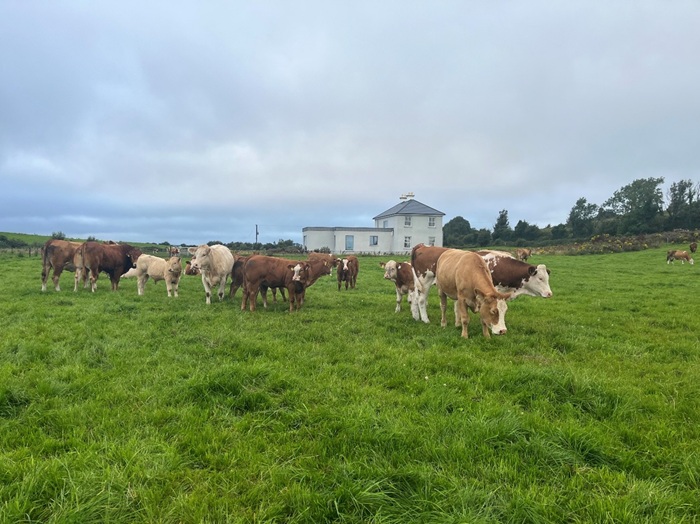
For Irish suckler farmers, the key to a profitable system lies in combining good grassland management, secure winter fodder supplies and strong breeding performance.
Cathal Irwin, a Future Beef Programme farmer, provides an excellent case study of how forward planning in each area can deliver results on a suckler, Advisor on the Future Beef Programme, Aisling Molloy tells us more.
Building winter fodder stocks
Securing enough winter feed has been a priority for Cathal due to restricted fertiliser limits on the farm. His second-cut silage ground received 2,500 gallons of slurry/acre and 50 units of protected urea, with a bag of 18-6-12/acre still to be applied. On grazing ground, he spread 20 units of protected urea in early June, followed by a bag of 0-7-30 later in the month and he plans to spread a final round of fertiliser in August.
To date, 206 bales of silage have been made from the first and second cuts and surplus paddocks – 65 more than last year. He attributes this to favourable weather, later turnout of cows, the use of a soil conditioner, slurry on grazing ground and improved grazing management.
With hay and silage already purchased and more silage bales expected from the third cut, Cathal will have over 300 bales in total. His requirement is 260, leaving a healthy surplus for the winter.
Breeding performance
Breeding results have been another highlight on the farm. Cathal is running both a Limousin and a Charolais bull with the cows, and they mixed without fighting recently. Scanning on July 19th showed 18 cows and heifers in calf out of 21 bred, with two more too early to confirm. These will be rescanned next month, and Cathal is confident of having 20 out of 21 in calf. One cow with a tumour and another selected for culling were not bred.
Expected calving dates for 2026 run from February 4th to April 16th – a tight 10-week block. He is also keeping a close eye on strong heifer calves and will separate them shortly to avoid the risk of them going in calf too young.
Looking back, calving in 2025 started on February 21st and finished on April 6th, lasting seven weeks. Ten cows and eight heifers calved. The calving interval averaged 397 days, but this was a deliberate move by Cathal as he has been gradually pushing forward the calving date each year to match turnout to grass. With an average calving date of February 21st achieved, he now plans to target a 365-day interval again next year.
The other KPIs are excellent:
- 0% calf mortality to 28 days, despite two sets of twins, leaving him with 02 calves per cow per year (ahead of the target 0.95 and national average of 0.84).
- Heifer performance – 63% of this year’s heifers calved at 22–26 months, well above the national figure of 22%.
- 6-week calving rate – 94%, supported by a synchronisation programme in 2024, far exceeding the >70% target and national average of 57%.
Overall, Cathal is very satisfied with his suckler herd’s fertility performance this year.
Calf and weanling management
To prepare calves for weaning, a creep feeder will be introduced in August. The sets of twins are smaller and will receive early meal to help them catch up. Lighter calves may also be sold before housing to leave a more uniform group indoors, simplifying winter feeding.
Bull finishing and dairy beef
Cathal finished 22 bulls this year, seven homebred and the rest bought in last autumn. They averaged 423kg carcass weight at 15.7 months, grading U=2+, and returned €3,200/head at €7.57/kg. After variable and fixed costs, the net margin was €866/head. He notes, however, that at 2024 prices of €5.47/kg, the system would have lost €20/head, highlighting its vulnerability to price changes.
To test alternatives, Cathal bought 12 dairy-bred bullocks at 530kg. They were built up to 8kg ration/day. Though kill-outs were disappointing at <50%, Cathal is happy that they left a small margin for little work in a 73-day feeding period. They fed into an average carcass weight of 287kg, graded O+3= and an average price €7.76/kg.
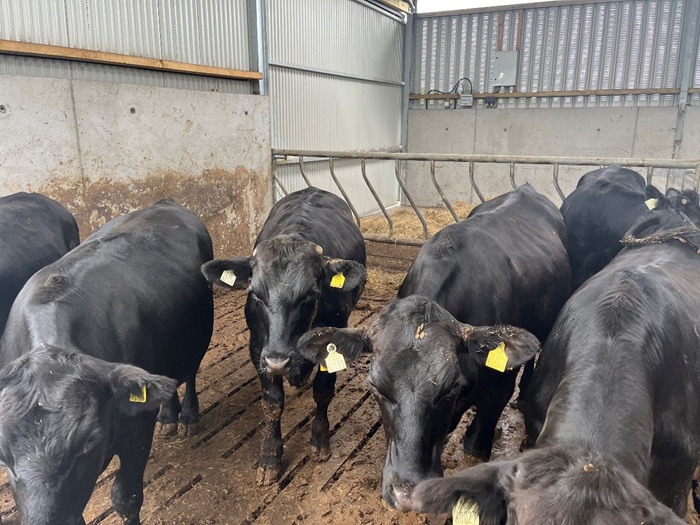
Figure 2: The purchased dairy beef bullocks
Facilities and safety
Yard upgrades are also underway:
- Wider feed barriers for easier feed access.
- Diagonal barriers at the back of the shed to prevent bulls knocking over troughs.
- New drinkers with more holding capacity to improve water supply and reduce competition.
- Mats for slats to prevent lameness and improve comfort, with Teagasc research showing mats can add up to 11kg carcass weight in finishers.
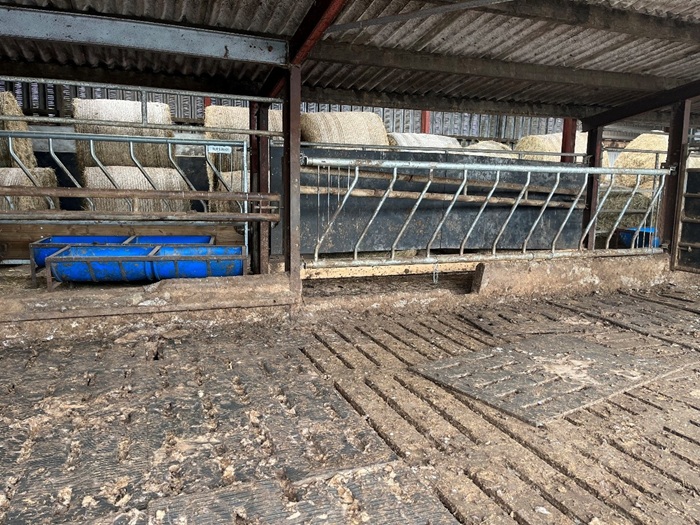
Figure 3: Cathal is replacing he open feed barrier on the left with bars similar to the one on the right
Key messages
- Plan silage early and build in a fodder buffer.
- Monitor breeding KPIs – fertility is the backbone of profitability.
- Use creep feeding and selective selling to simplify winter management.
- Be cautious with bull beef – margins are highly price-dependent.
- Invest in facilities to improve safety, comfort and performance.
Cathal’s results this year underline the value of forward planning. By combining a secure feed base with excellent fertility performance and careful monitoring of costs, he is positioning his farm to withstand both market and weather challenges.
For more on the Teagasc Future Beef Programme, visit here.
More from Teagasc Daily: Feeding concentrates to finish cattle off grass
More from Teagasc Daily: Running a profitable weanling system in Mayo
More from Teagasc Daily: The Future Beef guide to weaning