
As we head into the second week of December, most grazing around the country has finished. Nikki Kennedy of the Teagasc Grass10 team reminds us that it’s a great time to look back on the year and assess what went well and what didn’t, and to look forward to the 2026 season.
2025 has been a mixed year in terms of grass growth, performance and grazing conditions across the country. Good ground conditions and opening farm covers in spring 2025 were a welcome change to spring 2024. Growth was generally slow to start in March, but favourable conditions allowed for good graze outs. This maximised grass utilisation and drove good regrowth.
From mid-April, massive variation appeared across the country regarding grass growth owing largely to three periods of drought conditions across the south and east. Many farms in the midlands, north and west saw higher growth rates and exceeded the five-year average. Across the country, ground conditions for grazing remained very favourable overall throughout spring and summer with the exception of West Clare, West Limerick and Kerry.
Autumn again saw a divide across the country, where October allowed for many drought-stricken areas to catch up on grass growth coupled with favourable grazing conditions, while parts of the west and northwest struggled with the wet.
Fodder availability and grass next spring
As most stock across the country have been housed or sold, it is important to get a handle on fodder availability for the winter months and look forward to 2026.
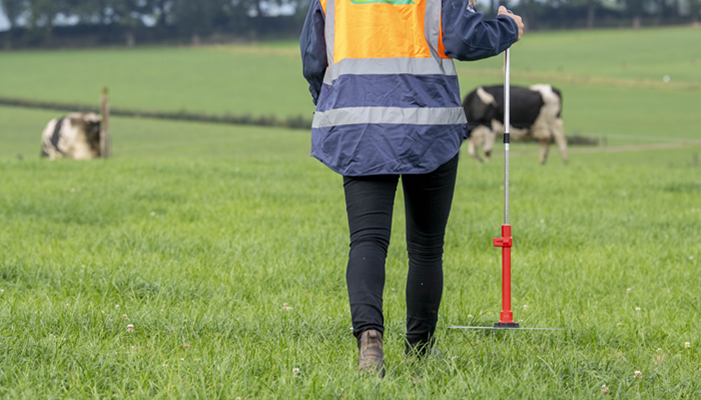
Continuing to graze now severely reduces the amount of available grass in the spring when it is far more valuable. Regardless of enterprise, it is important to walk the farm to assess the “closing cover”, allowing for plans to be made for the start of the 2026 grazing season.
A shortage of grass now, less that 600kg DM/ha on dairy farms and 500kg DM/ha on most drystock farms, may result in inadequate grass available in the spring and a plan will need to be made for extending the winter fodder supply to buffer spring grass.
Current PastureBase Ireland figures show that across dairy and drystock enterprises average farm cover (AFC) is 750kg DM/ha, but 20% of farms are under 600kg DM/ha with an AFC of 496kg DM/ha for that group.
Determining available fodder on the farm is crucial to ensuring the winter and early spring requirements are met. You can do this on PastureBase Ireland or using the calculator here: Winter Fodder Budget Calculator (Excel).
For guidance on how to complete a fodder budget using PastureBase Ireland, visit here.
Identifying shortages early allows farms to source extra feed to be fed at the appropriate time if necessary. You do not want to be caught short and forced into feeding lower quality feed in critical times pre and post calving or lambing.
Soil fertility
Now is a great time to look at your farm’s soil fertility. Soil sample in the coming weeks, leaving 6-8 weeks since the last application of fertilisers or slurry to get a true reflection of the soil fertility status. Plan to address shortfalls in P and K across the farm and target lime application based off the soil samples. Lime is underutilised on Irish farms; 39% of dairy farm soils and 62% of drystock farm soils have sub-optimal pH. Where soil pH, P or K are sub-optimal, nitrogen is not used efficiently, reducing the growth capacity of your land.
Grazing infrastructure
Finally, as we look forward to the 2026 grazing season, it is a good opportunity to ensure that grazing infrastructure is in place to allow for the best use of grass come turnout. Identify paddocks with only one access point and consider adding another to reduce damage.
Be prepared to implement grazing management tools such as spur roadways, back fencing and on/off grazing. Take stock of reels and posts, replace wire that is damaged and not carrying current well. Check gates that lambs cannot get under them, often soil is eroded, and it is only discovered when small lambs return to fields and planned grazing groups must be merged.
Overall, 2025 has been a mixed grazing year across the country but a great spring put everyone on the front foot from the get-go. Remember grazed grass is every livestock system’s cheapest feed source and any improvements made to growing and utilising more grass will have a benefit to the farm system.