
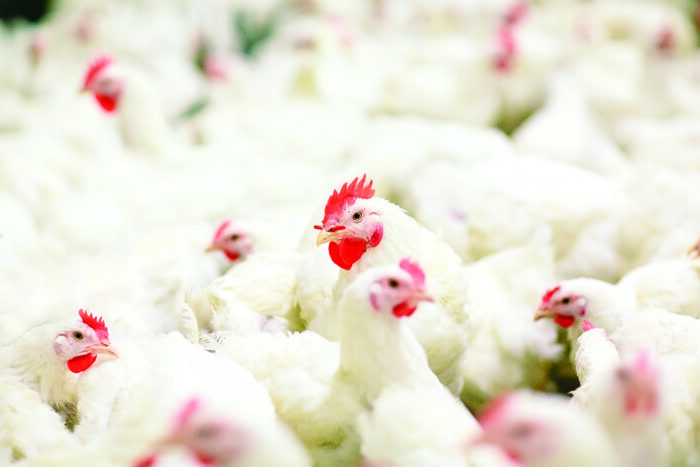
From input costs, consumption and retail demand, and the outlook for the poultry sector, Shauna Jager, Bord Bia, takes an in-depth look at the EU poultry market.
Feed price volatility, which sharply increased through late 2024, had largely subsided during 2025, with costs broadly stabilising across the year. This easing in input pressures has supported profitability across the sector. At the same time, poultry prices strengthened considerably through the year, driven by firm demand and tighter supply conditions linked to ongoing disease pressures. EU broiler prices increased strongly throughout 2025, finishing the year strong, sustaining historically high levels through the second half of the year.
Production
Across the European Union, poultry production remained relatively stable in early 2025, with some contraction during the first quarter as Highly Pathogenic Avian Influenza (HPAI) outbreaks constrained output in key producing regions. However, production has grown by approximately 2% (EU Commission) across 2025 as a whole, supported by strong consumption trends, easing feed costs and favourable pricing conditions.
Production continues to be concentrated among the EU’s leading producers. Poland, Spain, France, Germany, Italy and the Netherlands collectively account for approximately 73% of total EU poultry output, maintaining a broadly unchanged production structure. While output declined in parts of Poland, Italy and Hungary due to HPAI‑related issues, growth in Spain, France and several smaller producing Member States has offset some of these losses.
Consumption and retail demand
EU poultry consumption strengthened further during 2025, with per‑capita consumption expected to have risen by around 0.5kg year‑on‑year. Poultry continues to benefit from its positioning as an affordable, versatile and nutritious protein, particularly against a backdrop of high beef and lamb prices. These trends are helping the EU maintain its overall self-sufficiency rate above 100%. However, the EU continues to import popular products like chicken breast and wings, while exporting fifth quarter cuts.
In Ireland, retail demand for chicken remained exceptionally strong throughout 2025. Rising red meat prices have continued to encourage consumers to switch towards poultry, reinforcing chicken’s position as a very versatile and value driven protein source. Worldpanel by Numerator 52-week data highlights strong growth for chicken in Irish retail: volumes rose 4.2%, spend increased 9.2%, and both purchase frequency and buyer numbers grew. Chicken legs and wings led with 20% value and 16% volume growth, driven by affordability and taste. Chicken fillets saw nearly 11% value and 6% volume gains, while whole birds declined slightly as consumers preferred quicker, portioned options.
Irish throughput and exports
Ireland recorded an 8% increase in poultry slaughterings, reaching a total of 122 million birds processed. Irish primary poultry exports rose by 18% year-on-year, amounting to €163 million, with the UK remaining the key trading partner, accounting for over 60% of total exports. Notably, trade with Northern Ireland saw a €10 million year-on-year increase, while exports to Great Britain grew by €6 million. Value-added poultry exports also expanded in 2025 by 17%, reaching €230 million, with the UK continuing as the leading market.
The EU angle
From a trade perspective, the EU remains the third largest global exporter of poultry meat, behind Brazil and the United States. In 2025, export values increased, reflecting firmer pricing. Key destinations include parts of Africa, the Middle East, Switzerland and intra‑EU trade flows.
On the import side, EU poultry imports rose sharply during 2025, driven primarily by increased volumes from Brazil, Thailand and China, while imports from Ukraine declined following changes to trade measures and market access conditions. Imports remain close to record levels, despite solid domestic production, reflecting demand for value‑added cuts and foodservice‑oriented products.
Highly Pathogenic Avian Influenza
Highly Pathogenic Avian Influenza continues to represent a significant structural challenge for the sector globally. Between late 2024 and late 2025, the EU recorded over 500 HPAI outbreaks, resulting in the culling of more than 22 million birds. Hungary, Poland and Italy were the most affected countries, with laying hens, ducks and turkeys accounting for a large share of losses. While outbreaks have constrained production growth in specific regions, enhanced biosecurity measures and rapid containment have prevented systemic disruption to EU supply.
Outlook
Looking ahead, the EU poultry market outlook remains broadly very positive. Consumption growth is expected to continue, supported by strong consumer fundamentals, while production should expand moderately in 2026 provided disease pressures remain controlled. The sector will continue to face structural risks, including HPAI related volatility and ongoing trade uncertainty. Poultry remains one of the strongest performing protein categories in the EU, underpinned by favourable consumer dynamics and resilient demand through 2025 and beyond.
More from Teagasc Daily: Irish broiler production: Standards, Scale and Sustainability
More from Teagasc Daily: Antimicrobial Resistance and its importance for poultry farmers
More from Teagasc Daily: Broiler Net – Teagasc’s First EU Poultry Project