



Breeding
Olivia had 225 ewes scanned with an average of 1.7 lambs/ewe. Only 3 out of 27 ewe lambs are in lamb as the ram was sub fertile. Lambing started at the end of January and while very busy, in particular with the bad weather, it progressed well and is almost finished.
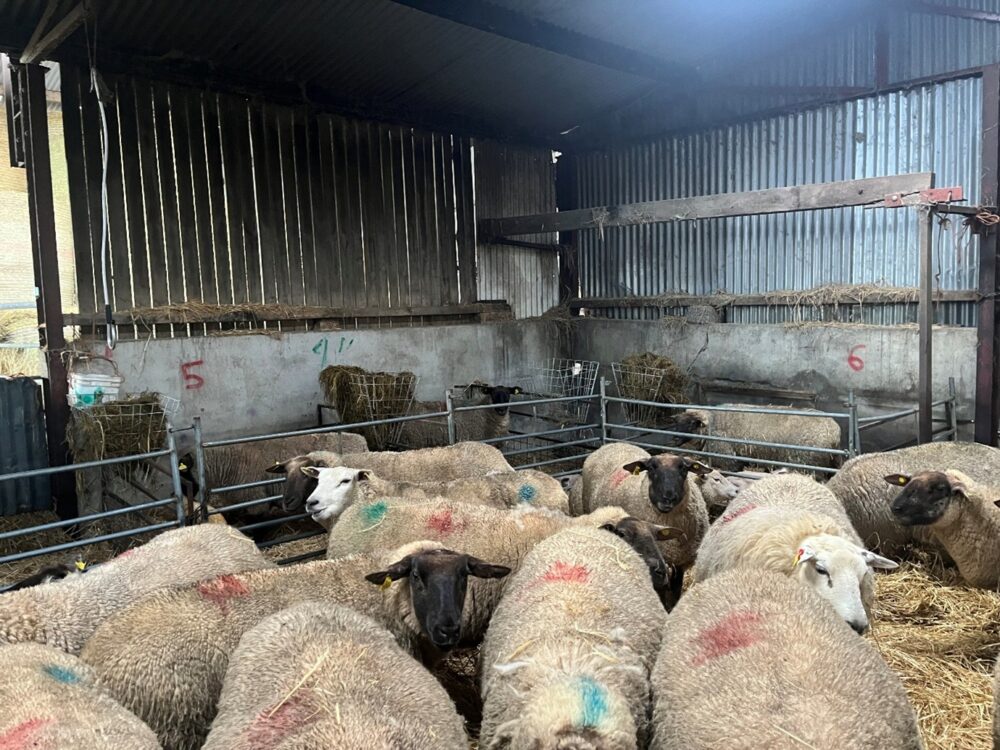
Figure 1: Lambing pens are easily located around the group pen
Calving started on the 1st of February and has progressed well, again in spite of the weather. While it was also very busy, Olivia is relieved to have less calving difficulty from her bull choices this year than last year which is a welcome relief.
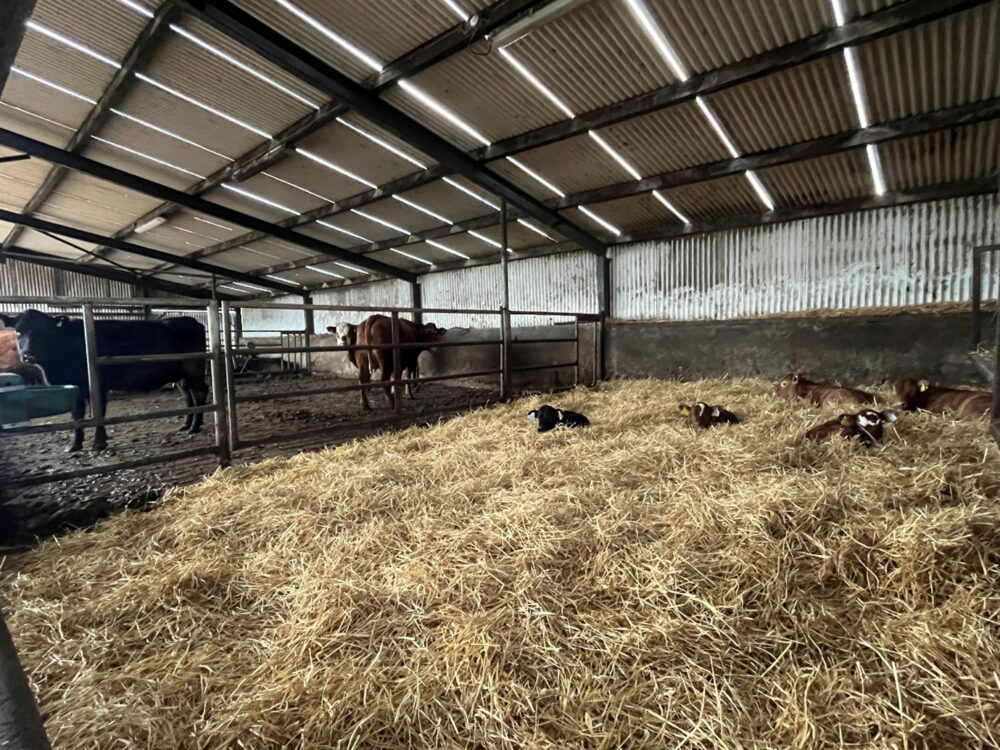
Figure 2: Newborn calves have access to a well-bedded creep area
Cows were being fed on a poorer quality silage (66-68% DMD) and haylage in the lead up to calving. Normally Olivia administers a mineral bolus pre-calving but this year has fed them pre-calving minerals through a lick bucket. The bucket supplies 18kg of minerals in a molasses. Intakes are variable with lick buckets but assuming an intake of 100g/day, the cows and in-calf heifers would not be getting sufficient magnesium, phosphorus, sodium, selenium, or vitamins A, D3 or E to meet their needs pre-calving. And if they were eating more than this, they would be getting excess minerals that are no benefit which makes it an expensive source of minerals. The figure below shows the recommended mineral requirements/day pre-calving and the amount being supplied by the lick bucket at 100g/head/day.
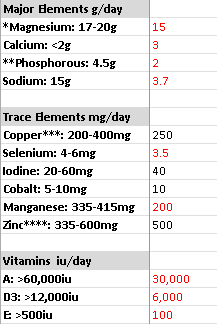
Figure 3: Pre calving mineral requirements and amount being fed through 100g/day of mineral lick bucket
Performance
8 Charolais/Limousin bull weanlings were sold live through the mart on 20th January. They averaged 364kg live weight and made €5.40/kg.
Eight of the dairy beef heifers were sold to the factory on 16th February at 23.1 months of age. They averaged 265kg carcass weight and graded O+4- on average, making from €7.28 to €7.48/kg depending on grade and breed. All cattle were in spec for fat cover.
Financial
Olivia has completed her profit monitor for 2025. There was no change to the system or land area on the farm for the year with the suckler to weanling remaining the predominant beef system, alongside the smaller calf to beef system. The lambs were mainly sold to the factory from the sheep enterprise, but some were also sold live through the mart. She has been analysing her 2025 cattle detailed report.
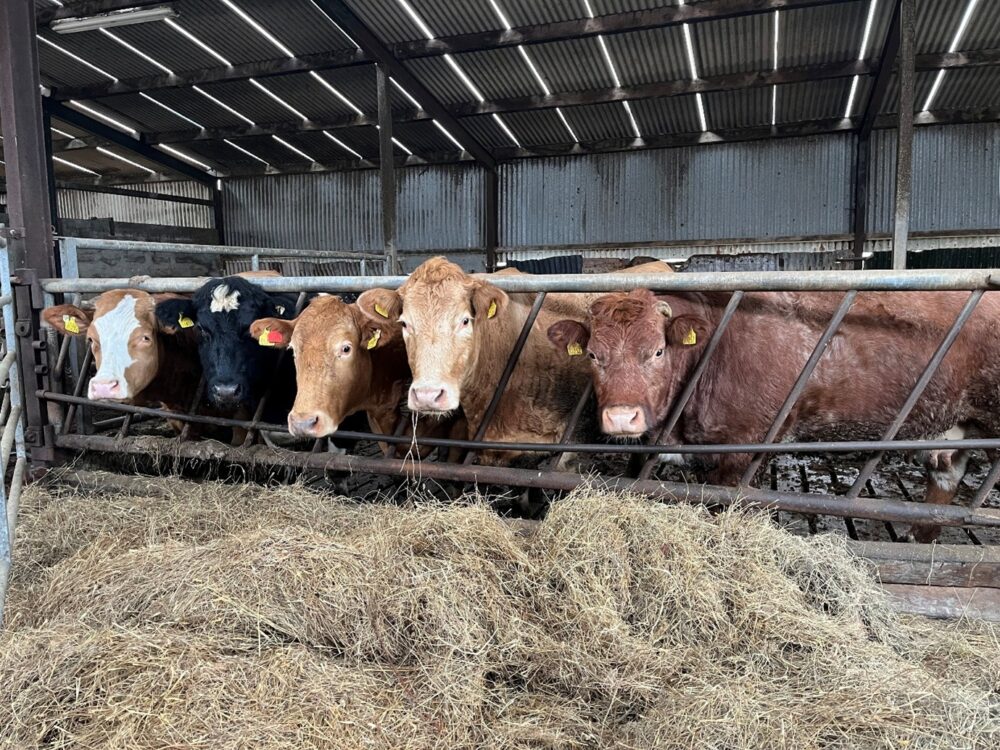
Figure 4: Cows and heifers pre-calving
The output per livestock unit was good at 356 kg/LU. This is affected by everything that affects daily live weight gain on the farm; bull fertility, cow fertility, mortality, grass management, animal health, silage quality, ration fed etc. The target is over 350 kg/LU for a suckler system and 500kg/LU for a dairy calf to beef system. It increased significantly from 322 kg/LU in 2024 and was mainly due to extra live weight sold from the farm. The grassland stocking rate stayed steady at 1.76 LU/ha.
The gross output figure is calculated from cattle sales minus cattle purchases and add/subtract any changes to the inventory. Olivia had a gross output figure of €2159/ha which is the main ‘money in the pot’ to cover variable and fixed costs. This increased substantially from €1724/ha in 2024.
The 3 biggest expenses on drystock farms are purchased concentrate, fertiliser and contractor costs. Olivia’s farm is no different with her biggest costs for the year as;
- Ration: €172/ha
- Fertiliser: €177/ha
- Contractor: €233/ha
In total, the total variable costs (€950/ha) were 44% of the gross output figure, which is much lower than the target of <50% for suckling enterprises. This percentage was 44% in 2024 also.
The fixed costs were €458/ha for 2025 which is similar to 2024. This is expected to climb over the coming years due to further investments into cattle housing. For 2025 the cattle enterprise made €751/ha net margin which does not include any direct payments or subsidies and is significantly higher than the net profit made in 2024 of €507/ha.