
Management tips for a successful suckler breeding season
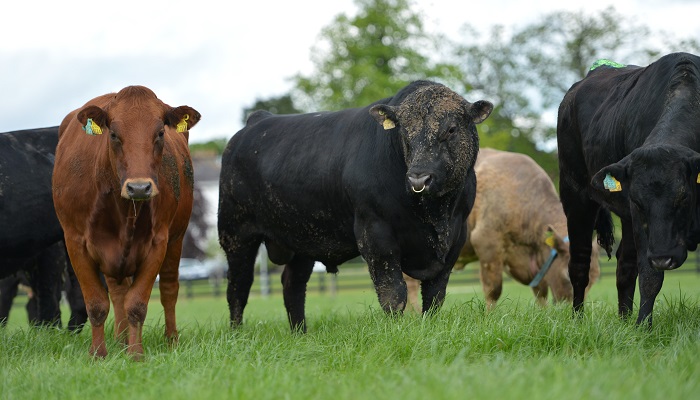
Managing breeding in a suckler herd during late spring/early summer has a direct impact on the herd’s performance and profitability for the following year, Teagasc Beef Specialist, David Argue outlines some key tips to ensure it's a success.
Body condition score
Body condition score is one of the most important factors to get right in the run up to breeding. Correcting this starts the previous autumn when cows are housed and batched and fed accordingly to condition score. Correct management of this allows the cow to calve down at the correct BCS, which will have a knock-on effect on getting cows geared up for breeding.
Cows should be between 2.5 and 3.0 when being bred. The most effective way in achieving this is ensuring that they are not calving down thin and that nutrition around the time of calving is adequate. Cows with a low BCS will be slower to cycle and this is particularly evident in young first-time calving heifers.
Heat detection
Once we are happy that the cows are in good condition and are cycling, the next step to a successful breeding season is heat detection. Aim to walk through cows 3-4 times a day to detect heats.
Most activity is usually seen early in the morning or late in the evening. Where this is not possible, heat detection aids are essential for example, tail painting, scratch cards, vasectomised bull or smart technologies (collars or tags).
A teaser bull should not be underestimated. Having your vet vasectomise a young bull prior to the breeding season is a good idea as they can be difficult to source when breeding starts.
Feeding the cow
Getting cows cycling within the first 6 weeks is important in achieving the target calving interval of 365 days. This is largely influenced by nutrition and the animal’s diet. At this time of year, high-quality leafy grass is the cheapest and most effective way to drive performance. Breeding cows should be prioritised to high quality grass.
Bull management
Don’t forget the bull. It is easy to assume he is ready to work when needed but finding this there is a problem in the lead up to the breeding season is both costly and stressful.
Again, like the cows, ensure the bull is in a good BCS before breeding. Check that he is moving well on all feet and legs, and if there are any issues with feet ensure they are addressed well in advance of breeding.
Check testicles for abnormalities and when breeding does start monitor the bull for the first couple of weeks to make sure he is mounting and serving the cow correctly. This can often be a problem with young bulls until they get the hang of it. Do not overwork the bull. Ideally 20-30 cows to a mature bull or 1 cow for every month of age in a young bull e.g. (15 cows to a 15-month bull).
More from Teagasc Daily: Stronger prices driver suckler profits in 2025
More from Teagasc Daily: What should be the paddock size on beef farms?