
An “acid test” for grass-fed dairy
Irish dairy standards require cows’ diets to be at least 95% grass-based, but current measurements rely on recorded farm practices. Researchers at Teagasc are examining an alternative for directly testing milk composition.
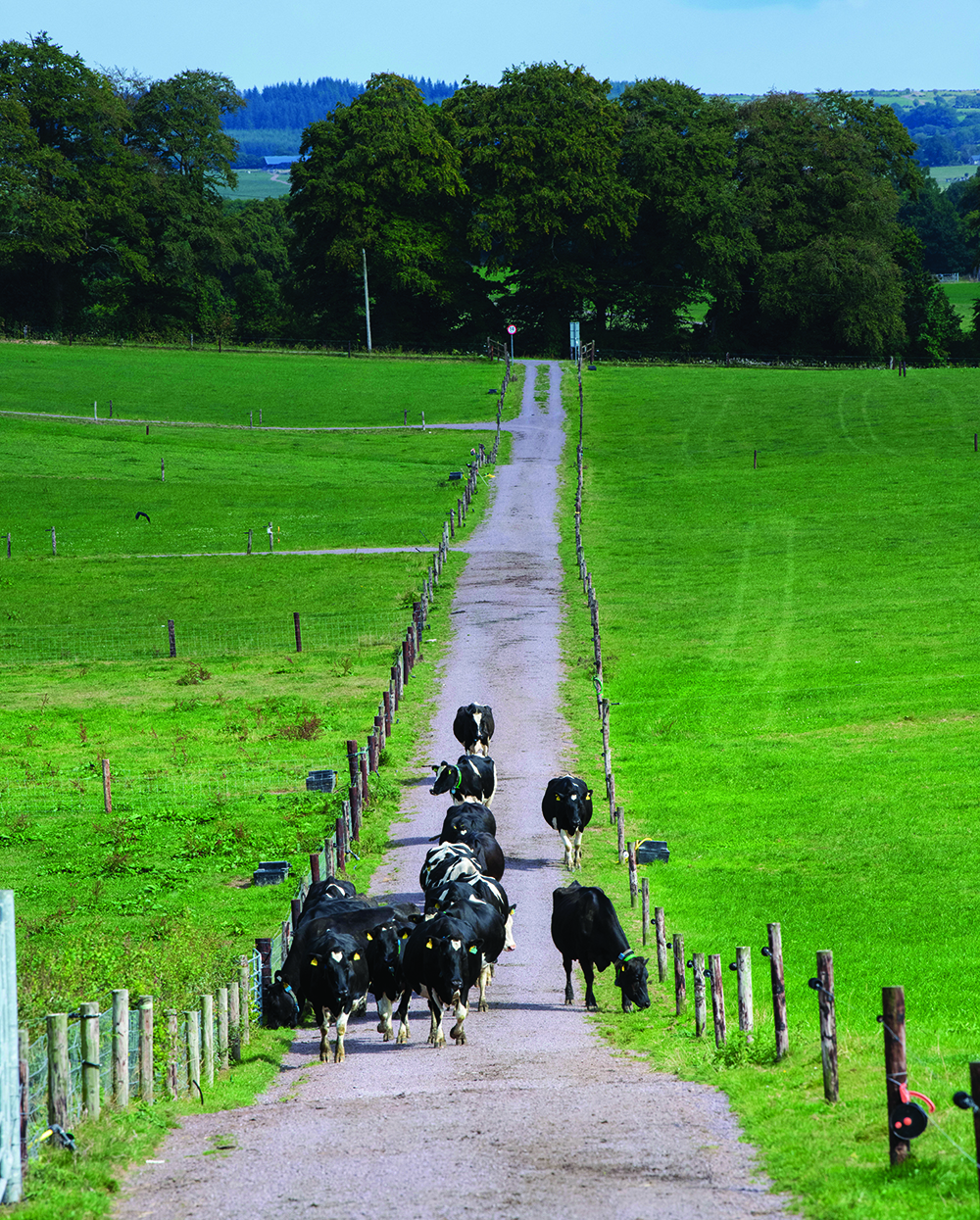
Ireland’s reputation for premium grass‑fed dairy is contingent on it having one of the world’s most pasture‑based systems. Together, Ireland’s mild climate and long grazing season mean cows eat fresh grass for much of the year.
The national Grass Fed Dairy Standard requires herds to be in the Sustainable Dairy Assurance Scheme and for cows’ annual diets to average at least 95% grass and grass‑based forage. However, the data for meeting this requirement relies on recorded farm practices rather than a direct compositional test of the milk.
Defining a biomarker
The fatty acid profile of bovine milk is impacted by several factors, but diet remains the biggest driver. Irish pasture is particularly rich in the omega-3 alpha-linolenic fatty acid (αLA), while other diets, such as concentrates and silages, contain less αLA, but also proportionally more linoleic acid (LA).
Kieran Kilcawley, a Principal Research Officer at Teagasc Moorepark’s Food Research Centre, explains this distinction further.
“Although both LA and αLA are extensively altered in the rumen of the cow, the high dietary supply of αLA, combined with its greater transfer efficiency to milk fat relative to LA, produces elevated αLA concentrations in milk from Irish pasture‑based systems.”
These differences create an opportunity to define a biomarker for grass-fed dairy based on the ratio of LA:αLA. A lower ratio indicates a greater reliance on fresh pasture, while a higher ratio reflects increasing use of non-pasture feeds.
“The appeal of the LA:αLA ratio lies in its simplicity: expressed as a ratio, it is largely independent of analytical method or reporting units, allowing direct comparison across laboratories and assays,” Kieran notes.
Seasonal effects
To test this, researchers at Moorepark analysed 1,554 bulk milk samples from silos supplied by seven industry partners across the Republic of Ireland. The samples were collected between 9 March 2021 and 9 April 2024 as part of the Dairy Processing Technology Centre’s National Milk Seasonality Database (Research Focus Area 1) [see TResearch Autumn/Winter 2026, p.35].
Over three years, the mean LA:αLA was 2.15, and the ratio remained below 2.5 throughout Ireland’s main grazing period (mid‑March to November). Outside that period, cows are predominantly housed on conserved forage and concentrates. This is also the same period when seasonal and lactation‑related physiological changes occur due to Ireland’s predominately spring calving system. During this period, the ratio rose, often exceeding 3.
“As both LA and αLA appear not to be substantially altered by butter making or cheese production, the ratio can potentially also be applied to these products,” adds Kieran.
Proposing a threshold
In a review of previously published research on milk, Cheddar cheese and salted butter derived from milk and produced during the main grazing period, all products had LA:αLA ratios below 2.5, further highlighting its potential as biomarker for grass-fed dairy products.
“We therefore propose an LA:αLA threshold of <2.5 to identify milk, cheese and butter produced on Irish pastures during the main grazing season,” concludes Kieran.
“This would not replace existing certification, but would complement it by providing a measurable, product‑based indicator of grass feeding – particularly valuable for products manufactured during the grazing period. This threshold figure would also recognise that seasonality and system differences mean the threshold is context‑specific and requires wider validation across different Irish dairy products.”
Funding
This research was funded under the Enterprise Ireland (EI) Technology Centres programme under Grant no. TC 20200028. Equipment required to undertake this research was funded under the EI Capital Funding Programme Grant CE-2021-0252.
Contributors
Kieran Kilcawley, Principal Research Officer, Food Research Centre, Teagasc Moorepark
Correspondence: kieran.kilcawley[at]teagasc.ie
David Mannion, Food Chemistry Technologist, Food Research Centre, Teagasc Moorepark
Diarmuid Sheehan, Principal Research Officer, Food Research Centre, Teagasc Moorepark