
Barley worth mentioning
Preserved in Ireland’s national seed bank, historical barley varieties may hold great potential for today’s brewing, distilling and food production. Teagasc-led research has been assessing whether such heritage varieties can offer “new” qualities for contemporary markets.
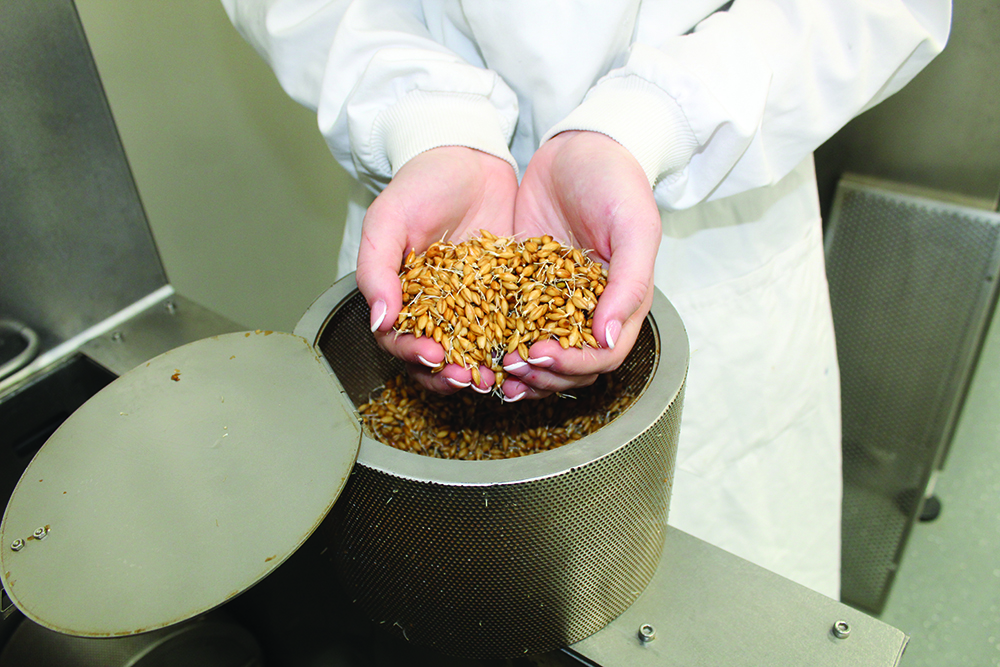
Assessing barley’s malting performance is key to understanding how it will perform in malting and distilling processes. Photo credit: Teagasc.
Historic barley varieties preserved in Ireland’s national seed bank could hold untapped potential for modern brewing, distilling and food production. Researchers at Teagasc and collaborating institutions have been reconstructing decades of barley breeding records and analysing surviving grain samples to determine whether these heritage varieties might offer new qualities for today’s artisan and industrial markets.
Barley is the major cereal crop grown in Ireland, with both spring and winter varieties cultivated primarily for animal feed and beverage production. Beyond these traditional uses, barley is increasingly attracting interest from craft brewers, distillers and food producers looking for distinctive flavours or nutritional characteristics.
Many of these qualities may lie in older barley varieties developed during earlier breeding programmes. Some of these historic varieties have been preserved in Ireland’s national seed bank, offering researchers a unique opportunity to explore how breeding efforts evolved and whether past varieties could still have value today.
The need for genetic improvement in barley was recognised early in the development of modern plant breeding. For malting barley, breeders sought varieties with traits such as low nitrogen levels, strong straw, disease resistance, high yields and uniform grain size. In the late 19th century, however, Irish barley varieties often fell short of these ideal characteristics.
Historical collaboration
Efforts to improve malting barley gathered momentum in the early 20th century. In 1900, the Department of Agriculture and Technical Instruction – a precursor to today’s Department of Agriculture, Food and the Marine (DAFM) – launched a collaborative barley breeding programme with the Guinness Brewing Company. The programme was based in Ballinacurra, Co. Cork, with an experimental brewery at the Guinness brewery in Dublin used to test small batches.
This collaboration continued for more than a century and produced several barley varieties that gained popularity across Europe. Today, these older or “heirloom” varieties are attracting renewed interest.
“For craft brewers and distillers, these historic varieties can offer distinctive flavour profiles compared with contemporary commercial barleys,” says Susanne Barth, Research Officer at Teagasc Oak Park. “Some of them may also offer nutritional benefits for food applications, due to higher levels of compounds such as beta-glucan, essential amino acids and antioxidants.”
However, relatively little detailed information existed about the barley accessions preserved in the national seed bank at DAFM’s laboratory campus in Backweston, Co. Kildare. “Many of the samples in the seed bank didn’t have detailed genetic or phenotypic information attached to them,” explains Susanne. “This kind of ‘passport data’ is important for identifying varieties and tracing their breeding history.”
Genotyping and germination
To address this gap, researchers undertook a major effort to document and analyse the historic barley material held in the seed bank. Genotypic information was added for both spring and winter barley accessions. Spring barley samples were analysed under the leadership of Colin Kelleher at the National Botanic Gardens, while winter barley accessions were studied under Teagasc leadership with support from collaborators at the James Hutton Institute in Scotland.
These analyses helped verify the identity of barley varieties preserved in the collection and provided a clearer picture of the breeding material stored there. Researchers also reconstructed the historical breeding programmes, identifying nearly 3,000 crosses made in the spring barley programme between 1942 and 1993, and around 700 crosses in the winter barley programme between 1979 and 1993.
In addition to documenting breeding history, researchers assessed the physical and malting characteristics of surviving grain samples. In particular, they focused on a set of 37 winter barley breeding lines preserved in the seed bank.
These lines were evaluated for agronomic and grain-quality traits including protein content, beta-glucan levels and Hagberg Falling Number, a standard test used to assess grain quality. The barley samples also underwent small-scale malting and brewing-related tests at the National Centre for Brewing and Distilling (NCBD) in Oak Park.
Much of the work focused on how the historic grains would perform during malting. “Germination is critical to the malting process,” says Lisa Ryan, Manager at the NCBD at Teagasc Oak Park. “If barley doesn’t germinate well, it won’t perform well in brewing or distilling.”
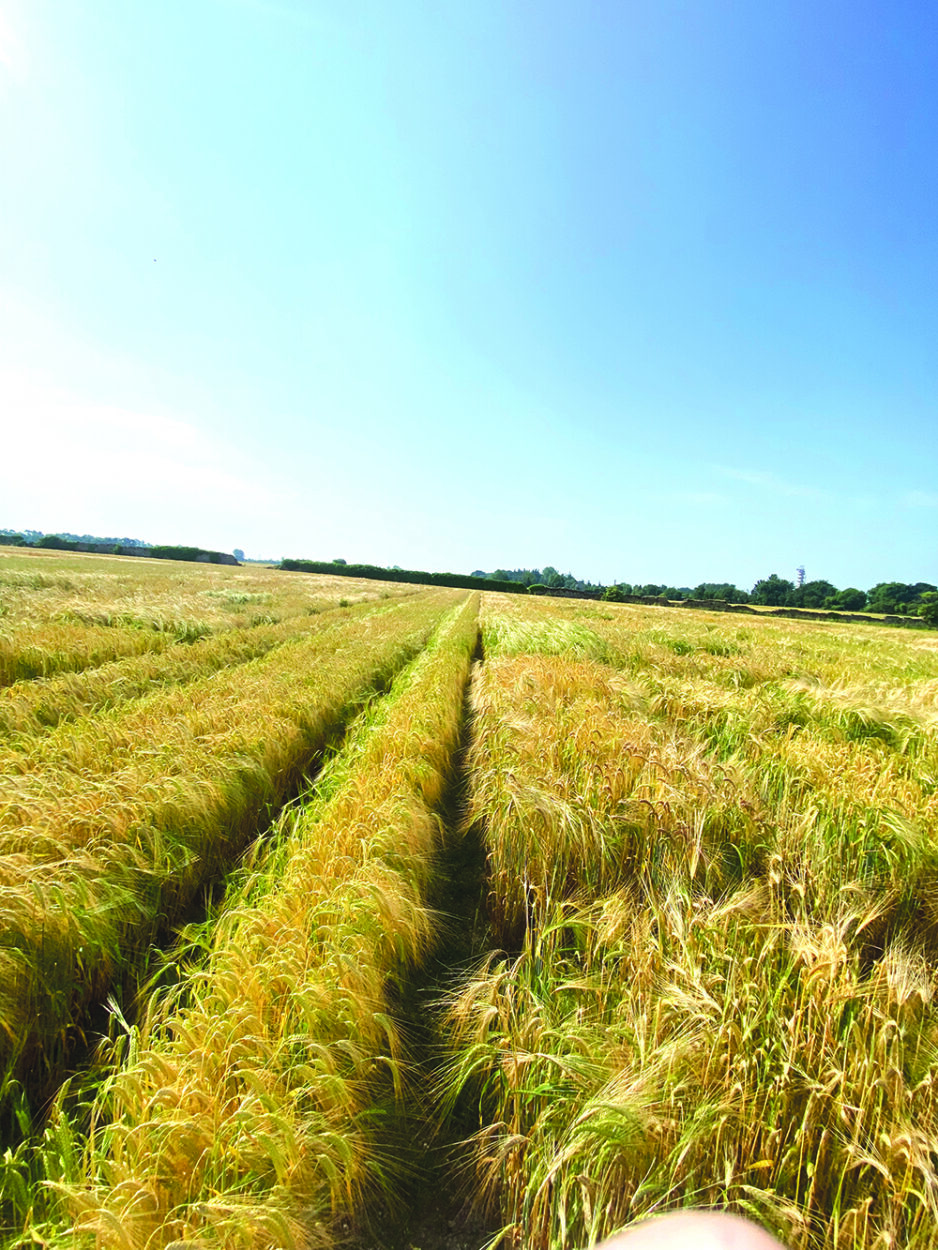
Understanding the genetic information of Ireland’s historical barley varieties may provide great
value to today’s brewing and malting sectors. Photo credit: Teagasc.
New insights
The researchers examined factors such as dormancy, germination energy, water sensitivity and germinative capacity. Beta-glucan levels ranged from 3.03% to 4.54%. While higher beta-glucan levels can cause difficulties in brewing, they may be beneficial for food applications such as breads, soups or cereal products.
Further analysis assessed properties such as friability – a measure of how easily malted barley breaks down during milling – and levels of free amino nitrogen, an important nutrient source for yeast during fermentation.
Of the 37 barley accessions studied, 27 were successfully micro-malted for further testing. Eleven showed sufficiently strong germination capacity to support malting. However, many samples displayed moderate to high water sensitivity, possibly reflecting genetic factors or environmental conditions during cultivation.
Grain uniformity was also variable. Uniform grain size is important for consistent milling and malting, and while acceptable homogeneity was observed in some samples, others produced higher-than-desirable levels of unmodified grain following malting.
Predicted spirit yields ranged from about 260 to 320 litres of alcohol per tonne – lower than yields typically achieved by modern commercial barley varieties.
Despite these limitations, the research provides valuable new insights into Ireland’s barley breeding history and the genetic resources preserved in the national seed bank.
27
of the 37 accessions studied were successfully micro-malted for further study.
Back to the future
By reconstructing breeding records and adding genetic descriptors to the seed bank collection, the project has significantly improved documentation of the historic Irish malting barley programme.
The work also demonstrated the capacity of the NCBD to process small batches of grain for experimental brewing and distilling.
The historic barley lines may not match modern varieties in yield or processing performance, but they represent a valuable genetic resource, says Susanne.
“They capture decades of breeding history, and their distinctive traits could prove useful for future breeding programmes or specialised applications.”
More broadly, the study highlights the importance of preserving and documenting crop genetic resources. As interest grows in heritage grains and distinctive brewing ingredients, these historic barley varieties may yet find a role in the future of Ireland’s brewing and distilling industries.
As interest grows in heritage grains and distinctive brewing ingredients, the rediscovery of historic barley varieties may offer new possibilities for Ireland’s brewing and distilling industries – and a reminder that innovation sometimes begins by looking back.
Funding
This work was part funded by the Department of Agriculture, Food and the Marine with grants to Colin Kelleher and Sinéad Dermody (PhD Fellowship, Protein-I), and was otherwise funded by Teagasc grant-in-aid.
Acknowledgements
The authors acknowledge the contributions of the full project team: Carl Ng, Colin Kelleher, John Jones, Manfred Klaas, Pete Hedley, Malcolm Macaulay.
Contributors
Susanne Barth, Research Officer, Teagasc Oak Park.
Contact: susanne.barth [at] teagasc.ie
Sinéad Dermody, Teagasc Walsh Scholar, Teagasc Oak Park.
Lisa Ryan, Manager, National Centre for Brewing and Distilling, Teagasc Oak Park.
Gemma Merrins, Technician, National Centre, for Brewing and Distilling, Teagasc Oak Park.