
Soil health is our wealth
Soil research has a longstanding history at Teagasc, and today the organisation is at the forefront of the field. Here, we catch up with a few of the researchers from Johnstown Castle’s Soils research programme.
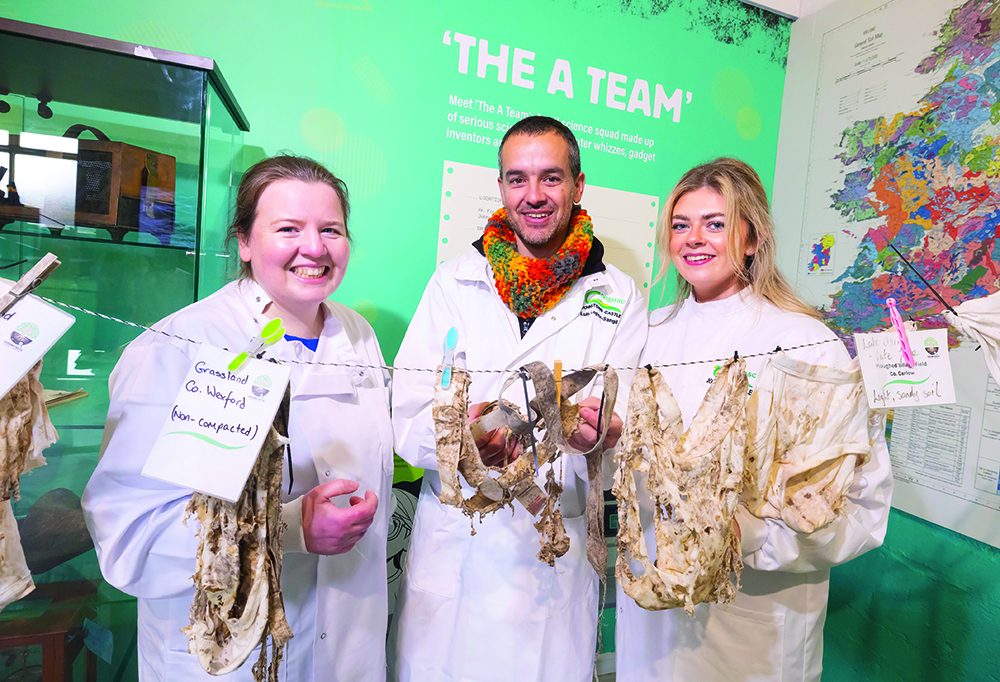
As the field of soil research has expanded, an initial focus on soil fertility has grown to encompass a broad understanding of health. Bringing in topics such as biodiversity, carbon sequestration and water quality, Teagasc’s research aims to keep the farmer at its centre: how can science and advisory functions ensure soils remain resilient, productive and sustainable for the future?
To learn more, TResearch spoke to several researchers from the soils department: Research Officer Fiona Brennan, Soil Health Technologist Luis Lopez-Sangil, Soil and Plant Nutrition Specialist Veronica Nyhan, and Teagasc Walsh Scholar Karla Burke.
Can you explain the history of this team within Teagasc?
Fiona: Soils research dates from the 1940s at Johnstown Castle and became part of Teagasc when the organisation was formed. The initial focus was improving soils’ capacity to produce food; it has since broadened to soil health and the full range of functions soils deliver, including water purification and storage, a habitat for biodiversity and carbon sequestration.
Luis: My role reflects that evolution: I was hired as a “Soil Quality” technologist, but the title quickly became “Soil Health”. It signals Teagasc’s wider focus not only on soil productivity, but on soil resilience and its role in supporting ecosystems and society.
What are your core priorities and objectives?
Veronica: Fundamentally, our job is to understand how soils work and help farmers get the best from them without damaging them. That means carrying out research and turning the science into practical advice. We develop tools, provide training, support advisers and work with policymakers so that the findings don’t stay on a shelf but make a difference on farms.
Fiona: We generate knowledge on how soil characteristics and management determine agronomic, environmental and soil health outcomes. We also study how soils respond to various stresses and pressures, develop indicators and monitoring approaches to safeguard soil health and inform policy and advice.
How do you achieve objectives and share findings?
Fiona: The Soils research programme feeds directly into policy and advice on managing soils for nutrient efficiency, water quality, biodiversity, and greenhouse gas emissions.
Karla: Through Teagasc outreach, we share research with audiences ranging from scientists and advisors to farmers, teachers, students and the public. Seeing it move beyond the laboratory and into practical advice, while inspiring people to think differently about the living world beneath their feet, is especially rewarding.
Veronica: We use field trials, laboratory research and national soil data to answer practical soil-management questions. The research feeds into advisor training, farmer events, discussion groups, online tools and national recommendations, creating a clear pathway from research right through to on-farm practice and back again.
What are the key techniques and tools you use to achieve this work?
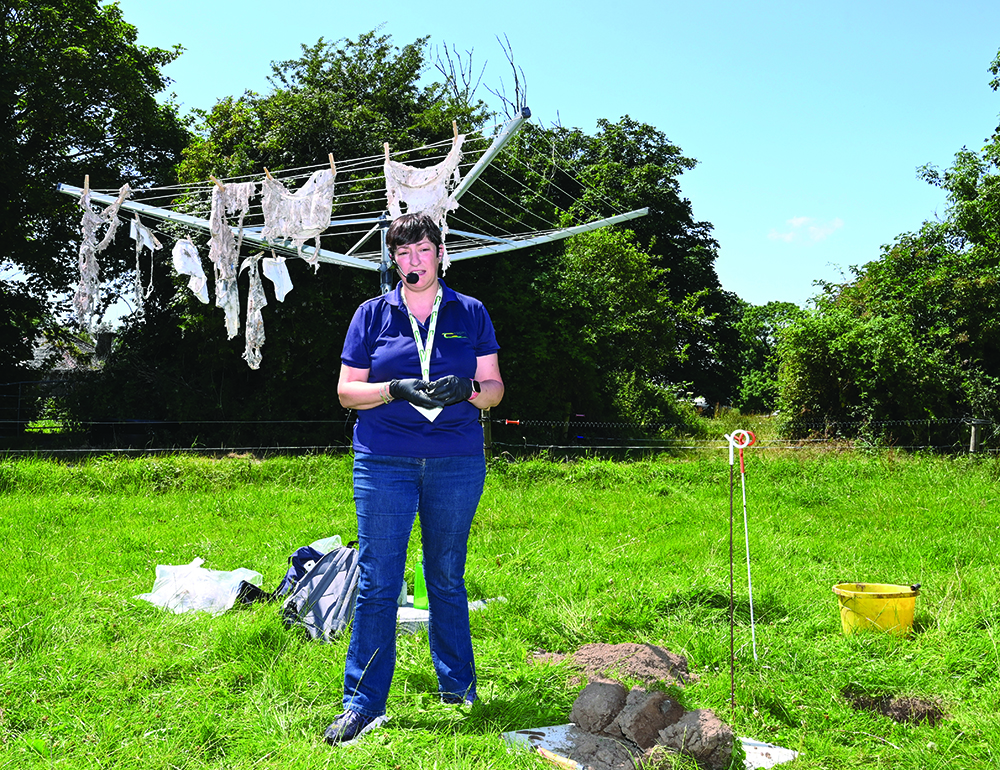
Veronica: Some powerful soil-health assessments are surprisingly simple. Digging a spade into the soil can tell you a huge amount about soil structure, roots, earthworms and biological activity. We combine traditional testing with digital tools and national datasets to get more value from this information.
Fiona: Molecular and sequencing techniques let us examine soil microbial communities in detail. We also use microscopy, enzymatic assays and isotopic techniques to study organisms, soil function and nutrient flows, while spectroscopy measures chemical and physical properties.
Karla: My research combines fieldwork with molecular and biochemical techniques. DNA-based methods identify microorganisms and genes involved in carbon, nitrogen and phosphorus cycling. Enzyme assays, alongside soil chemical and physical analyses, show how actively these microbial communities are functioning. Together, these methods move us beyond traditional fertility testing towards understanding soil as a living ecosystem and how management influences the biological processes supporting productive agriculture.
What specific projects are you currently working on?
Luis: One of the latest things we are developing is a soil type database to help researchers with soil experiments, and we’re also exploring ways to extract more from the data we capture with drones.
Fiona: We assess how practices such as fertilisation, crop diversity and pH management affect soil functions and biological communities. We are also developing indicators and tools to assess soil health and responses to climatic stress.
Karla: The EuroGrass project investigates how agricultural grassland management intensity affects the soil microbiome’s ability to cycle carbon, nitrogen and phosphorus. It combines European-scale field surveys with targeted experiments to identify microbial mechanisms that support sustainable grassland management and more environmentally resilient agricultural systems.
Veronica: Work across the team ranges from reducing emissions and developing recycled fertilisers to improving lime and phosphorus advice and creating practical soil-health indicators. My projects include the Soil Fertility Dashboard and SoilCycle, where farmers are helping shape practical technologies to improve nutrient recycling and make better use of organic manures.
Can you explain the importance of your work in an agricultural context?
Fiona: We like to put it as: “Soil health is our wealth.” Every blade of grass, drop of milk and ear of corn originates in the soil, making it one of a farm’s most vital resources. Safeguarding it is central to more sustainable farming systems that can better withstand climatic and other stresses.
Veronica: Everything starts with the soil. Healthy soils produce better crops and grass, use nutrients efficiently, cope with difficult weather, protect water quality, enhance biodiversity and reduce gaseous emissions. With rising input costs and increasing environmental pressures, helping farmers manage soils sustainably has never been more important. No two soils are the same, however; every field tells a different story.
Karla: Soils are also living ecosystems. Understanding how different grassland management affects microbial communities and nutrient cycling can help farmers improve soil health, meet environmental targets and build resilience without compromising productivity.
What results have you seen?
Fiona: Our research informs soil practical decisions, including when and how to apply slurry and fertiliser, which crops or plant species to sow and how to manage machinery traffic. We have also seen greater uptake of on-farm soil assessment methods.
Luis: Our evidence and recommendations supported European discussions on monitoring soil health, which ultimately informed an EU soil directive. Advisers and outreach activities also show growing farmer interest in practical soil-health measures.
Veronica: Soil fertility has improved over recent years, particularly in soil pH and phosphorus levels. The GroundTruth project has also shown how engaged farmers and the wider public become when practical soil-health assessments are accessible.
Karla: We found that grassland management affects microbial carbon, nitrogen and phosphorus cycling, while activity follows a seasonal pattern and peaks during the main growing season. This evidence can support more sustainable grassland management.
How does Teagasc benefit from your work?
Veronica: One of the team’s strengths is connecting research with practice while allowing on-farm experience to shape research. We work with researchers, advisors, industry and policymakers to turn new knowledge into practical advice, training and tools, helping Teagasc provide consistent, evidence-based guidance.
Luis: We also provide technical expertise and improved methods for analysing soil organic carbon, root biomass, texture, and the stability of carbon and nitrogen. These give Teagasc researchers a more accurate picture of soil health. As the saying goes: “You can’t manage what you can’t measure.”
Karla: Through farmer events, schools and public engagement, we help more people understand soil as a living resource and why it must be protected for future generations.
Are there any upcoming trends that will affect your work?
Veronica: Digital technologies will increasingly support field-specific nutrient management. We expect greater use of soil-health indicators and real-time sensing, combining traditional science with new tools to give farmers better information for decision-making.
Fiona: Climate‑related threats will become more prominent. The Soil Monitoring and Resilience Directive will also increase emphasis on assessing and monitoring the national soil resource, while we continue examining how to support farming systems and reduce nutrient losses to air and water.
Luis: Spectroscopy, AI, drones and citizen science are increasing the speed and scale of data collection compared with standard laboratory methods. Each approach has its strengths; the task is to combine them effectively.
Karla: The biological side of soil health will receive greater attention as molecular techniques become more accessible and affordable. Climate change will also increase interest in how soil biology responds to drought and extreme weather, and how soils can support adaptation.
What are you proudest of as a member of the team?
Fiona: The ‘Farming for Soil Health’ handbook distils the best available research into practical advice, while our education resources help teachers, advisors, farmers and the public understand soil and soil assessment.
Veronica: The Soil Fertility Dashboard, which makes decades of national data accessible, and the GroundTruth project, which encourages farmers and the public to see soils differently.
Karla: Helping people see soil differently. Sharing our science can be as influential as generating it, and I am proud to contribute to work which benefits farmers, the environment and society.
Luis: The people around me, and the satisfaction of continually contributing and learning alongside such great colleagues.