
Understanding consumer preferences for apples in Ireland
A nationwide survey of 900 people has revealed what consumers value most when buying apples in Ireland, providing valuable insights to guide future research and support the Irish apple industry.
As interest in expanding apple production in Ireland continues to grow, selecting the right varieties for new orchards has become increasingly important. Growers must consider factors such as yield, disease resistance and orchard performance, but long-term success also depends on producing apples that consumers want to buy and enjoy eating. Understanding consumer preferences can help ensure that new plantings are aligned with market demand and support the sustainable growth of the Irish apple industry.
To help address this, Teagasc, in collaboration with Atlantic Technological University, conducted a nationwide survey of almost 900 people living in Ireland to explore apple purchasing habits, consumption patterns and the characteristics consumers value most when choosing apples. The results offer meaningful evidence for growers, retailers and researchers, helping guide future variety selection, orchard development and consumer-focused research.
An everyday choice
The survey confirmed that apples continue to play an important role in Irish diets, says Alberto Ramos Luz, Fruit Research Officer at Teagasc Oak Park.
“More than 90% of respondents reported eating fresh fruit every day or several times a week, and apples were among the fruits they consumed regularly.”
Around 94% of respondents said they usually purchased apples from supermarkets, while farm shops and farmers’ markets represented only a small proportion of purchases, with most consumers typically spending between €2 and €3 per shopping trip.
“These findings suggest that apples remain an affordable, everyday food rather than an occasional purchase, making consumer preferences especially relevant to growers and retailers,” notes Alberto.
Quality or cost?
Consumers were asked to select the three factors that most influence their purchasing decisions. Two attributes clearly stood above the rest: freshness and taste.
More than 60% of respondents selected freshness among their top priorities, closely followed by taste. Colour, price and variety were also important, while brand ranked much lower than expected.
“This suggests that consumers are primarily looking for apples that deliver a good eating experience rather than simply the cheapest,” says Jean do Prado, Teagasc Walsh Scholar at Teagasc Oak Park.
“For growers, maintaining fruit quality from harvest through to the supermarket shelf may be just as important as selecting the right varieties for new orchards.”
Apple of your eye
Visual appearance plays an important role when consumers choose apples, but the survey revealed that some characteristics matter more than others.
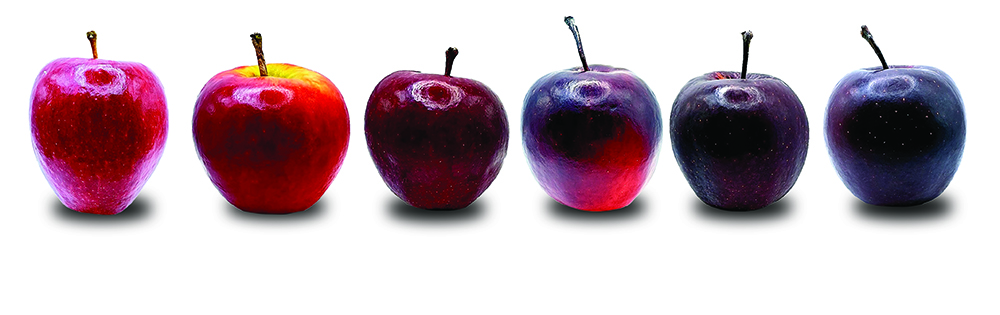
Pink Lady was the most popular variety among respondents, while medium-sized apples were clearly preferred over very small or very large fruit. Most consumers favoured apples with a high proportion of red skin, but our survey also showed that not all shades of red are equally appealing. Bright, vibrant red colours received consistently higher preference scores than darker, deeper red tones.
“Interestingly, consumers showed little overall preference between striped and solid-red apples, suggesting that the intensity and brightness of the colour may be more important than the pattern itself,” adds Jean.
These results can help growers and the wider industry identify the varieties and fruit characteristics most likely to appeal to Irish consumers.
The survey also revealed encouraging support for locally produced fruit. Just over half of respondents said they actively preferred apples grown in Ireland, while almost all of the remaining consumers had no strong preference. Very few specifically preferred imported apples.
“This represents an important opportunity for the Irish apple industry,” says Alberto.
“As local production expands, growers who can combine excellent eating quality with reliable fruit appearance may be well positioned to meet consumer expectations.”
From buying habits to eating experience
This survey represents the first stage of a wider consumer research project. Understanding how people choose apples is only part of the story. While visual appearance strongly influences the decision to pick up an apple, it does not necessarily determine how much consumers enjoy eating it, Alberto continues.
“The next phase of the project will therefore focus on what happens after the purchase: the eating experience. Consumers will be invited to taste a range of apple cultivars currently being evaluated in Teagasc research orchards and assess characteristics such as sweetness, acidity, crispness, juiciness, texture, flavour and overall liking.”
This will allow researchers to determine whether first impressions based on appearance are confirmed, or even changed, once consumers taste the fruit.
Consumer feedback will be combined with objective measurements of fruit quality, including firmness, sugar content, colour, size and external defects, as well as detailed sensory profiles generated by trained assessors.
Together, these complementary approaches provide a comprehensive understanding of the characteristics that influence consumer acceptance, concludes Alberto. By combining purchasing behaviour, sensory evaluation and fruit quality measurements, researchers will gain a more complete understanding of what consumers value – from the supermarket shelf to the first bite.
“These insights will help guide variety selection for new orchards, support the continued development of the Irish apple industry, and ensure that future plantings combine strong orchard performance with the eating quality consumers expect.”
Funding
Teagasc Core Funding
Contributors
Jean do Prado, Teagasc Walsh Scholar (Smart Apples Project), Horticulture Development Department, Teagasc Oak Park/Atlantic Technological University, Galway.
Francesco Noci, Lecturer and Researcher, Atlantic Technological University, Galway.
Alberto Ramos Luz, Fruit Research Officer, Horticulture Development Department, Teagasc Oak Park.
Correspondence: alberto.ramosluz[at]teagasc.ie