Walsh Scholars of the Year and Gold Medal Awards 2025
Gold Medal Award Winner & Animal and Grassland Research and Innovation Programme (AGRIP) Winner
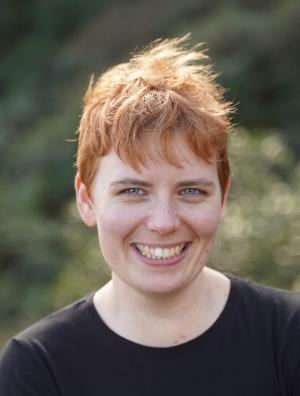
Luca Van Vijk - Investigations into the health and welfare aspects of intra-community trade of Irish dairy calves
Almost 200 thousand young calves are exported from Ireland each year. My research focused on the health and welfare of young calves transported from Ireland to The Netherlands. I found that this long journey negatively impacts these calves, and that fasting is more harmful than the journey length itself. The good news? Feeding milk replacer during the ferry journey helps protect their health and improves their welfare during transport.
Department: Animal and Bioscience
Teagasc Supervisor: Muireann Conneely
- View
Finalists from the Animal and Grassland Research and Innovation Programme (AGRIP)

Sofia Tisocco - Assessment and optimization of co-digestion of grass silage and animal slurry
Pasture-based livestock systems provide valuable feedstocks for anaerobic digestion (AD), but knowledge gaps hinder wider adoption. My research assessed how to sustainably and economically integrate AD into farming, using mechanistic and machine learning models to predict biogas yields from cattle slurry and grass silage. Findings support informed decisions, boost the economic case for biomethane, and advance sustainable AD use in Irish agriculture.
Department: Livestock Systems
Teagasc Supervisor: Paul Crosson
- View
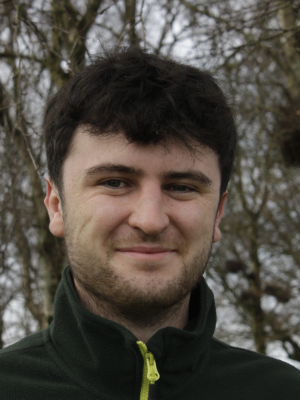
Charles Dwan - Determining strategies to reduce methane emissions in dairy cows
Irish agriculture must cut greenhouse gas (GHG) emissions by 25% by 2030, with 65% coming from livestock methane. My research explores what drives enteric methane emissions in Ireland’s grass-based dairy systems, focusing on pasture types and animal traits. The goal is to deepen understanding of methane production and uncover effective strategies to reduce emissions sustainably.
Department: Livestock Systems
Teagasc Supervisor: Laurence Shalloo
- View
Crops, Environment, & Land Use Programme Award Winner

Rajas Shinde - Enhancing the alternative use and circularity potential of crops (EXPECT)
Ireland’s abundant grass supply presents a chance to boost farm incomes and cut emissions. My project developed a grass-based anaerobic digestion biorefinery to produce bioenergy and valuable bioproducts. Lab trials and modelling assessed its economic potential and policy needs. Working with farmers and bioeconomy experts, we’re co-designing a framework to advance climate-friendly, economically strong biorefineries in Irish agriculture.
Department: Crop Science
Teagasc Supervisor: Susanne Barth
- View
Finalists from the Crops, Environment and Land Use Programme (CELUP)
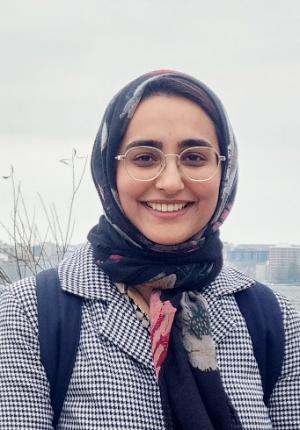
Fatima Latif Azam - Common scab disease resistance in Potato, towards resistant varieties
Most potato varieties are vulnerable to common scab, a skin blemish that reduces crop quality. Breeding resistant varieties has been difficult. My project combined phenotypic, marker-based, and genomic selection methods to identify resistant types. Genome-wide studies revealed that resistance is controlled by many small-effect genes, underscoring the need for genomic selection, as traditional marker-assisted methods alone may be insufficient.
Department: Crop Science
Teagasc Supervisor: Denis Griffin
- View
Virgile Ballandras - RapID-Pest
The European Green Deal aims to halve pesticide use by 2030. Achieving this requires effective Integrated Pest Management (IPM), which depends on fast, accurate pest monitoring. Currently, this relies on taxonomic expertise, the skill of identifying species by their physical traits, which is becoming rare. My project uses genomic sequencing to develop DNA-based tools, making pest monitoring faster, more accurate, and scalable.
Department: Crop Science
Teagasc Supervisor: Stephen Byrne
- View
Food Programme Award Winner
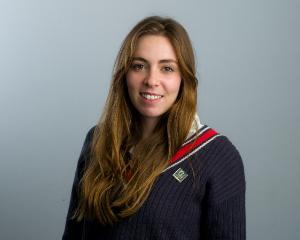
Mariana Macas - Application of novel technologies to elucidate new structural and shelf-life information in high protein bakery products (HighPBreads)
Irish-grown peas are underused in food, despite their nutritional and environmental advantages. My project explored their use in innovative bakery products. I optimized the pea milling process and used advanced techniques to assess bread quality and digestibility. The results showed improved nutrition, taste, and functionality in bread containing pea flour. This research supports healthier diets and climate-smart food innovation using sustainable, local ingredients.
Department: Food Quality and Sensory Science
Teagasc Supervisor: Eimear Gallagher
- View
Finalists from the Food Programme

Francesca Bietto - InfBar: Infant Intestinal Barrier
The infant gut is highly permeable, playing a key role in nutrient uptake and immune development. Over time, this barrier must close to prevent infection and inflammation- a process driven by breast milk. Current formulas fall short, putting infants at risk. I developed the first in vitro infant gut model, showing how formulas influence gut development and paving the way for next-generation infant nutrition.
Department: Food Bioscience
Teagasc Supervisor: Linda Giblin
- View

Animseh Singh Sengar - Driving Dietary Shifts to Plant Proteins from Irish Crops through the Development of Novel Extruded Meat Product Alternatives
My project investigates how Irish-grown pulses can replicate meat’s nutrition and texture using extrusion technology – a process that cooks and shapes proteins under heat and pressure. I analysed eight faba bean and four pea varieties grown in Ireland’s temperate maritime climate to optimize protein concentrate and isolate production. These plant proteins support sustainable, local meat alternatives and help reduce reliance on imported ingredients.
Department: Food Quality & Sensory Science
Teagasc Supervisor: Carlos Alvarez Garcia
- View
Rural Economy and Development Programme – Award Winner
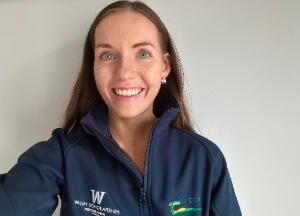
Holly Mullan - ‘Older’ potential farm successors in Ireland: An exploratory study
This research tackles low generational renewal on cattle and sheep farms across Ireland by focusing on farmers aged 35 and over, an often-overlooked group. Using in-depth interviews and the Person-Environment Fit framework, which explores how personal goals align with work and life settings, it shows off-farm lives and commitments strongly influence succession. The findings offer insights missed by traditional surveys, revealing deeper dynamics in farm succession.
Department: Agricultural Economics and Farm Surveys
Teagasc Supervisor: Emma Dillon
- View
Finalists from the Rural Economy and Development Programme

Carlos Cruz - Modelling farm level gaseous emissions at higher resolution
My research aims to reduce nitrous oxide (N₂O) emissions from Irish agriculture while supporting economic sustainability. It refines emission estimates, evaluates cost-effective solutions, and analyses their impact using Teagasc National Farm Survey (NFS) data. Findings show Intergovernmental Panel on Climate Change (IPCC) methods overestimate farm-level emissions. A regional Marginal Abatement Cost Curve (MACC) – which ranks actions by cost and effectiveness – helps guide practical, region-specific climate policies.
Department: Agricultural Economics and Farm Surveys
Teagasc Supervisor: Cathal Buckley
- View
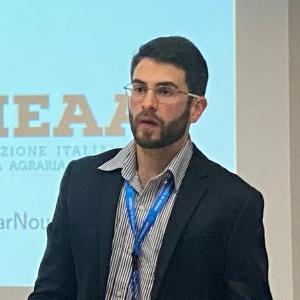
Felipe Aguiar Noury - Exploring farmers’ adoption of greenhouse gas mitigation measures that reduce chemical fertiliser application
Chemical fertilisers are a major concern, they emit ammonia and nitrous oxide, degrade soil, and pollute water. My research focuses on transitioning to sustainable alternatives like grass-clover and multi-species swards. By surveying over 700 Irish farmers, I identified key factors driving adoption and outlined practical pathways and policy recommendations to support a shift toward more sustainable fertilisation practices in agriculture.
Department: Agricultural Economics and Farm Surveys
Teagasc Supervisor: Cathal Buckley
- View
