

Media
- Upcoming farming walk: Friday 4th September at 6pm
- See topics below
- Watch video where James outlines the event
James is hosting a national farm walk on 4th September 2026 at 6pm. Attendees will get the opportunity to learn about the farm financials, the suckler herd, details of bulls used, grazing infrastructure & soil fertility, this year’s breeding heifers, red clover, herd health and participate in a live finishing demonstration. They will also have the opportunity to chat with beef industry staff on the night to discuss rations, feed ingredients, herd health, breeding decision and water quality actions for their own farms.
You can watch a video update from James as he discusses the breeding season, feed update and details of his upcoming walk here: https://youtube.com/shorts/njZZyrTwOEY
James has been using a synchronisation protocol for breeding the last few years for both cows and heifers. This year’s calving season started the first week of February and finished the first week of April. To facilitate this tight calving spread James opted to synchronise both cows and heifers for this year’s breeding season.
The cow’s synchronisation plan cost €30 per cow and the heifers plan cost €33 each per heifer. 8 out of the 9 heifers kept to the first round of AI and 15 out of 25 cows kept to the first round of AI. The Limousin stock bull picked up the repeats in the cows and the heifer that repeated was AI’d a second time.
Heifers were inseminated to an easy calving AI Angus sires – James places a huge emphasis on getting these heifers in calf and getting them calved down at 24 months. Cows are bred to AI Limousin, Charolais, Simmental and Aubrac bulls. James will scan everything in August to confirm how the breeding season went. Two cows were marked for culling, so they were not bred.
AI Bulls used in 2026:
| Angus | AA4089 AA9607 |
| Limousin | LM6172 LM3713 |
| Charolais | CH5980 |
| Simmental | SI8520 |
| Aubrac | AU1515 |
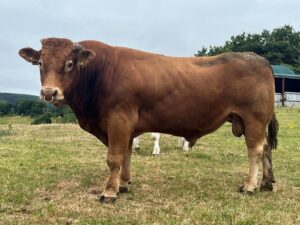
Figure 2. Limousin Stock Bull
The in calf and on a grass diet only on one of the out farms. The 2026 calves are still suckling their dams – creep feeding will begin with these calves in August. The 2025 born steers are grazing separately on the same out farm as the in-calf heifers, and these were weighed recently. The group of steers weighed on average 492 kg’s. They received an oral dose of Levacide low volume worm drench – this is the first worm drench they have received in this year’s grazing season.
In 2025 James opted to sell his steers live in September, given the exceptional good live trade at the time. Traditionally steers would be finished off the farm at 22-24 months old. This year James has begun feeding some of the 2025 born steers with the aim to increase liveweight gain while grass quality begins to naturally decline.
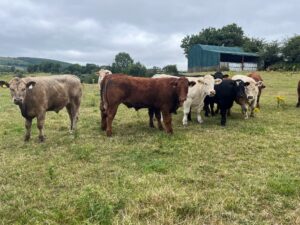
Figure 3 The 2025 born steers averaged 492kg on 22nd July 2026
Steers that weighed 450 kg’s or higher when weighed on the 22nd of July were separated from the lighter steers in the group. They are now being fed 2 kg’s daily of a high maize finishing ration, and this will be increased to 3 kg’s for the month of August. The steers will remain at grass and follow the rotation while being offered concentrates daily. In September James will decide whether to house these cattle and finishing them or choose to sell them live in the local mart, similar to last year. At the farm walk on September 4th these steers will be on display, where they will be reweighed on a live demo and assessed to see how much liveweight they have put on. A discussion will be facilitated with attendees on the evening on the best option for this group of steers.
Steers that were less than 450 kg’s will be on a grass only diet until housing in October – James intends to finish these out of the shed early in 2027.