Breeding
- Herd update after 8 weeks
- Issues with slow cycling cows and heifers
- Iodine was being over-supplied and has now been adjusted
Michael has 8 heifers and 21 cows bred so far this spring, amounting to 29 in total. Breeding started on 16th April and has run for just under 8 weeks at the time of writing. So far 14 of these have repeated once and a further 3 cows repeated twice.
So far 8 females are over 27 days bred without repeating, and 6 more are 24 days bred so Michael is hoping that they won’t repeat. It has been a tough breeding season with cows slow to come cycling and then so many subsequent repeats. Only 4 heifers and 4 calved cows have been bred from natural heats, all others were synchronised. The final 7 animals were scanned on 29th May. One heifer was not mature enough yet at 360 kg to be cycling and 6 were synchronised that day and are due to be bred.
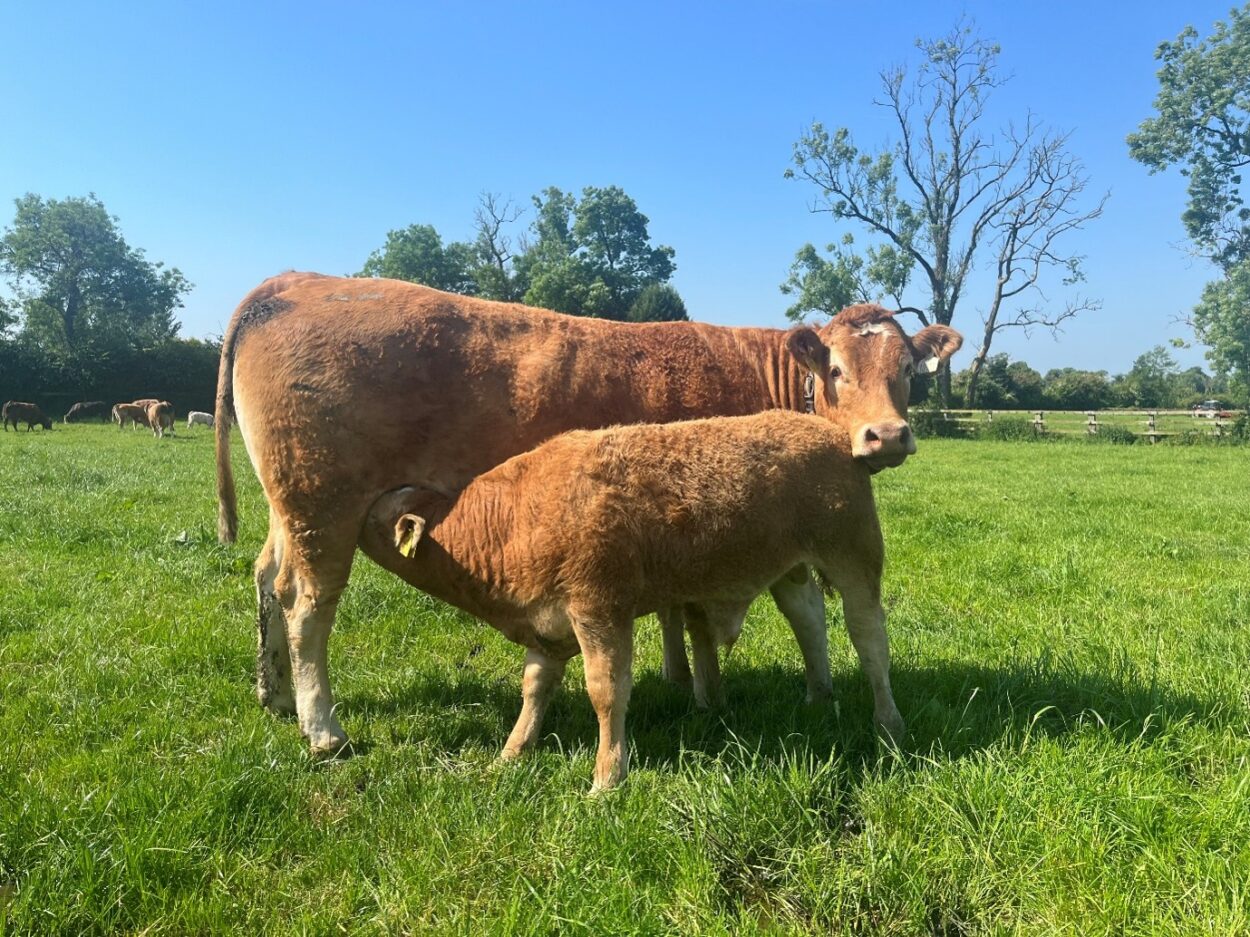
Figure 1: First calver #173 has been served twice to CH5980. Pictured with her SI4657 bull calf
After identifying an iodine deficiency in the herd last year, Michael had been adding an iodine supplement to the water to boost intakes. However when he blood tested them on 14th May the results showed elevated levels that were up to 13 times higher than the normal range. This was likely affecting their thyroid function, which would subsequently affect heats and fertility, so he stopped using it immediately. Instead he has opted for an iodine tablet that dissolves in the water and is added at a rate of 1 tablet/cow/week. It’s estimated that this will provide 60mg per cow per day, which is much less than the previous supplement and should stabilise levels in the animals. Research carried out by Philip Rogers (1999) recommended adding these tablets to the water daily rather than weekly to ensure regular and even intake of dissolved iodine by cattle. Michael plans to take further blood tests from the breeding stock in June to re-examine the iodine levels.
It is also evident from grass samples and soil samples on the farm that molybdenum and iron are high which could be causing a copper lock up issue. Michael has a lot of data gathered on the farm and with the help of his vet, advisors and experts in cattle reproduction and nutrition he fully intends on developing a mineral supplementation plan that will solve this issue for the coming years.
Michael reseeded the fields where the weanlings were grazing the catch crop over winter. He subsoiled, rotovated and then land levelled them. They were then sown with the grass tine harrow, stones were picked and the fields were rolled. Two bags of 18-6-12 were spread to help with germination. The fields will be monitored for weeds over the coming weeks and a clover-safe post-emergence spray will be applied before they become too strong.
A further 2 paddocks were oversown with 2kg of Aberswan white clover per acre, also using the grass tine harrow. For the next 2 to 3 grazings, Michael will graze them at covers of 800 to 1000kg DM/ha to help establishment by letting light down to the seed. Aberswan is a medium leaved clover and Michael expects that it will reduce his nitrogen use in these paddocks and improve animal performance through grazing.
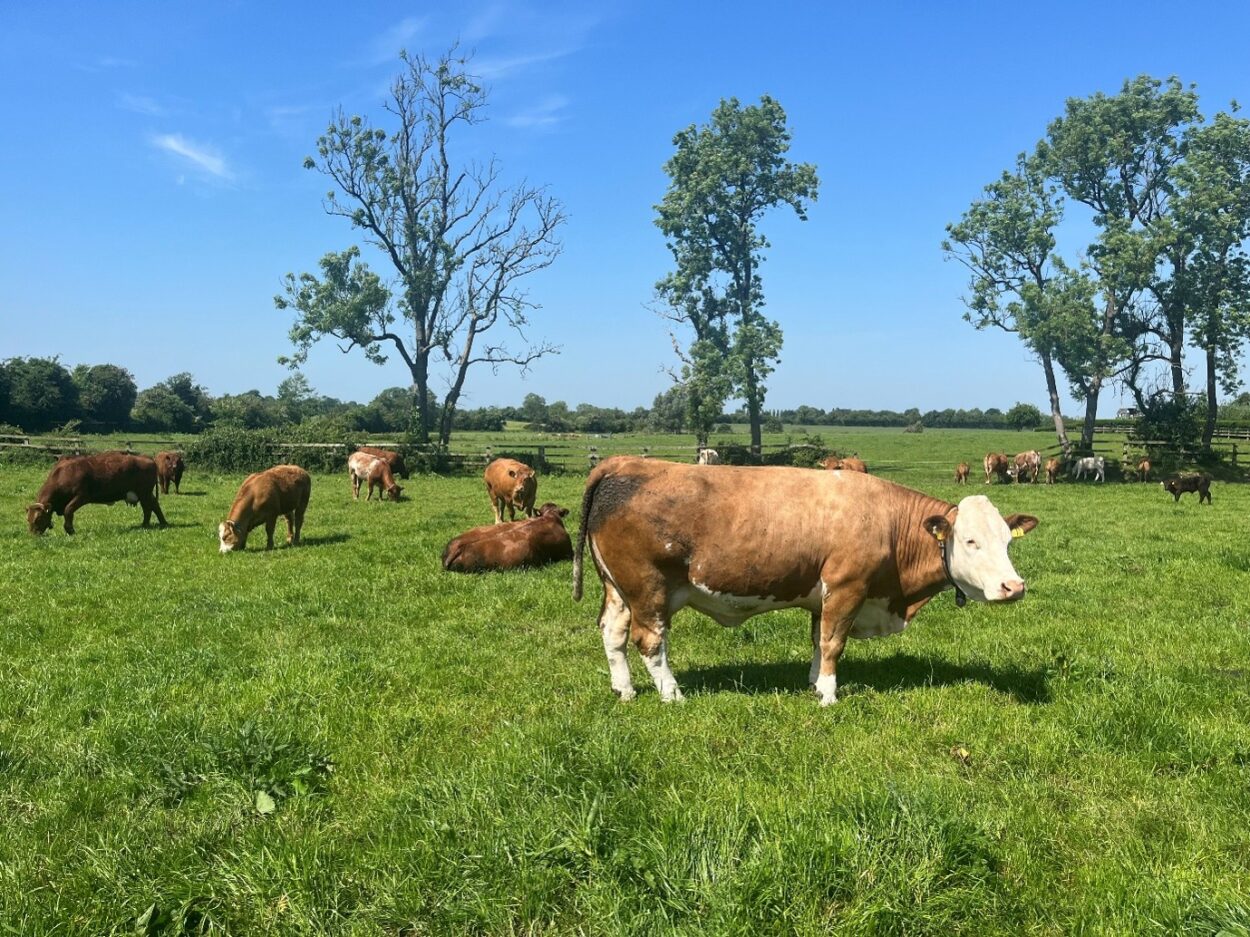
Figure 2: Cows and calves grazing
Michael measured grass on 7th June and the rain has brought a huge jump in growth of 99 kg DM/ha/day since 2nd June. 34 units/acre of protected urea was spread on some grazing paddocks in May which has really helped with the boost. With demand at 58 kg DM/ha/day, a farm cover of 731 kg DM/ha and 13 days of grass ahead, he is right on target and does not need to worry about taking out surplus paddocks yet.
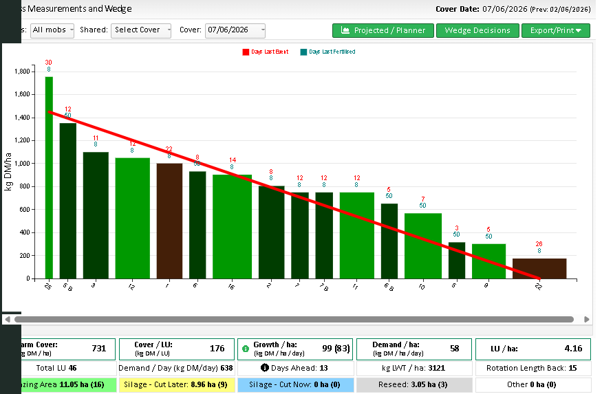
Figure 3: Grass wedge on 7th June 2026
Michael volunteered to have a Greenfeed machine on his farm with ICBF which will record the methane levels of the herd. The project is aiming to capture data on suckler farms that are predominantly using AI, have animals genotyped, and ideally cows that are AI bred for a 28 day test period.
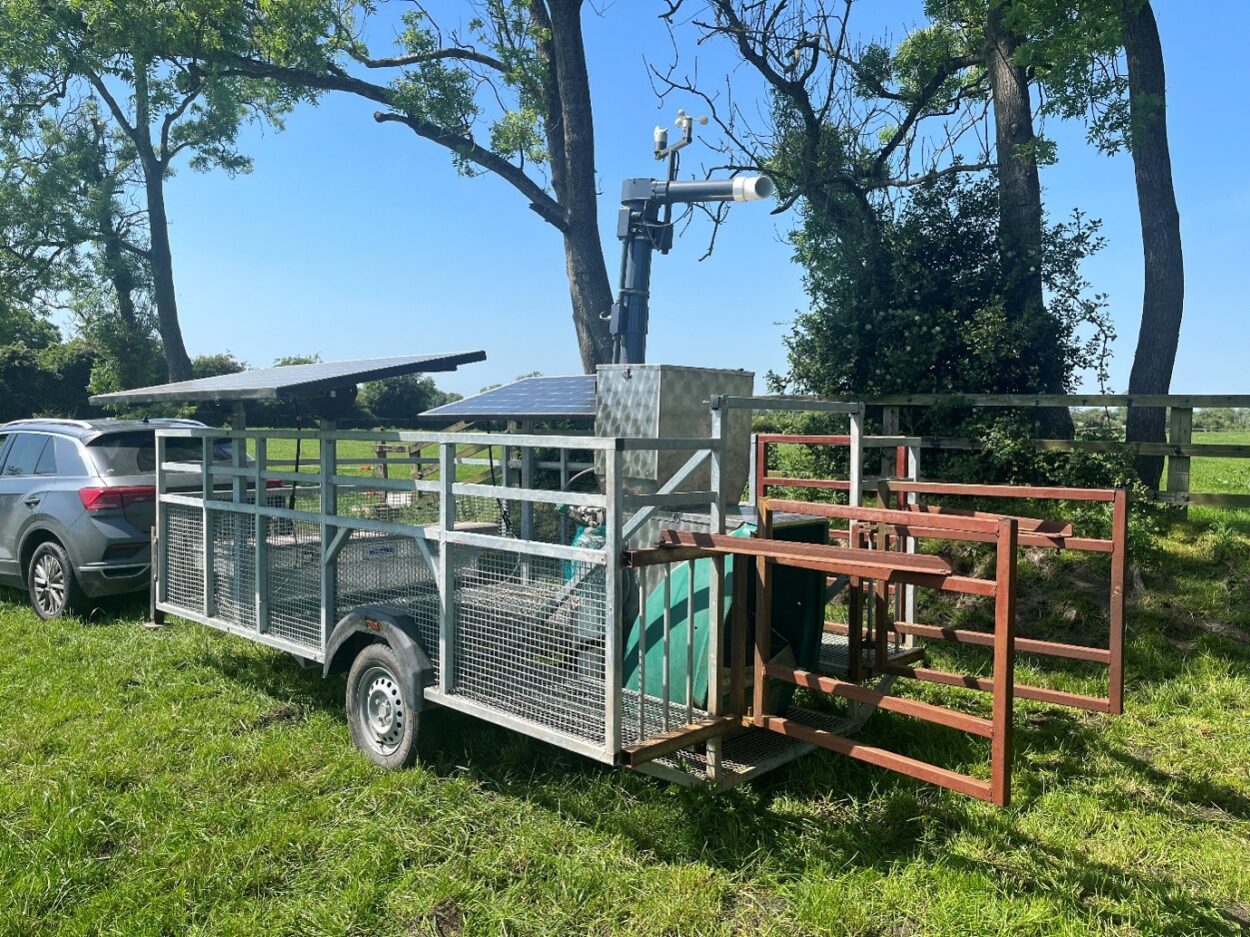
Figure 4: Greenfeed machine on Michael’s farm
The machine drops 30g of ration every 30 seconds with a max. of 6 drops per feeding time. This encourages cattle to enter the feed area and remain there while the expel 3 ‘burps’ so that the methane can be measured. There is a maximum of 6 feeding periods per day per animal and they are tracked through their EID tags. There must be 4 hours between the feeding periods so the machine will not drop meal to the cattle during that time. A general beef nut is used and while the GreenFeed will have the ability to provide up to a maximum of 1080g/hd/day/animal, herds average 400-500g/day/animal. Cattle that are on the Greenfeed will be weighed and linear scored.
The machine is battery operated through a solar panel which is all fixed to a trailer than Michael will move from field to field with the herd.