Breeding
- Calving report analysis
- Breeding season has started
- All cows are being synchronised, heifers being bred with Limousin bull
Michael and Niall have been analysing the ICBF beef calving report for 2026. Their calving season started on 2nd February and finished on 14th April, lasting 10 weeks in total. 67 cows calved, although 69 were scanned in calf. Two of them slipped embryos and one has been sold, while the other will be sold during the summer when she gains more weight.
The calving interval for the herd was 363 days which is ahead of the target 365 days, and well ahead of the national average of 400 days. Aside from the two cows that lost embryos, there was no mortality in the calves that were born. This has resulted in a calves per cow per year figure of 0.99, again well ahead of the national average at 0.85. Some older heifers were kept and bought in for breeding last year so 14% of the heifers calved at 22 to 26 months of age.
This year’s calving season was extremely compact with 81% of the herd calving in the first 6 weeks, and this can be seen in the uniformity of the calves now. 72% of calves were born from AI, with 3 from the hired in stock bull and the remaining 16 from the Charolais stock bull who has been since sold.
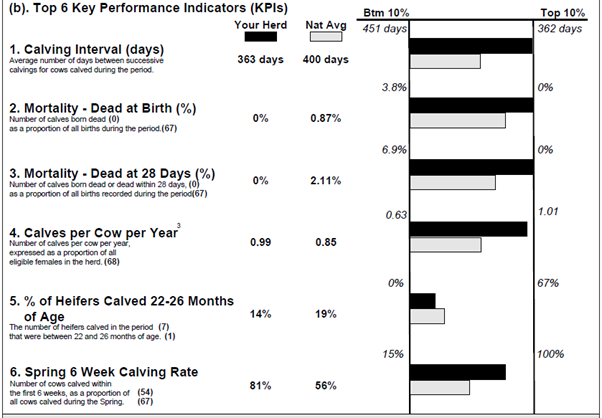
Figure 1: ICBF beef calving report 2026
The main issue that Michael and Niall had this year was from 2 second calver cows that dried up and did not have any milk for their calves. The cows hadn’t this issue with their other calves but a dairy cow was bought in and is now rearing the 2 calves. The cows will be culled later in the year and are currently being fed ration at grass.
The new Limousin stock bull was fertility tested pre-breeding and is running with the 28 breeding heifers.
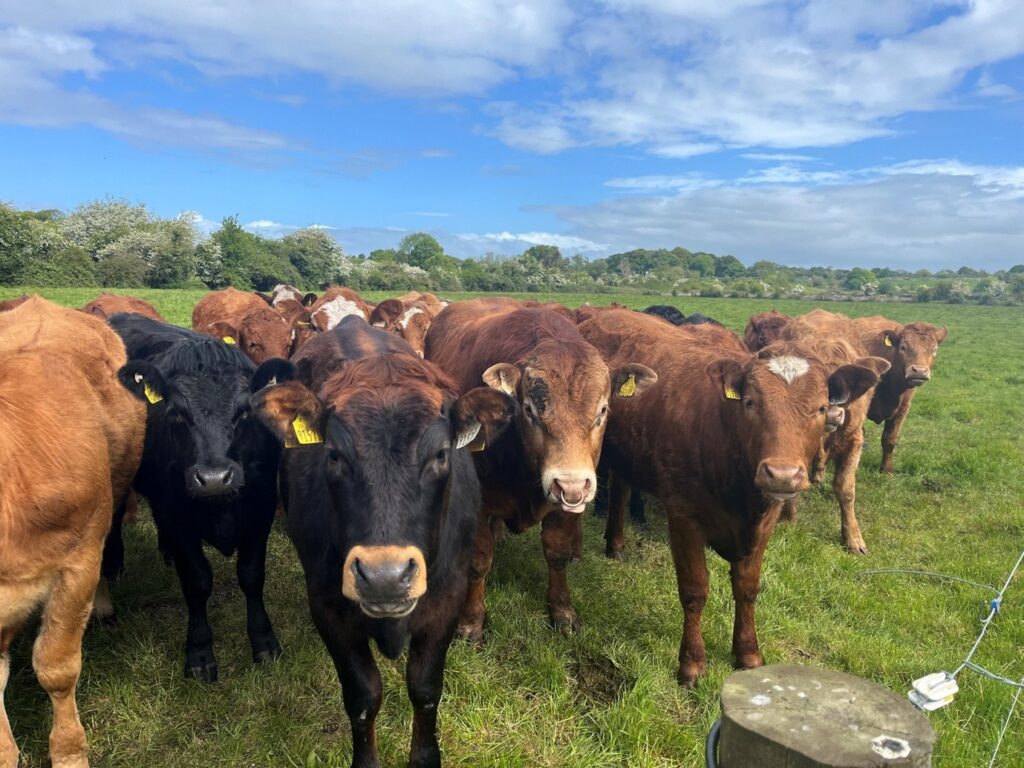
Figure 2: Limousin stock bull with the breeding heifers
53 cows were synchronised on 24th April and were AI’d on 4th May. The following AI bulls were used:
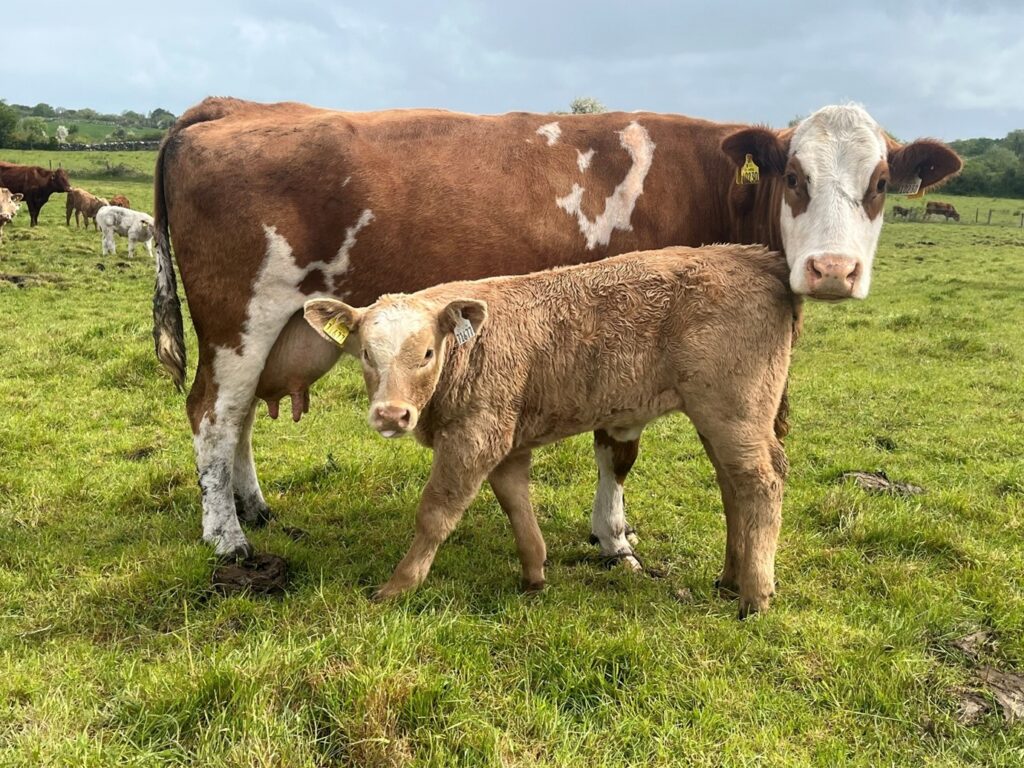
Figure 3: Cow 230 has been AI’d to CH6493. Pictured with her Charolais calf from the stock bull, born 7th March 2026
The 7 later calving cows will be synchronised and AI’d on 25th May to the bulls above as they will be over 35 days calved by then. Michael and Niall also have it timed as the repeats from the first group will also be due around then and this will leave it easier for heat detection.
Six cull cows will not be bred; the 2 dried up cows, one that lost an embryo and 3 based on temperament.
The calves have been given Dicoxan as a preventative against coccidiosis.
The 2 cows on the outblock were given a preventative against redwater disease from ticks. Redwater disease, also known as babesiosis, is a serious tick-borne disease affecting cattle in Ireland. It is caused by a blood parasite called Babesia divergens, which is spread through the bite of infected ticks. The disease is most common on rough grazing land, under-grazed pasture, and areas with heavy scrub or hedgerows.
The disease gets its name from one of its main symptoms — red or dark brown urine caused by the destruction of red blood cells. Redwater can develop quickly and may lead to death if treatment is delayed.
High-risk periods are in late spring, early summer, and autumn when tick activity is highest. Common signs include:
In severe cases, cattle may collapse and die within a short period. Pregnant cows may also abort.
It can be prevented by:
Ticks thrive in rough, damp areas with heavy vegetation. Good grassland management is very important.
Preventive measures include:
Well-managed grazing reduces the habitat where ticks survive.
Pour-on or topical tick treatments can help protect cattle from bites. These products reduce tick numbers but usually only work for a limited time, so repeat treatment may be necessary during the grazing season.
Michael and Niall have treated their cows with Bayticol which has to be re-administered every 14 days but only has a 5 day withdrawal period.
The red clover silage was cut on 5th May and baled on 7th May. There were only 20 bales but Michael was keen to clean it off early as it was not grazed at the end of 2025. It has since received 2500 gallons of slurry per acre and the aim is to cut it again in 6 to 8 weeks.
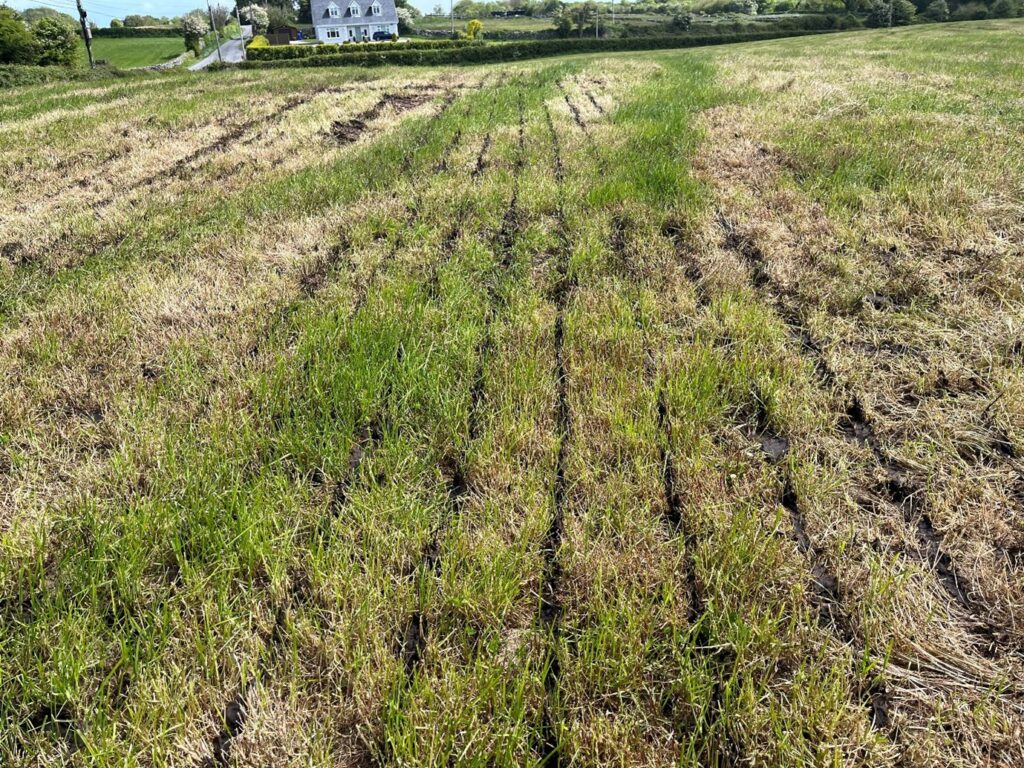
Figure 4: Red clover silage has been cut and field was spread with slurry for second cut
The grass silage will be cut at the end of May. Grass growth has been slow on the farm this spring with the cold and wet weather so Michael and Niall are hoping for a balance of yield and quality by then. Another field on the outblock was closed late for silage in early May so that has received 3000 gallons of slurry/acre and was topped up with 60 units of protected urea/acre.
The grazing ground has received 1.5 bags of 18-6-12 per acre to help growth and to build the soil indexes. The grass wedge on 10th May shows a farm cover of 741 kg DM/ha, with 20 days of grass ahead. Demand is currently at 38 kg DM/ha/day.
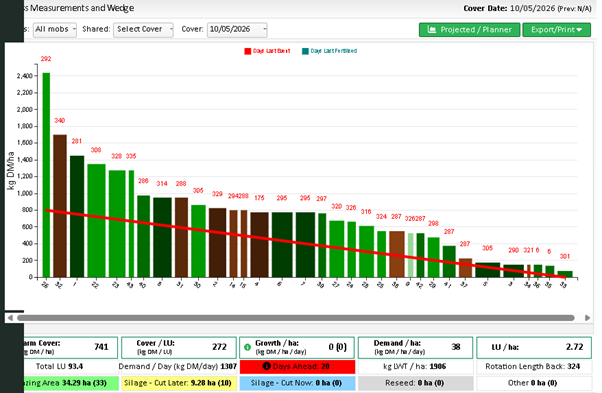
Figure 5: Grass wedge on 10th May 2026