
General Detail
- The 2026 breeding season at Newford Farm concluded on 1 July. Breeding commenced on 20 April, giving a total breeding period of 10 weeks.
- A total of 82 mature cows and 27 maiden heifers were presented for breeding this year.
- 84% of the mature cow herd was artificially inseminated within the first three weeks of the breeding season, while 100% of the herd was inseminated within the first nine weeks.
- The three teaser bulls have now been housed and are currently being finished for beef production.
- All cows and calves are thriving well at grass.
- While the recent good weather is very welcome, it also brings challenges. Heat stress in pregnant cows can increase the risk of embryo loss, so every effort is being made to minimise stress on the herd.
- Grass growth has begun to slow this week. With soil moisture deficits in County Roscommon reaching 55 mm, drought conditions are beginning to emerge on the farm.
- Newford Farm is situated approximately 250 metres above sea level, with limestone rock close to the soil surface. Like many farms, rainfall is now needed to sustain grass growth.
- Grass growth this week averaged 24 kg DM/ha/day, while farm demand was 46 kg DM/ha/day.
- To help maintain grass supplies, silage feeding commenced last week, with silage being offered to cows at grass along the paddock wire.
- The main priority over the coming days is to avoid placing any additional stress on the cows. Adequate forage and water are being provided daily.
- Routine animal handling activities, including weighing, will be avoided where possible until the current heatwave subsides.
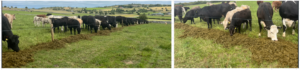
Figure 1 Cows and Calves been fed silage underneath the paddock wire.
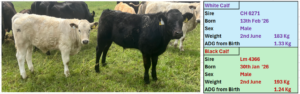
Figure 2 CH Calf and LM Calf weighs
- Calves have not yet received any worm treatment this year. Faecal samples are being taken every three weeks to monitor parasite levels.
- Calves will shortly receive a pneumonia vaccination programme in preparation for weaning in September.
- As part of the Suckler Carbon Efficiency Programme (SCEP), calves will also begin creep feeding in the coming weeks.
Replacement Heifers
- There were 27 replacement heifers presented for breeding this year.
- The heifers were synchronised on 17 April and artificially inseminated on 18 April as part of an 8-day synchronisation programme.
- Pregnancy scanning was carried out on 20 July, and the results are outlined in the table below.
- Any heifers found not in calf will be drafted for finishing alongside the main group of beef animals.
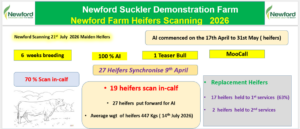
Figure 3 Heifers Scanning Information 2026
Grassland
- Grazing utilisation remains excellent, with all paddocks being grazed out effectively.
- The farm cover this week is 904 kg DM/ha, with grass growth at 24 kg DM/ha/day and demand at 46 kg DM/ha/day.
- No fertiliser has been applied since 27 June. As the farm approaches August and given the current dry conditions, only one further round of fertiliser application is likely this season.
- The inclusion of white clover in paddocks is proving particularly beneficial. Although growth rates in these paddocks have slowed, they continue to perform well without additional fertiliser, providing valuable flexibility during the current dry spell.
- The farm plans to cut its second-cut silage on Neilan’s Farm early this week. While yields are expected to be light, this silage will be reserved for weanlings and freshly calved cows.