Our Organisation Search Quick Links
Toggle: Topics

Current Grassland Management

Current Dry Matter Levels (%)

Athenry
23%

Moorepark
28%

Oakpark
29%

Grange
22%

Johnstown
26%

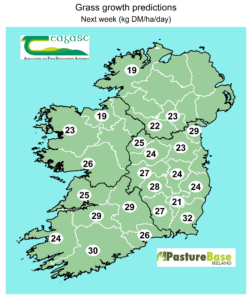
Grass Growth Predictions

Grass growth predictions for each county in Ireland
  • MoSt Grass Growth Predictions for each country for 7 days (from 28th July 2026) show average growth in the North and North West predicted with below average growth predicted for the rest of the country
  • There is some predicted rain in the forecast but soil moisture available is still reduced across the country. Growth recovery will be linked to actual rain that falls not forecast rain
  • Current grass growth is below average across the country

Weekly Actions

Walk the farm!

  • Walk the farm to assess grass growth and supply on farm
  • Even where growth is low walking the farm allows you to assess recovery of paddocks and make informed decisions
  • Grass DM are above 20% across the country, avoid underestimating covers
    • Implement strip wire to correctly allocate grass to cows and maximise utilisation
  • Paddocks that are brown to the base and not actively growing should be targeted for grazing
  • Aim to stretch rotation length to 25 days
    • Graze no more than 4% of the farm per day
  • Identify paddocks that are green to the base and are actively growing
    • Mind these paddocks and graze over 1000 kg DM/ha

Reducing demand on farm

  • Buffer feeding – Concentrate and good quality grass silage
  • Bring silage ground (<2,500 kg DM/ha) back into grazing area if accessible
    • Where silage yield is >2,500 kg DM/ha cut as planned
  • Actions to reduce demand on drystock farms
    • Utilise out block
    • Try to finish animals earlier
    • Wean lambs and autumn born calves
  • Actions to reduce demand on dairy farms
    • Remove surplus stock (low yielders, cull cows, non-dairy animals)
    • Move heifers and calves to out block
  • Do a fodder available budget in PBI to assess current feed quantity and
    quality available in yard

Caution with Fertiliser

  • Fertiliser should not be spread when growth drops below 35 kg DM/ha
    • Plants do not uptake fertiliser when growth is reduced and it can be lost
      to the environment
  • After a dry spell there will be mineralisation in the soil after rain falls
    • This will release N to fuel recovery grass growth
  • Fertiliser can be spread 7-10 days after rain when grass is growing 50+kg
    DM/ha consistently
  • Spreading fertiliser earlier is a risk to water quality and is a waste of fertiliser
    • Paddocks actively growing grass (over 50 kg DM/ha) can receive some fertiliser or dairy washings
    • Target paddocks reseeded in the last 3 years, paddocks with optimum soil fertility and paddocks on heavier land
  • If rain is forecast it is important not to pre-spread fertiliser

Water supply

  • Providing adequate water supply to meet herd demand is important to keep
    stock comfortable in warm weather
  • It is particularly important where a higher dry matter diet is being offered to
    the animals
  • Paul Maher discusses the importance of farm water supply on farm, in the video below.

Sign up to the Grass10 Newsletter