Project Team
 Dr. Russell Adams
Project Leader and Co-ordinator based at Teagasc, Johnstown Castle
Russell.adams@teagasc.ie
Water quality modeller with experience in research into hydrology and hydrogeology. His research has also considered the modelling of catchments with karst or mining activities. Currently focused on upscaling nutrient loss and transport models from micro- to meso- scale catchments in Ireland.
 Prof. Owen Fenton
Project Principal Investigator based at Teagasc, Johnstown Castle
Owen.fenton@teagasc.ie
Owen specialises in nitrogen and phosphorus characterisation and mitigation on agricultural landscapes across mineral and peat soils. This work also investigates soil water management with an emphasis on soil hydrology and hydrogeology.
 Dr Wenxuan Shi
Research Officer based at Teagasc, Johnstown Castle
Wenxuan.shi@teagasc.ie
Soil scientist with research interests in nitrogen and phosphorus cycling and management, particularly related to water quality and GHG emissions.
 Dr Patricia Oliveira Antunes
Research Officer based at Teagasc, Oak Park
Patricia.antunes@teagasc.ie
Patricia is a researcher in water quality supporting the Better Farming for Water campaign. She is interested in sustainable agriculture, water pollution (nutrients, sediments and faecal organisms) resulting from agricultural activities, and mitigation of diffuse water pollution from agriculture, including nature-based solutions (NbS).
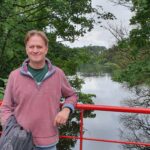
Dr Per-Erik Mellander
Senior Research Officer in Catchment Science, ACP, Teagasc (Johnstown Castle)
PerErik.Mellander@teagasc.ie
Per-Erik has an interest in advancing knowledge in water quality issues under the impacts of agriculture and changing climate. He is the manager and scientific lead of the water quality section of the Agricultural Catchments Programme. His research advances understanding of temporal and spatial nutrient, pesticide, and sediment dynamics to support sustainable environmental management and resilient food production in a changing climate.
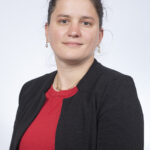 Dr Elodie Ruelle
Senior Research Officer based at Teagasc, Moorepark
Elodie.Ruelle@teagasc.ie
Biologic System Modelling Researcher. Elodie’s research interests are simulating biological system using mechanistic models; predicting grass growth in real time on commercial farms; better understanding of the interaction between soil, grass management, the animals and grass growth; improving N use efficiency and reducing N leaching; precision fertiliser application; predicting animal intake at grazing; and climate adaptation.
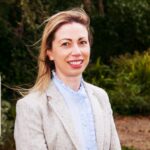
Dr Bridget Lynch
Senior Research Officer, ACP, Teagasc (Johnstown Castle)
Bridget.lynch@teagasc.ie
Bridget leads the agronomic aspects of the Agricultural Catchments Programme and manages the soil science, gaseous emissions, socio economic and mitigation measure assessment teams in the programme.
 Dr Golnaz Ezzati
Research Officer, ACP, Teagasc (Johnstown Castle)
Golnaz.ezzati@teagasc.ie
Catchment scientist/ hydrometeorologist specialising in projecting climate-change induced risks to water quality and nutrient losses. As Hydrochemist Research Officer in the Agricultural Catchments Programme, Golnaz investigates the dynamics of pollutant losses in agricultural catchments driven by anthropogenic activities and weather patterns.
 Dr Réamonn Fealy
Research Officer based at Teagasc, Agrifood Business and Spatial Analysis Department (Ashtown)
Reamonn.fealy@teagasc.ie
Réamonn’s work entails both research and technical development and implementation of spatial analysis. He has responsibility for the strategic management of the infrastructural aspects of GIS work carried out by the Spatial Analysis Unit and for guiding the broader development and application of GIS across Teagasc.
 Dr Jesko Zimmerman
Research Officer based at Teagasc, Agrifood Business and Spatial Analysis Department (Ashtown)
Jesko.zimmerman@teagasc.ie
Before joining Teagasc, Jesko was a researcher at Trinity College Dublin with a background in environmental sciences. In particular, his interests lie in applied spatial analysis, land use dynamics, greenhouse gas emissions and mitigation options in agriculture, the circular bioeconomy, as well as ecology and biodiversity. In addition to that, Jesko has responsibility for data management in the department.
 Dr Fiachra O’Loughlin
Assistant Professor, School of Civil Engineering, University College Dublin; Project Collaborator and Task Lead (4)
fiachra.oloughlin@ucd.ie
Director of the UCD Dooge Centre for Water Resources Research at the UCD School of Civil Engineering. Specialises in hydrological extremes at catchment and national scale with the overall aim to improve understanding of the hydrological cycle and the associated risks to the natural and built environment.
 Dr Devon Kerins
Assistant Professor, School of Civil Engineering, University College Dublin; Project Collaborator
devon.kerins@ucd.ie
Devon is a Lecturer/Assistant Professor at the UCD School of Civil Engineering. Her research investigates the interactions between water flow, biogeochemical processes, watershed structure, and external forcings to understand how climate and land-use change influences terrestrial-aquatic carbon cycling and water quality.
 Dr Alan Seltzer
Assistant Professor (Ad Astra Fellow) based at School of Earth Sciences, University College Dublin; External Collaborator with the RESPONSE Project
alan.seltzer@ucd.ie
Hydrogeochemist with expertise in groundwater tracers and residence time analysis. As an Assistant Professor of Hydrogeology at UCD, Alan’s research focuses on in-situ and laboratory-based geochemical tracer measurements, combined with numerical modelling, to investigate physical transport and biogeochemical processes in hydrogeologic systems.
 Aravind Chandra Menon Venugopal
PhD Researcher based at University College Dublin
Aravind holds a Bachelor’s degree in Civil Engineering and Masters in Environmental Sciences. His research focuses on understanding how catchment-scale processes control nutrient and water fluxes by applying hydrological and water-quality models to Irish catchments of different scales, his work aims to identify key controls on stream nutrient levels and link these insights to water quality response times to perturbations.
 Prof. James Sweeney
Professor, Department of Mathematics and Statistics, University of Limerick; Project Collaborator and Task Lead (3)
James.A.Sweeney@ul.ie
James has expertise in the modelling of complex environmental phenomena with a focus on spatio-temporal statistical modelling. His research focuses on inferring aspects of water quality at unobserved locations on the Irish river network through the borrowing of information from water quality samples that are sparse in both space and time.