
Improving water quality in Irish agriculture – A shared responsibility


Summary
- Ireland’s response to challenges around water quality is set out under the River Basin Management Plan 2022-2027 whereby ‘areas for action’ have been identified across the country.
- Farmers in these ‘areas for action’ can receive free advisor support under the Agricultural Sustainability Support and Advisory Programme (ASSAP) programme.
In Ireland, water policy and management is led by the Water Framework Directive. Under this directive, Ireland has been set a target of achieving at least ‘good status’ for all Irish waters by 2027. However, despite a lot of good work over the last 20-30 years we are falling short in achieving this target; in fact, water quality has declined in recent years.
Ireland’s response to challenges around water quality is set out under the River Basin Management Plan 2022-2027 (Water Action Plan). As part of this plan, areas for action have been identified across the country where water quality improvements need to be made. The Local Authority Waters Programme (LAWPRO) have deployed a catchment assessment team of 60 specialist staff across the country to evaluate surface water bodies in these areas in detail and identify the significant pressures impacting water in them. Where an agricultural pressure is identified, the farmers in these ‘areas for action’ will receive the offer of a free farm visit from an advisor under the Agricultural Sustainability Support and Advisory Programme (ASSAP) programme.
Implementation of the ASSAP
The ASSAP programme is made up of a group of over 60 advisors (20 working under Teagasc, jointly funded by Department of Housing, Local Government and Heritage (DHLGH) and Department of Agriculture, Food and the Marine (DAFM), and approximately 40 advisors from the dairy processing co-ops and meat processors). These advisors are available to provide farmers with a free and confidential advisory service that farmers in an area for action can avail of on a voluntary basis.
The advisors will meet the farmer to assess the farm for any potential issues that are having an impact on the water quality in the local waterbody. At the end of a visit the advisor and farmer will agree on where the farmer should focus improvements or actions, if any are required on their farm. The practical advice will be designed to ‘break the pathway’ and prevent nutrients and other contaminants from entering water. The measures supported by the Farming for Water European Innovation Partnership (EIP) will help farmers to put the right measures in the right places on the farm to target the loss of phosphorus, sediment, nitrates and pesticides from farming activities.
Better Farming for Water (BFFW) Campaign
In May 2024, at the request of the Minister for Agriculture, Food and the Marine, Teagasc launched the multi-actor ‘Better Farming for Water 8-Actions for Change’ campaign. The objective of the campaign is to support all farmers in the adoption of sustainable farming practices that minimize the impact of agriculture on water quality. The campaign is built on 6 Key Pillars:
- Stakeholder engagement – multi-actor approach led by local ‘champion’ farmers.
- Building awareness – acquisition and utilisation of local water quality data.
- Upskilling farmers, advisors, lecturers/teachers and students.
- An impactful knowledge transfer programme supported by advisory support.
- A supporting research programme to identify effective mitigation actions.
- Strong communication plan with target audience.
The BFFW campaign is focused on supporting farmers to implement 8-Actions for Change. These actions which will provide a structure for farmers to engage with addressing water quality and lead to a positive improvement. The 8-Actions for Change (Figure 1) can be divided into three areas of practice improvement: Nutrient Management, Farmyard Management and Land Management.
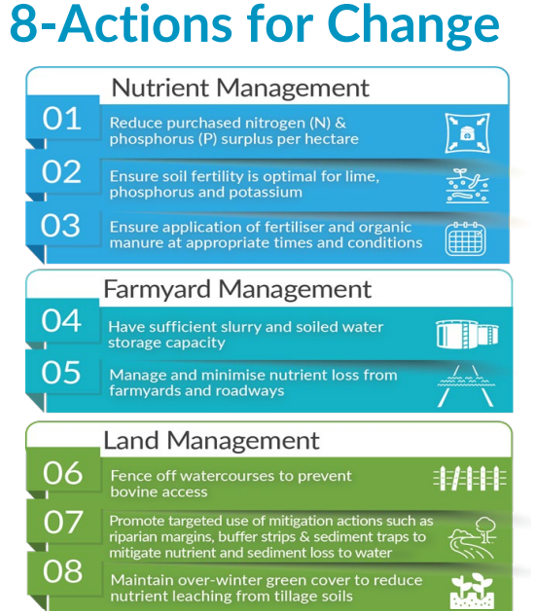
Figure 1. Better Farming for Water (BFFW); 8 Actions for Change
The campaign will initially concentrate on eight river catchments which the EPA has identified as ‘Catchments of Concern’ where nitrogen concentrations are too high: the Bandon-Ilen, Barrow, Blackwater, Lee, Nore, Slaney, Suir and the Boyne. A catchment coordinator has been appointed for these catchments to manage the roll out of the campaign in these areas.
The Boyne Catchment – A Case Study
Water quality in the Boyne
Teagasc Grange is located within the Boyne Catchment. This catchment is divided into 20 sub-catchments and has 131 surface water bodies and 41 groundwater bodies. Table 1 shows the ecological status of surface waterbodies in the Boyne in each of the last six-monitoring cycles. The most recent EPA report “Water Quality in Ireland 2019-2024” showed that in the Boyne Catchment 35% of surface water bodies are in Good/High ecological status, which included 24 % of river waterbodies, 45 % of lakes, 66 % of coastal waterbodies, and the single transitional waterbody was at poor status.
Table 1. Ecological status of surface water bodies in the Boyne Catchment
| Catchment | Monitoring Cycle | High | Good | Moderate | Poor | Bad | High + Good |
| Boyne | 2007-2009 | 2 | 30 | 44 | 14 | 2 | 32 |
| Boyne | 2010-2012 | 2 | 25 | 55 | 20 | 2 | 27 |
| Boyne | 2010-2015 | 2 | 32 | 44 | 22 | 3 | 34 |
| Boyne | 2013-2018 | 2 | 35 | 64 | 30 | 0 | 37 |
| Boyne | 2016-2021 | 3 | 35 | 51 | 42 | 0 | 38 |
| Boyne | 2019-2024 | 3 | 32 | 58 | 37 | 1 | 35 |
ASSAP in the Boyne catchment
ASSAP advisors from Teagasc, dairy processors and meat processors are providing a free, confidential and voluntary service to farmers in the catchment. ASSAP is working collaboratively with LAWPRO who provide the catchment science and data so that visits are informed and directed to areas where agriculture is a significant pressure to water quality.
Farming for Water EIP
Financial support for farmers to implement measures identified by ASSAP assessments can be made available through the Farming for Water EIP. Applications are completed by ASSAP advisors on foot of an assessment in referral areas and will assist farmers in implementing voluntary measures on farm above regulatory requirements and ensure the “right measure is put in the right place”.
BFFW Campaign in the Boyne Catchment
The BFFW catchment coordinator in the Boyne, Fiona Doolan, will lead the role out of the campaign and work to ensure its aims are achieved through a coordinated approach across all the actors. A BFFW Catchment Implementation group (CIG) has been set up to represent all the stakeholders in the catchment; regulatory, advisory, industry and farmer. The BFFW Boyne Catchment Action Plan has been developed to provide a pathway for implementing the campaign in the catchment.
Events at catchment, sub-catchment and local level will be delivered, in collaboration with key stakeholders in the catchment. A strong communications plan will reinforce campaign messages across all media platforms. A strong emphasis on upskilling of local advisory and agri-professionals, as well as farmers, will be central to implementation of the 8 Actions for Change on farm.
Understanding Nutrient Loss and Mitigation Measures
Soil profile
Soil plays an important role in the movement of water through the landscape (Figure 2)A test pit/soil profile is useful to visualise the pathways for nutrients such as nitrogen and phosphorus to be lost to waters. Understanding the pathway of nutrients through or over soils can help to inform management practices to reduce losses and improve nutrient use efficiency.
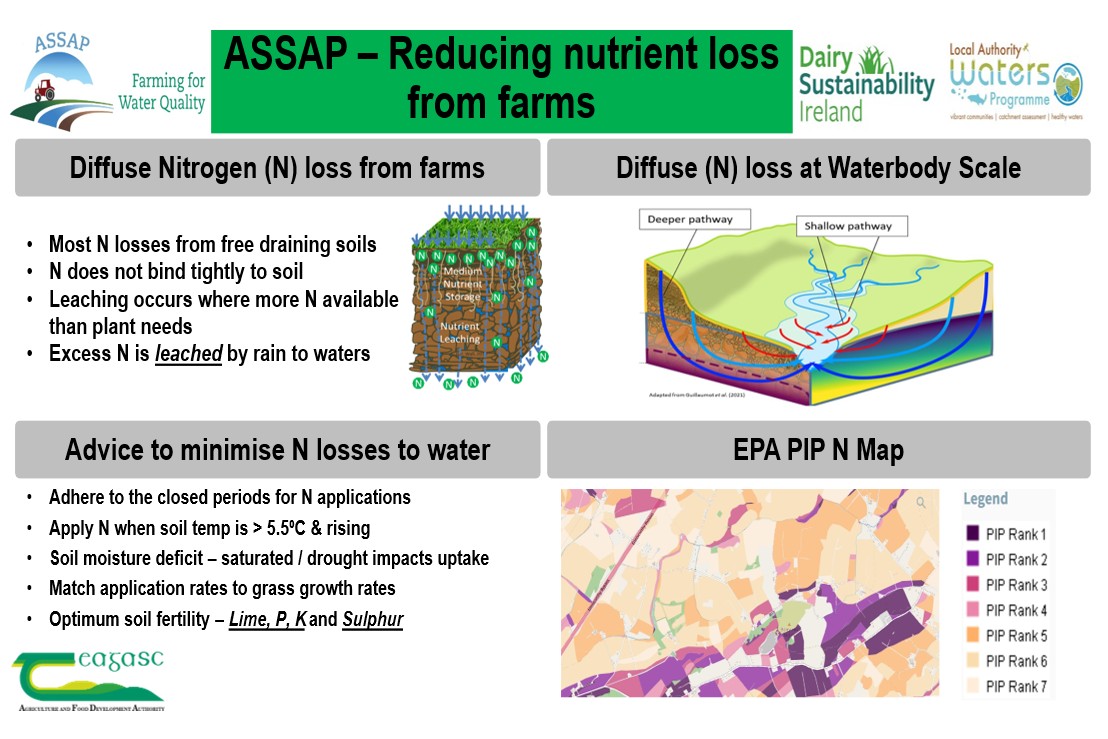
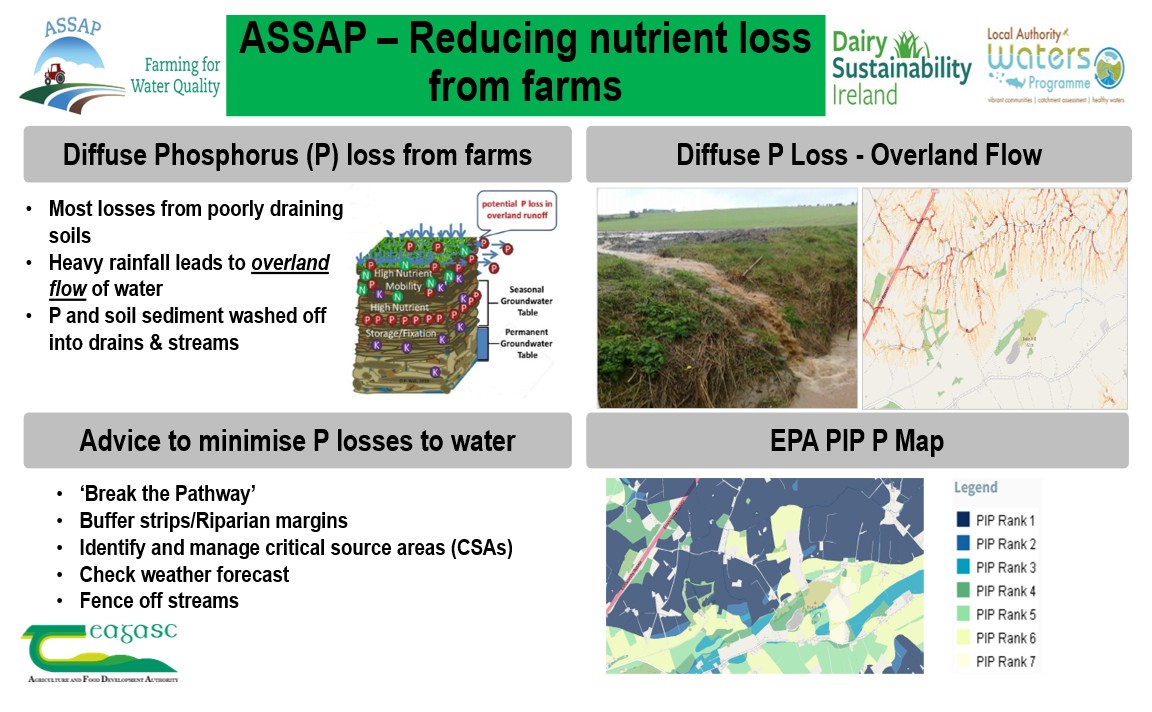
Figure 2. Overview of factors affecting nutrient loss from Irish soils and steps to minimise these losses.
Soil type
Soil type has a significant impact on the risk of nitrogen and phosphorus loss. Freely draining soils are risky for nitrate loss, whereas poorly draining soils can lead to phosphorus and sediment loss. A variety of soil types on display demonstrate the different risks associated with them.
Buffer Margins
Buffer margins provide a practical way to mitigate against nutrient runoff from land when spreading organic manures. They are a low-cost effective mitigation measure for phosphorus and sediment loss across both tillage and grassland systems.
What’s living in our rivers and lakes?
Our rivers and lakes are homes to countless different species of macroinvertebrates and fish. Nutrients such as phosphorus and sediment can have a massively negative impact on their environment. The presence or absence of species in a waterbody can tell a lot about its ecological condition (Figure 3). Ireland’s water quality is measured and scored by its ecological status.
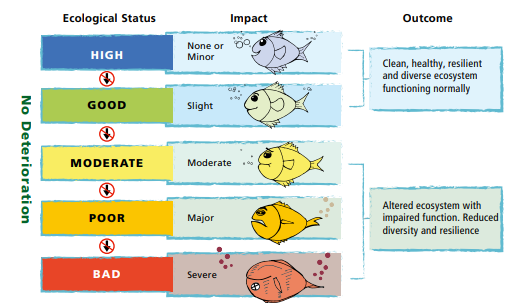
Figure 3. Impact of water ecological status on water ecosystems.
Source: EPA Water Quality Report 2016-2021
Compiled and edited by Mark McGee and Paul Crosson, Teagasc, Grange Animal & Grassland Research and Innovation Centre, and first published in BEEF2026 – Driving Sustainable Performance, additional reading from BEEF2026 is available here.