
BEEF2026 Open Day
Wednesday, 1st July 2026 | Teagasc, Grange, Co. Meath. Eircode: C15 PW93
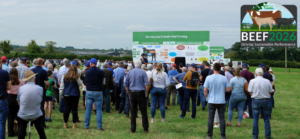
Centred on the theme of Driving Sustainable Performance, BEEF2026 provided cattle farmers with valuable information and access to the latest research, technologies and advice to support more sustainable and profitable beef farming.
This event addressed the key challenges facing beef farmers, including profitability; beef price volatility; labour, work-life balance and succession; environmental sustainability; and how farmers improve the performance of their herds and farms.
Teagasc acknowledges our sponsors FBD Insurance for their generous support for this open day.
Integrating knowledge from Teagasc’s research, advisory and education services, and compiled and edited by Mark McGee and Paul Crosson, Teagasc, Grange Animal & Grassland Research and Innovation Centre, the event also seen the publishing of BEEF2026 – Driving Sustainable Performance available to download here or view digitally below.
View the Booklet: BEEF2026 Open Day – Driving Sustainable Performance
Foreword
Professor Frank O’Mara
Director Teagasc
You are all very welcome here to the Teagasc Animal and Grassland, Research and Innovation centre in Grange, County Meath. The theme of our BEEF2026 open day is “Driving Sustainable Performance”, and I expect you will receive some useful information and hear about new research and technologies that will assist you with your cattle farming enterprises.
This year’s event focuses on the big issues facing beef farmers..
Foreword
Professor Frank O’Mara
Director Teagasc
You are all very welcome here to the Teagasc Animal and Grassland, Research and Innovation centre in Grange, County Meath. The theme of our BEEF2026 open day is “Driving Sustainable Performance”, and I expect you will receive some useful information and hear about new research and technologies that will assist you with your cattle farming enterprises.
This year’s event focuses on the big issues facing beef farmers, including profitability on beef farms; dealing with volatility in beef prices; labour, work-life balance and succession; the environment; and how farmers can keep improving the performance of their herds and farms. A lot has changed in the last two years. Beef prices and market conditions improved strongly in 2025, leading to a very welcome improvement in family farm income on beef farms. As we all know, there have been recent declines in beef prices and some input costs have risen this year, which will reduce profitability compared to last year. Nevertheless, incomes on many Irish beef farms are in a stronger position and this gives beef farmers a real opportunity to look at the areas that will make their farms more productive, more profitable and more sustainable into the future.
Grass-based systems are at the heart of beef farming in Ireland. At BEEF2026, there is a strong focus on operating systems that exploit our potential to grow high yields of top quality and low cost grazed pasture. Grassland management is key to this, but operating productive suckler herds and achieving optimal performance from growing and finishing cattle is also essential. In this regard calf rearing, animal health and welfare and genetics are essential components and the latest Teagasc research and advice in these topics is addressed at the BEEF2026 open day. This is your chance to talk directly to Teagasc researchers, advisers and education staff.
The focus of the event is on practical demonstrations, live displays, discussion forums and interactive exhibits in the technology villages throughout the day. There are also live displays on low-emissions slurry spreading, grazing management, health and safety, protected urea fertiliser, spreader calibration and farm infrastructure. Cow simulators will show safe calving practices and safe ways to handle livestock. Cattle from the suckler and dairy-beef research work at Grange are also on display.
There is more focus now than ever on how food is produced and on the environmental performance of farming. Irish beef farmers have a really positive story to tell because of our natural pasture-based systems, but there is still room to improve, and research continues to provide new information for the farm sector. The good news is that many of the steps farmers can take to improve profit, tend to reduce greenhouse gas emissions and improve the environment. Better use of grass, reducing finishing age with lower emissions per kilo of carcass, keeping animals healthier and getting more output from each livestock unit can all help to improve both farm income and environmental performance. The theme “Driving Sustainable Performance” is about finding the right balance on beef farms: producing cattle efficiently, making a profit, protecting the environment and having a system that works for the farmer and the family.
Making the best use of time and labour is very important on beef farms. Many farmers are running their beef enterprise while also working off-farm, so the systems of the future must be profitable, practical and manageable. These issues are all covered at BEEF2026 through live demonstrations, technology villages and discussion forums. There is a strong focus on the main drivers of profit in suckler farming, including improving efficiency on the farm, getting more output from each livestock unit and keeping costs under control. Dairy-beef systems are also an important part of the day. Choosing the right dairy-beef system for your own farm is very important, and today’s open day shows practical ways to improve efficiency and profit in dairy-beef steer and heifer systems.
There are a number of panel discussions during the day in the “Beef Pulse” discussion arena. These cover important topics across suckler, dairy-beef and other beef production systems. The main opportunities and challenges facing beef farming are outlined. Beef farmers from around the country who are participating in Teagasc programmes are here today to meet you, along with key industry stakeholders and partners in the Ag-Tech and Industry Villages. Key organisations in the sector, including the Department of Agriculture, Food and the Marine, the Irish Cattle Breeding Federation, Animal Health Ireland, Bord Bia, Meat Industry Ireland, Meat Technology Ireland and the Health and Safety Authority, are all participating in the open day.
I would like to thank our sponsors FBD Insurance for their generous support for this open day. This event is built on collaboration, and we work closely with our industry partners in building an event that will be the highlight of the beef farming year. I hope that you will take home useful messages from this informative and practical day for the Irish beef sector.
Welcome to Grange
Paul Crosson and Pearse Kelly
Teagasc, Grange Animal & Grassland Research and Innovation Centre, Dunsany, Co. Meath
On behalf of the staff at the Teagasc, Animal & Grassland Research and Innovation Centre, Grange and other staff involved with today’s event, it is a pleasure to welcome you to BEEF2026. The theme of this year’s event is ‘Driving Sustainable Performance’. Since our last open day two years ago, improved market conditions for beef have contributed to a considerable strengthening of incomes on Irish beef farms.
Welcome to Grange
Paul Crosson and Pearse Kelly
Teagasc, Grange Animal & Grassland Research and Innovation Centre, Dunsany, Co. Meath
On behalf of the staff at the Teagasc, Animal & Grassland Research and Innovation Centre, Grange and other staff involved with today’s event, it is a pleasure to welcome you to BEEF2026. The theme of this year’s event is ‘Driving Sustainable Performance’. Since our last open day two years ago, improved market conditions for beef have contributed to a considerable strengthening of incomes on Irish beef farms. While markets continue to fluctuate, the theme of BEEF2026 reflects the opportunity to build on this stronger position by improving the productivity and profitability of beef cattle production, while continuing to meet the highest standards in sustainable farming systems. Generational renewal is one of the central themes of BEEF2026. Key to this will be addressing work-life balance and improving profitability by adopting best practice in relation to grazing management, animal nutrition, beef genetics, reproductive management, animal health and farm planning. Information boards, expert talks, live demonstrations and interactive sessions will cover all these key topics. The latest Teagasc research and innovation in beef cattle farming will be highlighted throughout the day. BEEF2026 is your opportunity to see first-hand the results of Teagasc’s comprehensive research and innovation programme, meet Teagasc research, advisory and education staff, and an opportunity to discuss the future direction of the Irish beef sector.
Driving Sustainable Performance
The theme ‘Driving Sustainable Performance’ focused on finding the right balance on beef farms: producing cattle efficiently, improving profitability, protecting the environment and developing a farming system that works for both the farmer and the family.
Setting the scene for the BEEF2026 Open Day, Head of Drystock Knowledge Transfer at Teagasc, Pearse Kelly focuses on planning for profit: labour and farm renewal in the below video:
An overview of beef cattle farming in Ireland
From the perspective of farm numbers and land area farmed, beef cattle farming is the most important agricultural enterprise in Ireland. Moreover, the sector contributed €4.2 billion, some 30%, to total agricultural output in 2025, an increase of €1.1 billion when compared to 2024. The beef sector is export orientated with over 90% of production […]
 Paul Crosson
 Mark McGee
 Pearse Kelly
Suckler beef systems for profitable production
Suckler beef production in Ireland encompasses a wide range of production systems operating at varying stocking rates, although most farms are stocked at less than 130 kg organic nitrogen (N)/hectare (ha). This paper examines the key performance targets and indicators that determine efficiency, financial and environmental (greenhouse gas (GHG) emissions) performance of suckler beef systems, […]
 Peter Doyle
Mark McGee
Peter Doyle
Mark McGee
 Martina Harrington
 Edwin Carroll
 Chloe Higgins
 Cliona Ryan
 James Mullane
Paul Crosson
James Mullane
Paul Crosson
Profitable pasture-based dairy-beef systems
Dairy-beef is an integral part of Irish beef production, with its contribution to beef output increasing in recent years in line with the 40% increase in dairy cow numbers since 2015, and dairy-beef now accounts for 62% of beef cattle processed in 2025. The current stabilisation of the dairy herd has led to a reduction […]
 Nicky Byrne
Paul Crosson
Nicky Byrne
Paul Crosson
 Alan Dillon
 Ellen Fitzpatrick
Producing beef from grass-forage-based systems
Irish suckler beef production is largely pasture-based where collectively, grazed and conserved pasture account for up to 92% of the lifetime feed consumption. As grazed pasture is invariably the cheapest cattle feed resource in Ireland, maximising the duration of the grazing season and animal growth performance at pasture is critical for sustainable production. This in […]
Peter Doyle
 Nikki Kennedy
Nicky Byrne
Mark McGee
Nikki Kennedy
Nicky Byrne
Mark McGee
Growing-finishing beef cattle: national performance data and growth targets
In 2025, 1.79 million calves were born in Ireland, and approximately 1.16 million animals were finished as prime (steers, heifers and young bulls) cattle. Nationally, suckler-bred animals now account for 38% of the prime beef cattle produced, reflective of a decline in suckler cow numbers (currently ~0.75 million), and an increase followed by a stabilisation […]
 Paul Smith
Paul Crosson
Peter Doyle
Paul Smith
Paul Crosson
Peter Doyle
 Bernadette Earley
 David Kenny
Mark McGee
David Kenny
Mark McGee
 Alan Kelly
Grassland and Forage
Grazed grass is the cheapest feedstuff available on Irish cattle farms, whether that be suckler or dairy-beef. Despite its importance, many beef farmers continue to leave weight gain behind over the grazing season. At BEEF2026, there was a major focus on operating systems that exploit our potential to grow high yields of top quality and low-cost grazed pasture.
Lime – increases farm productivity while reducing fertiliser costs
Correcting soil pH is an old but vital farm practice that delivers both productivity and environmental benefits. Maintaining optimum soil pH of 6.3 to 6.5 on mineral soils increases the biological soil activity and availability of major nutrients such as nitrogen (N) thus reducing the need for imported chemical fertiliser. Soil test results show that […]
 Mark Plunkett
Sustainable use of nitrogen fertilisers on cattle farms
Agriculture has a requirement to reduce greenhouse gas emissions by 25% by 2030, relative to 2018. To date agriculture has reduced emission by 4.6% since 2018. Meeting emission reductions will be challenging over the next 5 years. The Marginal Abatement Cost Curve (MACC) developed by Teagasc sets out a menu of actions that farmers can […]
Mark Plunkett
 Francis Quigley
Management of red and white clover in Irish beef grass-based systems
There has been a significant renewed interest in the role of legumes – both white and red clover – on Irish grassland farms in recent years, with seed sales having increased to 353 t and 131 t for white and red clover, respectively, equating to a 40% increase in 2025 from 2020. The main benefits […]
 Michael Egan
Peter Doyle
Michael Egan
Peter Doyle
Benefits of paddock grazing in beef systems
Grazing infrastructure is the farm layout and physical structures (roadways, fencing and water system). Optimal grazing infrastructure facilitates good pasture management practices to maximise days at grass and increases pasture utilisation in a rotational grazing system. Target pasture management practices: Enter paddocks at a pre-grazing herbage yield of 1,250-1,500 kg dry matter (DM)/hectare (ha) (9-10 […]
Nikki Kennedy
 John Maher
 Caitlin Looney
Making quality silage on beef farms
Irish cattle systems rely heavily on our competitive advantage – producing high yields of high nutritive value grazed grass. However, although emphasis must be placed on maximising the proportion of grazed grass in the diet, there is a significant part of the year on most Irish farms where grass silage will constitute part or all […]
Nikki Kennedy
Peter Doyle
 Joe Patton
 David Argue
Effective reseeding and use of the Pasture Profit Index
Regular reseeding of pastures enables farmers to produce higher yields of better-quality grass, improving feed self-sufficiency and enhancing overall farm sustainability. It is recommended that 10% of the farm be reseeded annually. Current reseeding rates are estimated to be only 2% of the total grassland area. Although reseeding costs are substantial, currently estimated at €1,100/hectare […]
 Sarah Walsh
 Noirin McHugh
 Michael O'Donovan
Improving water quality in Irish agriculture – A shared responsibility
In Ireland, water policy and management is led by the Water Framework Directive. Under this directive, Ireland has been set a target of achieving at least ‘good status’ for all Irish waters by 2027. However, despite a lot of good work over the last 20-30 years we are falling short in achieving this target; in […]
 Cathal Somers
 Fiona Doolan
 Hugh Rooney
Using AgNav to review the performance of the Future Beef suckler demonstration farms
Demonstration farmers are signed up to the Signpost Advisory Programme and AgNav. AgNav is a digital sustainability platform that helps Irish farmers measure, understand, and reduce their farms environmental impact by tracking emissions and guiding sustainability improvements. These farmers use AgNav to review their progress in adopting emissions-reducing technologies and to track their farm emissions […]
 Siobhan Kavanagh
 Tom O'Dwyer
Martina Harrington
Tom O'Dwyer
Martina Harrington
Soil carbon on agricultural soils
What is soil carbon and carbon sequestration? Soil carbon refers to the carbon stored within soils, mainly as soil organic matter (SOM), which is derived from decomposed plant material and microbial biomass. It is a vital component of healthy soils, helping to maintain fertility, support biodiversity, and sustain ecosystem functions. As the largest terrestrial carbon […]
 Rachael Murphy
 Giulia Bondi
 Gary Lanigan
Suckler Beef Systems
Suckler beef production in Ireland varies widely in system structure, stocking rate and performance, affecting profitability and greenhouse gas emissions. Focusing on key performance indicators (KPIs) namely age at first calving, herbage utilisation and clover incorporation can support higher margins and lower emissions intensity.
Martina Harrington, Cattle Specialist and Manager of the Future Beef Programme, Teagasc provides an overview of the factors driving profitable and sustainable suckler beef systems in the below video:
Producing the future suckler cow: balanced genetics for profitability and sustainability
Improving the efficiency of the national suckler herd is a key priority for the Irish beef industry. Research and on-farm evidence consistently show that cows with strong maternal traits and of moderate size deliver superior lifetime performance. Balanced genetic selection is essential to produce a suckler cow capable of meeting both profitability and sustainability targets. […]
 Aisling Molloy
Martina Harrington
Aisling Molloy
Martina Harrington
Strategic use of oestrous synchronisation and timed artificial insemination in beef cattle herds
Reproductive efficiency is a major factor determining production and ultimately the profitability of beef cow enterprises. Annual statistics from the Irish Cattle Breeding Federation (ICBF) suggest that less than 20% of heifers calve for the first time at the target average age of 24 (22-26) months and that the average calving-to-calving interval for Irish suckler […]
David Kenny
Calving at two years of age: identifying and rearing suitable replacement suckler heifers
The current national average age at first-calving in suckler-bred heifers is 32 months with only 19% of heifers calving for the first time at 22-26 (~24) months of age. There is huge potential for improvement to this important reproductive key performance indicator. The top 10% of commercial suckler herds and research herds are consistently calving […]
Chloe Higgins
Mark McGee
Martina Harrington
David Kenny
Alan Kelly
Weaning management of beef-suckler calves: health implications
In Irish grass‑based, spring‑calving suckler systems, calves are typically weaned in autumn. This often coincides with a change in weather, reduced grass availability, additional handling, housing, vaccination and sometimes transport or sale. The resulting stress response in the calf, especially when several of these stressors occur concurrently, can temporarily suppress immune function, increasing susceptibility to […]
Bernadette Earley
Mark McGee
Infectious disease in the suckler herd
Disease is a major cause of financial and animal production losses on beef farms, and even though it’s difficult to put a value on it, the labour and stress involved in a disease outbreak should also be taken into consideration when evaluating individual farm disease risks. The likelihood and consequences of a disease need to […]
 Natascha Meunier
 Michelle McGrath
 Maria Guelbenzu
Information on Bluetongue Virus (BTV) for Irish beef herd owners
Bluetongue is a viral disease caused by bluetongue virus (BTV). This virus is a double stranded RNA virus of the genus Oribvirus due to the ‘ring’ (‘orib’) appearance of its outer capsid. There are at least 29 different serotypes or strains of the virus, and each strain differs in the severity of disease that is […]
 Emmet Kelly
 Conor McAloon
Newford suckler demonstration farm update
The Newford Demonstration Farm was established in 2015 as a joint initiative between Teagasc and Dawn Meats, with support from the Irish Farmers Journal and McDonald’s. Its primary objective is to operate as a stand-alone suckler herd under commercial conditions, demonstrating best-practice technologies to the wider beef industry. A key focus is placed on maximizing […]
 Michael Fagan
 Padraig French
Cliona Ryan
Padraig French
Cliona Ryan
Future Beef 2026: demonstrating the path to profitable sustainable suckler farming
The Future Beef Programme is Teagasc’s flagship suckler beef demonstration farm network, comprising 22 farms representing typical Irish beef systems across geographical regions, diverse soil types, and contrasting stocking rates. The programme demonstrates practical, adoptable technologies under three core objectives: Profitability Environmental sustainability Work-life balance A central principle of the programme is that profitability and […]
Martina Harrington
Aisling Molloy
James Mullane
Dairy Beef Systems
Dairy-beef is central to beef production in Ireland, accounting for 62% of cattle processed in 2025. BEEF2026 highlighted practical ways to choose the right system and improve efficiency, health and profitability in dairy-beef steer and heifer systems on your farm.
In the below video, Dr Jamie O’Driscoll, Research Officer, Teagasc takes us through the final main board at BEEF2026, which focuses on profitable dairy beef systems:
Commercial Beef Value: making genetics work in the dairy-beef system
What is the Commercial Beef Value? Every spring, beef farmers across Ireland purchase dairy-beef calves and face a simple question: which calves will perform best in my system? Knowing which calf is likely to exhibit good performance traits over its lifetime can be difficult when purchasing at three to four weeks of age, but the […]
Cliona Ryan
 David Kelly
Nicky Byrne
David Kelly
Nicky Byrne
The principles of successful calf rearing
Calf health and nutrition strongly influence an animal’s lifetime growth potential. The calf-rearing phase provides an important opportunity for efficient live weight gain due to calves’ high feed conversion efficiency in early life, which has been shown to be 2–3 times greater than that of comparable finishing cattle. Efficient calf-rearing protocols aim to maximise health, […]
Ellen Fitzpatrick
Nicky Byrne
Understanding Summer Scour Syndrome
Summer scour syndrome (SSS) is a relatively novel digestive disorder affecting recently-weaned dairy-bred calves during their first grazing season in Ireland and in other countries with pasture-based systems, such as the UK, Australia, and New Zealand. This syndrome typically occurs within two to six weeks following turnout to pasture and often affects groups of calves. […]
 Rischi Robinson
Mark McGee
David Kenny
Bernadette Earley
Rischi Robinson
Mark McGee
David Kenny
Bernadette Earley
 Edward O’Riordan
 Catherine McAloon
Calf health from birth to the end of the first grazing season in dairy-beef systems
Beef production from the dairy herd has increased in recent years due to increasing dairy cow numbers and now contributes approximately 60% of beef output in Ireland. Typically, dairy-bred calves are sourced at approximately three weeks of age and are vulnerable to several infectious diseases, particularly during the calf-rearing phase. The most common diseases of […]
 Orla Keane
Bernadette Earley
Orla Keane
Bernadette Earley
Tipperary dairy calf to beef demonstration farm update (Ballyvadin Beef Farm Ltd.)
Ballyvadin Beef Farm Ltd. was established in 2022 to function as an independent, standalone commercial entity providing Irish beef farmers with a realistic financial, operational and genetic baseline for integrated dairy-beef production. The enterprise acts as a blueprint for high-efficiency spring-born steer and heifer calf-to-beef finishing systems. Farm footprint and expansion Total land area: 134 […]
Padraig French
 Chloe Millar
An analysis of the 2025 Teagasc DairyBeef 500 Profit Monitor results
The Irish beef sector has undergone significant structural and economic changes in recent years, particularly dairy-beef systems. The Teagasc DairyBeef 500 Programme, established to promote sustainable and profitable dairy calf-to-beef systems, provides a valuable dataset through its annual Profit Monitor analysis. This programme aims to demonstrate best practice in technical and financial performance, targeting a […]
Alan Dillon
Growing and Finishing Cattle
Achieving optimal performance from growing and finishing cattle is essential. Detailed blueprints, incorporating live weight targets and detailed management strategies, were discussed at BEEF2026 to optimise animal growth rates and achieve an earlier age of finish.
First winter nutrition: silage digestibility and concentrate supplementation to maximise compensatory growth
In beef production systems, feed provision is the single largest direct cost incurred, accounting for approximately 75% of total costs of production; therefore, focusing on feed (cost) efficiency enhances farm profitability. Of the predominant feedstuffs available, grazed grass is lowest cost, purchased concentrate is the most expensive and grass silage and other conserved forages are […]
 Emily Roskam
 Niall Kerins
Mark McGee
Niall Kerins
Mark McGee
Nutritional management of finishing beef cattle
In 2025, the national average finishing age of prime beef cattle was 26.5 months. To improve environmental sustainability of Irish beef production systems a goal, embodied in the national Climate Action Plan, is to reduce mean age at finish by ~three months by 2030 relative to 2018. This can be achieved by improving animal nutrition, […]
Emily Roskam
David Argue
Niall Kerins
Mark McGee
Methane-reducing feed additive research in beef cattle
The microbial ecosystem residing in the rumen or forestomach of ruminant animals facilitates the conversion of human-inedible plant material into high-quality meat protein. However, this fermentation process results in methane production as a metabolic by-product. Methane is the second most important greenhouse gas (GHG) after carbon dioxide and accounts for approximately 74% of Irish agricultural […]
 Neal Folliard
Emily Roskam
Neal Folliard
Emily Roskam
 Omobolanle Blessing Kalenikanse
 Sinéad Maloney
 Leanna Kelly
 Muhammad Moiez Ahmad
Paul Smith
David Kenny
Muhammad Moiez Ahmad
Paul Smith
David Kenny
Finishing cattle housing: space allowance and floor type
A series of experiments were conducted at Teagasc, Grange to examine the effects of space allowance and floor type on cattle performance and welfare. The research primarily involved finishing steers, with additional studies using heifers, bulls, and weanlings. Across experiments, treatments included concrete slatted floors (CS), different rubber mat types overlaid on concrete slats (RM), […]
Bernadette Earley
Mark McGee
Edward G. O’Riordan
Health management of purchased weanlings and store cattle
Beef farming in Ireland is characterised by many different production systems and repeated animal movements are an inherent feature. The structure of the sector typically involves cattle moving through several holdings before slaughter, often transferring from dairy or suckler herds to specialist rearers and subsequently to finishing farms. While this system supports efficient use of […]
Paul Smith
Mark McGee
Bernadette Earley
 Frank O’Sullivan
Digital approaches for beef carcass characterisation
The meat industry is increasingly seeking automation to address challenges such as labour shortages, worker welfare in abattoir environments, stringent hygiene requirements for non-contact processing and the need to minimise waste. Over the past few years, automation in poultry and pork processing has advanced considerably; however, the beef sector continues to lag due to several […]
 Jyoti Prakash Mishra
 Ruth Hamill
Measuring beef quality: from EUROP grid to consumer-driven eating quality and emerging technologies
Beef production is one of the most economically and culturally significant food industries in Europe, contributing to food security, sustainable land use and diverse national cuisines. Yet EU beef consumption has declined by approximately 13% over two decades – from 11.1 kg per capita in 2004 to 9.6 kg in 2024 – and is projected […]
 Jingjing Liu
Developing premium Irish beef through dry aging and novel processing technologies
Irish beef is well-known around the world and is synonymous with being high quality, flavoursome and nutritious, thanks to our pasture-based farming systems. Considering this high-value raw material, industry is increasingly seeking opportunities to further enhance the eating quality and consumer acceptance of Irish beef. Extensive research has been carried out on this area at […]
 Mary Ann Kent
Market outlook for Irish beef and livestock, summer 2026
Producer price developments The year 2025 will be remembered fondly by most beef farmers, as Irish cattle prices reached new record levels, rising by an average of 39% year-on-year. Unfortunately, however, producers have experienced considerable downward pressure on the value of their animals over recent months, and many are questioning whether there are any signs […]
Advisory, Education and Opportunities
Topics relevant to the future of beef farming in Ireland were also discussed at BEEF2026, featuring conversations on farm safety, education and apprenticeship pathways and generational renewal. Information was also disseminated on emerging opportunities in organics, diversification and anaerobic digestion.
The economic performance and the role for diversification on cattle farms in Ireland
Farm incomes are generally low on cattle farms in Ireland with farm subsidies accounting for the majority of farm income. Cattle farmers have contended with several economic challenges in recent years, with some welcome respite in margins in 2025. In this paper, Teagasc National Farm Survey (NFS) data is used to describe recent trends in […]
 Fiona Thorne
 Jason Loughrey
 Anne Kinsella
Teagasc Grange Anaerobic Digestion Programme
Anaerobic digestion (AD) is a biological process conducted in a sealed vessel in the absence of oxygen. This process involves the fermentation of organic matter resulting in the production of biogas and digestate. There are four steps in the AD process: i) break-down of the organic material into soluble compounds (sugars, fats, proteins); ii) fermentation […]
 Adriana Ferreira Maluf Braga
Paul Crosson
Adriana Ferreira Maluf Braga
Paul Crosson
Organic beef farming systems research: first insights from the Teagasc National Farm Survey
Organic farming has become increasingly important within Irish and European agricultural policy as governments seek to address challenges relating to climate change, biodiversity loss, input price volatility and the long-term sustainability of food production systems. Under the EU Farm to Fork Strategy, a target has been established for 25% of European agricultural land to be […]
 Kevin Kilcline
 Mary Ryan
Paul Crosson
Mark McGee
Mary Ryan
Paul Crosson
Mark McGee
 Marie McFadden
 David Wall
 David Flynn
 Joe Kelleher
 Elaine Leavy
 Tara Gilna
Organic beef cattle research update
Introduction The Climate Action Plan (2024) has set ambitious targets to increase land farmed according to organic standards from the current area of 225,000 ha (5% of total farmed area) to 450,000 ha (10%) by 2030. The largest organic sector in Ireland is beef cattle production. There are an estimated 40,000 organically-farmed suckler cows in […]
David Flynn
David Wall
 Rioch Fox
Peter Doyle
Marie McFadden
Mark McGee
Paul Crosson
Rioch Fox
Peter Doyle
Marie McFadden
Mark McGee
Paul Crosson
Farming for the next generation
Generational renewal in farming is generally understood to mean younger farmers taking over from the older generation in running and owning farms (Department of Agriculture, Food and the Marine – DAFM, 2025).2 It should be seen as a process rather than a single event and it has been described in the literature as a “ladder […]
 Emma Dillon
 Brian Moran
Education pathways for agriculture and the land-based Sector: Teagasc options for school leavers, adult learners and career changers
Teagasc is the primary provider of accredited further (vocational) education for the agricultural and land-based sectors. Teagasc has a major input into higher education and postgraduate education delivery through its extensive partnerships. Teagasc introduced four new apprenticeship programmes for the land-based sector in 2023 and welcomes applications for apprenticeships due to start in September 2026. […]
 Brian Morrissey
 Carmel Finlay
 Tara Fitzsimons
Teagasc land-based apprenticeships: earn while you learn
As land-based industries navigate current and future sustainability challenges and regulations, it is essential that operators and managers are highly skilled. The Irish land-based sector is reliant on skilled farmers and operatives who can cope with such challenges as well as managing day-to-day productions task, work with people and meet business objectives. The next generation […]
Brian Morrissey
 Marcella Phelan
Staying safe on a beef farm
High standards of safety, health and welfare can greatly support the creation of a safe working environment. Farmer health and farm safety are closely linked. Physical health, stress and mental health, fatigue, burnout and sleep problems can impact farmer wellbeing and increase the risk of a farm accident. Protecting your health and wellbeing, knowing your […]
 Francis Bligh
 MJ Kelly
 Diana van Doorn
 David Meredith
Photo Competition
We know Irish beef farmers are passionate about what they do and we want to celebrate their hard work by giving away some prizes!