
Making quality silage on beef farms


Summary
- Silage quality or nutritive value is currently lower than cattle requirements on many farms.
- A balance must be struck between quality and quantity of silage produced.
- Complete a fodder budget.
- Improving the quality of the pasture grown and preservation are key steps to increasing silage quality and improving animal performance.
Irish cattle systems rely heavily on our competitive advantage – producing high yields of high nutritive value grazed grass. However, although emphasis must be placed on maximising the proportion of grazed grass in the diet, there is a significant part of the year on most Irish farms where grass silage will constitute part or all of the animals’ diet. Grass silage typically makes up around one-quarter to one-third of total feed dry matter (DM) consumed on drystock farms. Compared to grazed grass, grass silage is expensive to produce. However, when taken as part of an integrated grazing system and the right quality is achieved, it is good value compared to concentrates and alternative forages. Different animal categories (e.g. growing-finishing cattle vs dry suckler cows) have different requirements in relation to silage nutritive value. Overall, the ‘quality’ of grass silage on beef farms, based on dry matter digestibility (DMD), is much lower than what growing-finishing cattle require for optimal performance. The mean DMD of grass silage samples submitted for the 2025 National Beef Welfare Scheme was 68%. This shortfall in silage digestibility leads to lower animal output or increased input costs through a higher use of concentrates to make up live weight performance losses. There is considerable scope, and need, to improve the digestibility of grass silage produced on beef farms in Ireland. In recent years challenging weather conditions including summer droughts and extended winter housing periods have reaffirmed the need to produce sufficient quantities of silage of adequate digestibility to meet nutritional requirements of the animal types on the farm.
Silage requirements
When making silage plans for the year it is vital that you determine silage requirements on your farm i.e. consider both the quantity and quality of silage required. On many farms there will be a requirement for silages of different digestibility to satisfy the nutritional needs of different classes of livestock. Consequently, your silage plan may require you to make, and store, different qualities of silage so they can be fed to different animal groups or to the same animal group at different times of the year – as a guide see Table 1. For example, making 67% DMD silage for dry cows in good body condition (~3.0, scale 0-5) at the start of the indoor winter, and 72+% DMD silage for weanlings, in-calf heifers and lactating suckler cows if they must remain on silage post-calving. Separate storage of pit silage or bales is essential to be able to feed different silage qualities where required.
Table 1. Silage dry matter digestibility (DMD) requirements for different livestock
| Silage DMD | 74% + | 71-73% | 68-70% | ≤67% |
| Suitable for | Finishing cattle | In-calf heifers, growing cattle, lactating suckler cows | Dry suckler cows in poor body condition | Dry suckler cows in good body condition at the start of the winter |
After each winter, it is advisable to develop a fodder budget. This entails taking stock of silage remaining on-farm, quantifying what was fed over the winter and what remains, to help plan for what silage needs to be made in the current year. The aim should be to make 15% – 20% more silage than needed in a typical winter to account for a prolonged housing period in adverse conditions, as well as the possibility of having to feed out silage during excessively dry summer periods. Use the farm historical usage combined with the Teagasc Fodder Budget as a guide to prepare your farm’s silage plan.
Table 2. Silage volume requirements for different livestock classes
| Animal type | Pit silage (tonnes fresh weight) needed per month | Bales (4×4) needed per month |
| Suckler cow | 1.4 | 1.6 |
| In-calf heifer | 1.3 | 1.4 |
| Weanling | 0.7 | 0.8 |
| Store / finishing cattle | 1.3 | 1.4 |
Current quality of silage on beef farms
Data from the Department of Agriculture, Food and the Marine’s National Beef Welfare Scheme in 2025 showed that only 11% of grass silage samples submitted were greater than 74% DMD, 18% were between 70% DMD and 74% DMD, 44% were between 65% and 69.9% DMD and 27% were less than 65% DMD. Overall, 71% of sampled silage was less than 70% DMD, which is concerning given the number of lactating suckler cows, replacement heifers, store/finishing cattle and weanlings in the country that require higher quality silage. This shortfall in silage quality must be met through supplementation with expensive concentrate feeds to bridge the nutritional gap for animal performance targets to be met.
Quality vs quantity
Often the question on farmers minds is, should quantity or quality be the priority when planning silage making for the year? In practice, both must be considered equally to meet animal needs and performance targets on farm. This question is particularly pertinent in 2026 where we have seen a massive increase in costs particularly fuel and fertiliser which has resulted in higher silage-making costs. However, even when higher costs are considered, making high digestibility silage in a two-cut pit or bale system is still more cost effective than purchasing concentrate feed. Additionally, the common practice of ‘bulking up’ the first-cut of silage leads to a subsequently lower yield in the second-cut. Consequently, no additional overall yield is achieved but quality of silage is significantly reduced and costs remain the same. An analysis was carried out to show the costs of different silage cutting systems compared to concentrate supplementary feed at different costs (Table 3). Price assumptions used: Land rental, €300/acre; protected urea, €740/tonne (t); 16-6-12, €600/t; fertiliser spreading, €55/t; dribble bar with 2500-gallon tanker, €100/hour; pit silage – complete job, €210/acre; mowing €33/acre; bale and wrap (incl. plastic) €20/bale. *Please note contracting prices are based on FCI costs published in February 2026 and are subject to change particularly with the increase in fuel cost.
Table 3. The cost of different silage systems compared to concentrates feeds
| Adjusted for 10% rise in assumed contractor costs | ||||
| €/tonne DM utilised (incl. land charge) | €/tonne DM utilised (excl. land charge) | €/tonne DM utilised (incl. land charge) | €/tonne DM utilised (excl. land charge) | |
| Two-cut pit | 300 | 240 | 318 | 258 |
| Two-cut bale | 341 | 286 | 366 | 311 |
| Three-cut pit | 318 | 259 | 337 | 278 |
| Beef nut €350/t | 421 | 421 | 421 | 421 |
| Beef nut €450/t | 580 | 580 | 580 | 580 |
Factors influencing silage quality
There are numerous factors that affect the DMD and yield of grass silage, many of which are under the control of the farmer. Although factors like weather are out of anyone’s control, how farmers plan and react to any given weather can affect quality and yield.
Growing time and cutting date
The length of time the silage crop is growing for and time of year it is cut has the biggest influence on DMD of the resulting silage. Silage swards need to be managed so that they reach a desirable yield, approximately 5 t DM, before the grass heading date to ensure quality and quantity. This gives the option to then cut high quality silage for animals that need it, or harvest can be delayed where lower DMD silage is required for sucklers cows in good body condition. Timely closing of pastures for silage and nitrogen (N) application is important to allow for enough growing time before grass heading date and N to be utilised before harvest. A useful guide for fertiliser N is that grass uses 2.5 kg N (2.0 units) per day on average. However, this is not a hard and fast rule and if growing conditions are good, N is used at a higher rate and vice versa. Therefore, it is recommended to test the grass for N levels as harvesting could take place earlier than anticipated in good growing conditions.
Soil fertility
Like most crops, soil fertility underpins growth potential (Figure 1).
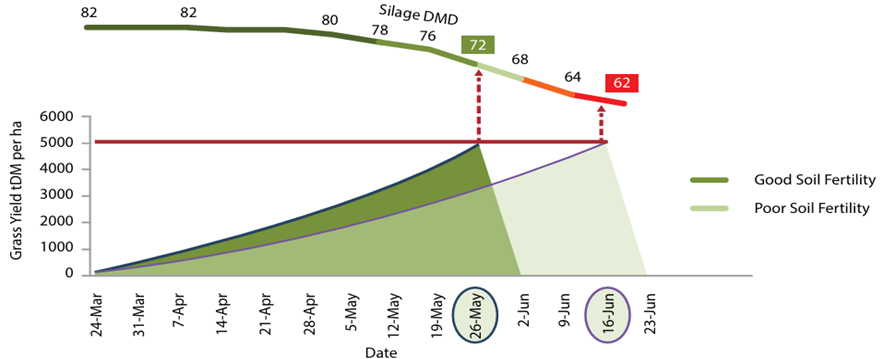
Figure 1. The impact of soil fertility on silage DMD and yield
By having good soil fertility (pH, 6.3+; Index 3, phosphorus (P) + potassium (K)), desired yield is reached at an earlier date before plants have reached their reproductive stage where the proportion of stem increases resulting in lower quality (Figure 2). Regular soil testing is critical to know the nutrient requirements on silage ground.
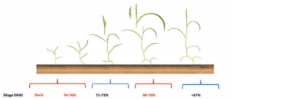
Figure 2. Growth stage of grass and the corresponding silage DMD
Soil pH is hugely limiting so ensure the target of 6.3 is met but avoid spreading lime three-four months before cutting silage as it can affect preservation. Instead, apply lime after cutting in the summer/autumn. Treat P and K separately and nitrogen should be reduced where ryegrass content is low (Tables 4 and 5).
Table 4. First-cut requirements (kg/ha)
| Soil Index | 1 | 2 | 3 | 4 |
| P | 40 | 30 | 20 | 0 |
| K | 175 | 155 | 125 | 0 |
| N | 125 | |||
| S (Sulphur) | 12-14 (10% of N applied) | |||
Table 5. Second-cut requirements (kg/ha)
| Soil Index | 1 | 2 | 3 | 4 |
| P | 30 | 20 | 10 | 0 |
| K | 70 | 50 | 50 | 0 |
| N | 100 | |||
*Reduce N:P:K by 25:4:25 kg per ha on older swards with low growth potential
Prior management
Growing grass from a ‘clean’ sward with no dead material is essential to achieve good quality silage in May. Ensure swards are grazed to 4 cm in late autumn or February/March before applying fertiliser for silage. Swards with yellow/dead material must be grazed off otherwise silage DMD may be reduced by up to 6-7%.
Reseeding
Old permanent pasture with low perennial ryegrass content is less responsive to fertiliser leading to delayed harvest and poor DMD. Lower sugar content of older pastures also makes preservation more difficult, potentially further decreasing DMD.
Managing preservation
The ensiling process requires fermentation of available sugars to lactic acid. This process causes a decline in pH, which preserves the feed value of the stored silage. High availability of sugars, low buffering capacity (low N) and air-free conditions are necessary for achieving good preservation. Good grass sugar content is more critical for good preservation than nitrate readings, so test for both to aid in decision making as to when to cut. Conditions that increase sugar contents include high ryegrass content, dry sunny weather and mowing in the afternoon. Where conditions are favourable there is no clear benefit to using additives. Wilting will increase the concentration of sugars in the crop but ensure this is achieved as quickly as possible as DMD declines between cutting and preservation. There is no advantage to wilting beyond 32% DM. overly dry silage, >40% DM, may be too dry to properly compact and ferment in a pit. Heating at feed-out can also lead to DMD losses of up to 3%.
Managing DM losses
DM losses at ensiling and feed-out are often overlooked as a point of waste. Losses can range from 15-30% of the crop DM grown, significantly increasing the requirement for purchased feed or making extra silage. The main sources of DM loss through spoilage are poor aerobic stability, failure to seal and maintain pits/bales fully, excessive exposure to air across the silage pit face, and waste at the feed barrier.
Compiled and edited by Mark McGee and Paul Crosson, Teagasc, Grange Animal & Grassland Research and Innovation Centre, and first published in BEEF2026 – Driving Sustainable Performance, additional reading from BEEF2026 is available here.