
Strategic use of oestrous synchronisation and timed artificial insemination in beef cattle herds

Summary
- Oestrous synchronisation, combined with timed artificial insemination (TAI) offers a powerful tool for herd management and genetic improvement of beef cattle.
- Synchronisation technology should only be considered in herds where animals are in moderate-to-good body condition and there is a sufficiently high level of technical expertise.
- Where sex-sorted semen is to be used, AI should be based on observed heat activity and timed accordingly.
Reproductive efficiency is a major factor determining production and ultimately the profitability of beef cow enterprises. Annual statistics from the Irish Cattle Breeding Federation (ICBF) suggest that less than 20% of heifers calve for the first time at the target average age of 24 (22-26) months and that the average calving-to-calving interval for Irish suckler beef cows remains in the region of 400 days, essentially one month longer than it should be. A worrying statistic for continued genetic improvement of the Irish beef cattle herd is that, annually, less than 20% of calves in suckler beef herds are bred from artificial insemination (AI). Such low usage of AI most likely reflects the difficulty and labour requirements for heat detection, assembly of cows for insemination and land fragmentation in beef herds. Notwithstanding these challenges, AI offers access to a vast range of sires, with accurate information on their genetic merit, across a variety of breeds. Depending on herd size, in many cases using AI can be more cost effective, and it also reduces the safety risk of retaining a stock bull. Specific sires can be selected to complement the strengths and weaknesses of individual cows, and in particular, to augment maternal qualities ensuring the continued availability of high-quality herd replacements.
Resumption of oestrous cycles post-calving
Results from studies at Teagasc show average calving to first heat/ovulation intervals of 50 to 55 days in beef cows, which is almost twice as long as the interval for dairy cows. Additionally, for first-calving beef cows, this interval is usually 10 to15 days longer than for mature cows. There are several factors influencing post-partum anoestrous interval but the two primary drivers are the cow-calf bond and nutrition, manifested as body fat reserves, measured using the body condition scoring technique.
Breeding and the establishment of pregnancy
Beef cows typically achieve conception rates of 60 to 70% to either AI or natural service, unless there are problems with semen quality, AI technique or bull fertility. Conception rates reach a normal level in cows bred at 60 or more days after calving. However, when cows are bred at 40 days or less after calving, conception rate is usually <40% but it is still advisable to breed such cows once the breeding season has commenced.
Post-calving conception rates are often lower for first-calvers compared to mature cows which reflects the increased nutritional demands of the young cow for growth in addition to maintenance and lactation requirements. Where AI is practised, fertility is highest following AI at 12 to 18 hours after heat onset but is not greatly reduced following early insemination. However, late insemination, at 24 hours or later, after onset of standing heat, should be avoided. Timed AI (TAI) based on use of oestrous synchronisation programs, can substantially reduce the labour requirements of heat detection and assembly of cows and have been tested extensively at Teagasc Grange. Indeed, the combination of timed AI and natural service or AI for repeat breedings can result in up to 80% of treated cows pregnant in three weeks.
Oestrous synchronisation of cows
To develop and test a robust and repeatable timed AI program for Irish suckler beef farmers, Teagasc conducted a large on-farm trial, which involved fixed-timed AI of over 2,200 cows on 85 herds throughout Ireland. An example of the synchronisation regimen tested in this study is outlined in Table 1. All cows were at least 35 days calved at the start of the synchronisation programme and their ovaries and uterus were ultrasonically scanned to determine their reproductive health and cyclicity status. Each farm organised the insemination procedure and semen used for their respective herd. An overall pregnancy rate of 55% to the timed insemination (first-time submission) was achieved, which is particularly impressive considering that approximately 50% of the treated cows were anoestrous (not resumed heat cycles following calving) at the start of the protocol and the huge variation in sires used and insemination technicians across the various herds. Repeat breedings were managed using predominantly natural service bulls (typically introduced to the cows 7-10 days following TAI) with heat detection and AI used on some herds. When the results of the TAI were subsequently combined with that of repeat breedings, 80% of synchronised cows were found to be pregnant in the first three weeks of the breeding season, which has obvious positive benefits for average herd calving interval and compactness of the subsequent calving season. Thus, the benefits of using heat synchronisation include, aligning breeding and calving to best suit the availability of labour, 100% submission rate using TAI and inducing heat in some anoestrous cows. The technology is a tool to manage the cow’s natural oestrous cycle and facilitate insemination at a time that suits the herdowner. There is no evidence, whatsoever, of any carry-over effects of using oestrous synchronisation on the subsequent fertility of the animal.
For best results with oestrous synchronisation in beef cows, it is recommended that:
- Cows are in a moderate body condition score (BCS) score (2.5–3.0, scale 0-5) at time of treatment. It is equally important that cows are a minimum of 35 days calved at time of PRID® or CIDR® insertion and are on a good plane of nutrition (plentiful supply of grass) for a minimum of 3-4 weeks prior to, during and after treatment.
- Synchronisation should only be used in herds where the level of management and in particular heat detection skills/technology are appropriate to detect heats, and particularly repeat heats, with high accuracy. To overcome the requirement to detect repeat heats, a fertile bull can be introduced to treated females 7-10 days following the initial AI.
Table 1. Recommended synchronisation regimen for beef cows ≥35 days calved at time of treatment
| Day (example) | Action |
| 0 am (Monday) | PRID or CIDR insertion + GnRH at insertion. |
| 7 am (Monday) | PRID or CIDR removal + prostaglandin + 400 iu eCG (also known as PMSG) intramuscular (i.m.) at time of removal (ideally tail paint cows or affix heat detection patches to cows). |
| 8 (Tuesday) | Cows will start to show standing heats late pm and through the night. Record cows in heat and those that are active. |
| 9 (Wednesday) | Inseminate all cows observed in heat in the evening of Day 9 and on Day 10. Continue to heat check and AI unbred cows. Alternatively, inseminate all cows at 72 hours following progesterone insert removal and administer GnRH to cows not yet observed in heat. |
| Day 10 am (Thursday)
|
Continue heat detection and inseminate cows observed in heat. Alternatively, inseminate all cows not observed in heat at 72 hours post CIDR or PRID removal and administer GnRH to these cows at time of insemination.
If heat detection is not possible, all treated cows can be inseminated once at 72 hours (or as close as possible to this time), though GnRH must be administered to all cows. This is referred to as ‘timed AI’. |
| Notes
• All drugs are Prescription Only Medicines (POMs) and are under veterinary control. • Dosage of drugs: will vary according to drug and drug formulation. • Inadvertent administration of prostaglandin to a cow/heifer during the first 3-4 months of pregnancy will cause abortion. · Sex-sorted semen should only be used in conjunction with observed heats and is not suitable for use with timed AI. |
|
Synchronisation of replacement heifers
As the vast majority of replacement heifers should be undergoing normal oestrous cycles during the breeding season, there is a reduced requirement for incorporating an exogenous source of progesterone in the regimen for heifers. Consequently, prostaglandin (PG)-based regimens are the method of choice for use on replacement heifers. A cost-effective regimen involves good heat detection initially carried out for six days and all heifers detected in heat are inseminated. On the sixth day, all heifers not yet detected in heat are injected with prostaglandin (see Figure 1). The treated heifers will typically exhibit signs of heat 2-4 days afterwards and should be inseminated as normal with conception rates of 65-70% expected. The remaining heifers, not yet recorded in heat and inseminated, can be treated with a second PG injection 10-11 days after their initial injection. Up to 80% of heifers will respond following two injections of prostaglandin. Using this protocol drug use, semen and veterinary costs are minimised but it does require targeted heat detection. It is important that replacement heifers are well-grown (minimum 350-400 kg depending on breed type, see: Calving at two years of age: identifying and rearing suitable replacement suckler heifers) and are regularly cyclic.
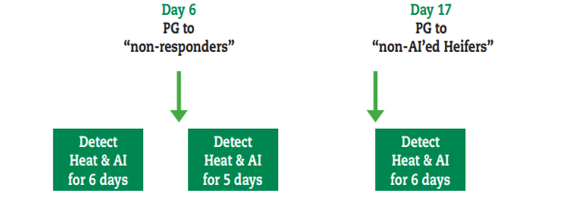
Figure 1. Alternative prostaglandin-based regimen for replacement heifers.
There is an option to use a PRID/CIDR device in heifers using a similar protocol to what was outlined above for cows. Where this is employed, heifers can be subjected to (i) heat detection and AI as normal with those not showing heat inseminated at 72-84 hours after device removal in conjunction with administration of an injection of GnRH or (ii) where heat detection is impractical, all treated heifers can be inseminated (i.e. TAI) at 55-60 hours after device withdrawal. GnRH must be administered at insemination (as a safeguard to ensure ovulation). This approach will result in a 100% submission rate and will induce ovulation and possible pregnancy in some non-pubertal heifers. Pregnancy rates of 70% and above have been achieved at Grange to a single timed insemination in post-pubertal 15-16 month old beef heifers using this regimen.
Regardless of regimen used, it is imperative that heifers are bred to easy-calving sires, ideally not harbouring any myostatin gene mutations, as dystocia or calving difficulty can be up to four-fold higher in heifers compared with mature cows.
For further advice on breeding management, consult with your Teagasc advisor or veterinary surgeon. Additionally, the US based Beef Reproduction Task Force, a group of research scientists and extension officers, produce practical recommendations on various heat synchronisation/TAI protocols each year and these can be viewed on the Beef Reproduction Task Force webpage.
Compiled and edited by Mark McGee and Paul Crosson, Teagasc, Grange Animal & Grassland Research and Innovation Centre, and first published in BEEF2026 – Driving Sustainable Performance, additional reading from BEEF2026 is available here.