
Matching people and rostering to farm workload, getting the balance right


Summary
- Dairy farmers are well-positioned to offer highly competitive and attractive employment packages and many are doing so very successfully on a consistent basis.
- Word-of-mouth is the single most commonly used method of recruiting locally, however multiple methods may need to be used to maximise access to available labour.
- There are numerous benefits to having a staff roster, yet very few dairy farmers have a written/physical work roster in place.
- One of the main benefits of a roster is ensuring people are not over-worked and stressed, benefitting staff productivity and retention.
- Rosters can and do change over time but fundamentally having the correct number of good employees is essential for the success of any staff roster.
The issue of burnout, and challenges of attracting and retaining employees, have become increasingly prominent in Irish agriculture. Farm structure in Ireland has seen a dramatic change in recent years. Recent data indicates that almost half of farm families do not have an identified successor. The traditional owner-operator plus additional family help model, that previously could manage an average herd size, is increasingly becoming incapable of coping with the new realities of herd size. The sustainability of dairy farming increasingly relies on farms being able to provide employment opportunities where pay and conditions of work are at least as attractive as alternative careers.
Previous studies with dairy farm employees have found that hours worked on dairy farms can make employment unattractive. Evening finish time was cited as the most critical issue for employees. The majority of Irish dairy farmers are calving in Spring and aim for at least 80% calved in the first 6 weeks. Spring has been identified as accounting for 35% of the overall workload. This can bring its own challenges in terms of matching staff to the roster throughout the year. Alongside this, Irish farms are competing with industries that typically offer a 5-6pm finish time and flexible working arrangements. Therefore, more farmers are trying to ensure employees, insofar as feasible, have structured working days for most of the year. Employment law must be adhered to in terms of rest breaks and overall working hours per week. See the Workplace Relations Commision website for additional information.
Rostering is not a new concept however in most dairy farms, except for some of the larger and multi-site units, there is no physical roster in place. The roster is verbal, with usually fixed hours for full-time employees. This brings its own challenges, namely are there enough people at key time, who covers leave and sick leave etc. For some farmers the initial challenge is ‘where will I find employees?’, and then the rostering challenge will follow. Perhaps instead, the starting point should be ‘can I offer an attractive job and what does that look like on a roster?’. Over time this shift in approach can lead to better hiring outcomes and a more effective work plan for the whole farm.
What makes employment attractive
Research and experience tell us that people seeking employment want the following as core factors; Flexible working hours, fair pay, relevant training, good communication, responsibility, respect and good working conditions. These are common to all employees and the best quality employees will expect them. Higher-level expectations such as opportunities for career progression will vary more depending on the person and are very important to some depending on their circumstances, however the core factors must be in place as a starting point in all cases.
There is no question that dairy farmers can offer flexible working hours as these farms are operating 365 days per year with a variety of tasks. Mindset and tradition can often be the barrier around hours of work. However, change is happening and we can now see farmers offering most or all of the above. After careful consideration to what the farm and farmer can offer, thought must be put into platforms for finding people.
Finding employees
Based on a recent study conducted with Teagasc dairy discussion groups, Figure 1. presents the variety of methods used by the farmers to recruit employees. Some farmers used more than one method, and word of mouth was the most used method. Word of mouth remains the most used method of recruitment. Peer recommendations and word-of-mouth recruitment rely entirely on the dairy farmers reputation as a quality employer.
In the future, dairy farmers will need to reach a larger and more diverse talent pool such as urban dwellers looking for a career change, as well as overseas workers seeking employment or experience in Ireland. To search for these less traditional farm employees, a variety of innovative recruitment methods will be required. We see this already on farms that have a tradition of hiring multiple employees, where for example a mix of agency staff, local people and work experience students are combined into a diverse workforce on the farm. By using a variety of recruitment methods, farmers are ensuring their jobs are advertised to a wide network of people.
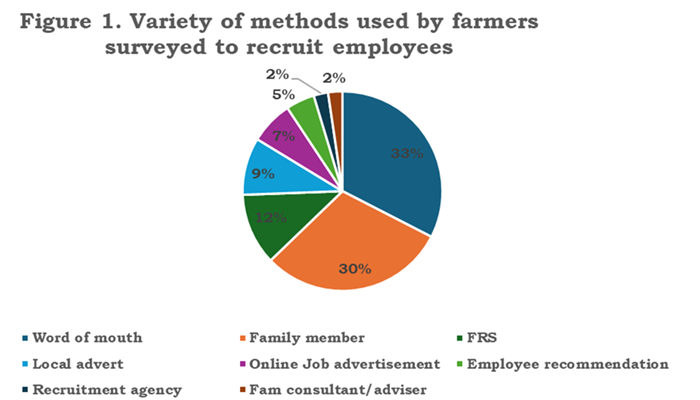
Figure 1: Recruitment methods used by farmers
Identifying and managing work related stress through better rostering
HSE policy on presentation and management of work-related stress has characterised the indicators of work-related stress as including the following:
- Staff attitude & behaviour- loss of motivation
- Staff turnover- increased turnover
- Sickness absence – frequent short periods of absence
- Presenteeism- coming into work when unwell
- Relationships at work-tension between colleagues
- Work performance – reduced output
There are multiple signs and symptoms of work-related stress and more information can be accessed on the HSE website. The HSE has also identified six key areas for assessing potential sources of work-related stress. These are known as the ‘Management Standards’. They cover the primary sources of work-related stress and can be used to measure performance in these areas. The key areas are:
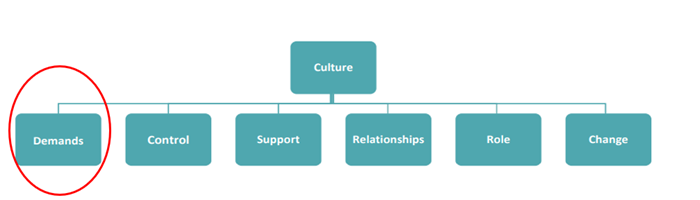
Demands include important issues such as total workload, daily/weekly work patterns and the work environment.
Rostering
Rostering is a tool that can help with the demands above as they can:
- Eliminating over and under staffing
- Ensuring legal obligations are adhered to with hours work and leave
- Reducing workplace accidents
- Reducing burnout
- Reducing staff turnover
- Preventing conflict
- Enhancing communication
Unfortunately, on many dairy farms physical written rostering is still not commonly practiced.
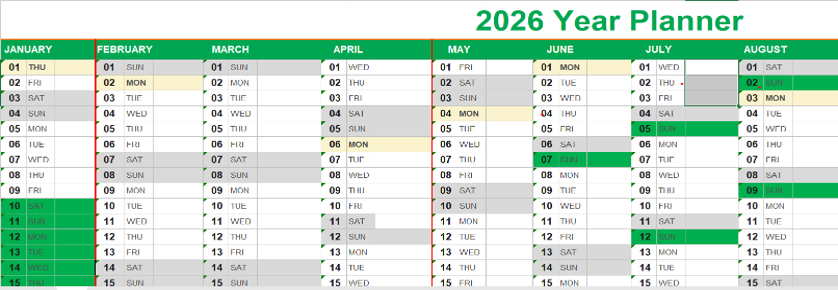
Figure 2: Example of a 2026 Year Planner
Considerations when rostering
The average age of dairy farmers is increasing with the average age now 54 and consequently more are saying they are not able to do the work they used to do. Therefore, this adds to the benefits of having scheduled, fixed staff employed, giving the opportunity to plan the workload accordingly.
In-terms of the number of hours or people that a farmer will need, it depends to a large extent on the system and facilities in place. For example, some farmers calve cows in two seasons, some are aiming for very high output system where cow care can be more demanding, some have invested in facilities which improve work efficiency around the yard while others have not. It will also depend on how much work is outsourced to the contractor or others. On average a good guide is that for the average herd size of 100 cows, the farmer providing full-time labour input with 800+ hours part-time help can work well, while for larger herds 1 person per 100 cows plus some part time help to cover additional work in spring and leave throughout the year is adequate.
Regardless of how many people you need or if they are all part-time or full time or mixed, fixed hours are essential. This has been an issue in the past with some farmers only looking for someone for the busy spring period or when they go on holidays. Variable, non-fixed hours undermine scheduling reliability, as staff may prioritize outside commitments and remain unavailable for short-notice shifts. Poor planning can also damage your reputation as an employer, making you appear unorganized and disrespectful of your team’s personal time.
Farmers managing the average herd size need to be mindful when planning part-time help. For example, if the farmer is working Monday to Friday on their own and have help scheduled for Saturdays, they could decide to plan for additional work due to having another person. The challenge here is that the farmer has worked hard all week and now has a packed Saturday planned on top of this. Some farmers have decided to get in a relief milker one or two evenings during the week to ease the workload for themselves. Farmers must be mindful that they are a key part of the roster and in turn must also look after themselves and not over commit themselves.
Another consideration is to balance workload across the seasons. Farmers with part-time help can have the challenge when employees are in school/college during spring when they have them for the weekend and during the summer they also have them during the week. Farmers in some cases would like to have more help in spring but decide to make the most of summer and take more time off then.
Farmers with full-time help can have a challenge when it comes to weekend rostering. Full-time people can typically prefer working Monday to Friday. What farmers are doing here is completing all major tasks from Monday to Friday. As a result, weekend duties are strictly limited to milking and routine youngstock management, allowing for an optimized schedule where team members rotate onto weekend shifts only once every three weeks.
Rostering annual leave is a major benefit when working with employees. Farmers can guide employees in terms of ideal time to take leave and farmers can firstly roster their own leave. When leave must be noted on the roster and it operates as a first come basis employees get more efficient around booking leave. Sick leave is far more challenging when there is only one employee and also when understaffed. This leaves the farmer under a lot of pressure. On the back of this some farmers have decided that it is best to have 2 people or more working on the farm be it part or full time.
Key considerations for the management of night-time calving centres around farms operating with family and multiple employees tending to roster nighttime calvings so that whoever is on at night starts later in the following day and is not rostered on every night. For some farmers with part time help they have invested in additional calving facilities and have a bigger number of close-up cows on straw and on the back of this have the routine of doing a final check and if nothing is happening, they go to bed and are back out early in the morning. These farmers say it is too much to have broken sleep at night and work all the following day. Other farmers have advertised and hired a night-time calver for 6 weeks and where used is working successfully.
Practical Implications
Before we can think of rostering, the WRC employer obligations and the fundamentals around attracting people to work on your farm need to be seriously considered. Work-related stress is a real issue for both employees and employers and needs to be factored into labour management decisions. As a survey farmer noted ‘in the long run it costs more being a little bit under-staffed than being a little bit over-staffed’. Rostering is a fantastic aid to matching workload and staff. It is not a difficult task and the visualisation of it helps to determine what is required on any given day. There are many considerations when rostering. The advice is to make a positive start and then all can be tweaked along the way to help achieve your farm objectives.
The above first appeared in the proceedings from the Teagasc National Dairy Conference 2026 ‘Developing Resilient Dairy Farming Systems’, additional reading from the National Dairy Conference 2026 is available here.