
The Climate Change Advisory Council has highlighted the need to ‘urgently accelerate the roll-out of proven on-farm measures to reduce emissions’ in its 2025 Annual Review of Agriculture and Land Use, Land Use Change and Forestry.
The review, released on 17th July 2025, made key recommendations around reducing emissions, prioritising resilience and accelerating diversification.
According to the latest EPA Greenhouse Gas (GHG) emissions report, agricultural emissions fell by 0.346 MtCO2e (1.7%) in 2024. Compared to the 2018 baseline for the 2030 Climate Action Plan target, agriculture emissions have decreased by almost 1.0 MtCO2e (4.6%). The sector is committed to reduce emissions by 10% by 2025 and 25% by 2030 relative to 2018.
Greenhouse Gas Mitigation Measures
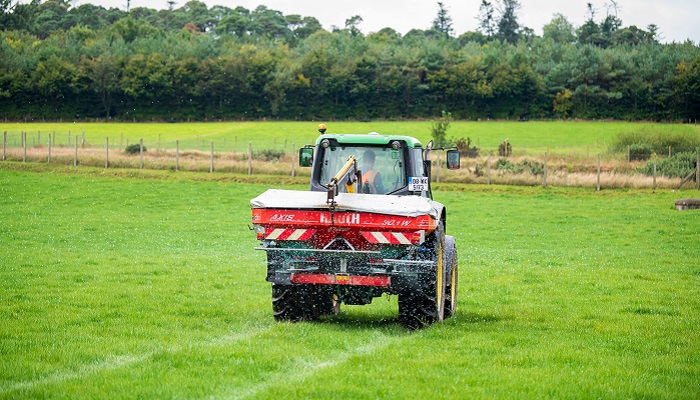
The CCAC has called for targets to be set for the deployment of technologies outlined in the Teagasc MACC, including methane-reducing manure additives, as well as an ‘urgent push’ to progress the replacement of 90% calcium ammonium nitrate utilisation with protected urea.
Recent research from Teagasc has shown that sulfuric acid and peroxide-based manure amendments have stood out as effective in reducing both methane and ammonia emissions during manure storage. Research is underway to investigate the practical application of these additives in existing farm operations.
Relating to nitrous oxide emissions, Teagasc research has shown that protected urea has the potential to give the largest, quickest and a cost effective way to reduce greenhouse gas and ammonia emissions.
While the CCAC review also noted the importance of the Signpost Advisory Programme to the knowledge transfer of MACC measures, ‘incentives and regulations will also be needed’ to ensure sufficient adoption.
Diversification
The CCAC review also calls for annualised targets relating to the roll-out of diversification measures, including (but not limited to) bioenergy generation and increasing afforestation and agroforestry. Annual afforestation rates are falling well below the 8,000ha/annum target. The measurement of forest carbon stocks is a focus of ongoing research within the Teagasc Climate Centre, as well as exploring how species choice, genetic diversity and forest management can build resilience to the changing climate.
Research is also underway at Teagasc Grange to investigate the sustainability of anaerobic digestion in Ireland. This includes identifying feedstocks with the lowest GHG emissions per unit of energy produced and exploring alternative combinations of feedstock to optimise biogas production.
Resilience and Adaptation
The CCAC review highlighted the importance of adaptation measures to support agricultural resilience in the face of climate risks. A recent report by Teagasc for the CCAC highlighted that farmers have been impacted by weather changes and face new challenges, with more frequent disruptions to farming operations and resulting environmental, economic, and social impacts. Adaptation to future weather changes is the focus of the Agri Adapt project, led by Teagasc.
The Agri Adapt project, led by Teagasc, will develop strategies for different sectors of Irish agriculture to adapt to climate change. The goal of the Agri Adapt Project is to develop strategies for different sectors of Irish agriculture to adapt to climate change, including solutions that are location and farm specific.
More information:
Marginal Abatement Cost Curve 2023
CCAC Agriculture and Land Use, Land Use Change and Forestry, Annual Review 2025