
Aligning Policy and Practice: Improving Uptake of Ammonia Reducing Measures
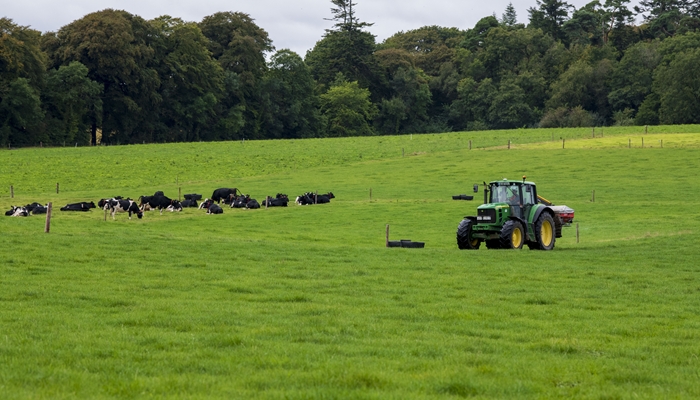
A new Teagasc–UCD study published in the journal Agricultural and Food Economics has examined why some cost effective ammonia reducing practices aren’t being taken up on Irish farms.
In a study consisting of eight focus groups (four with beef farmers and four with dairy farmers), affordability, compatibility and low awareness were identified as key barriers to adoption.
Ammonia is an atmospheric pollutant that is linked to health problems in humans, acidification of soils, terrestrial water bodies and marine ecosystems, and plant nutrient losses from farms.
In the Republic of Ireland, ammonia emissions decreased in 2022 and 2023 and were in compliance with the emission reduction targets, mainly due to the uptake of mitigation measures such as Low Emission Slurry Spreading (LESS) and decreased nitrogen fertiliser application. However, fluctuations in livestock numbers and fertiliser usage means that it is important to continue the ammonia abatement efforts to ensure sustained compliance with the target.
Although many mitigation technologies are cost-beneficial and assumed to have positive outcomes for all users, non-economic considerations such as farm managers’ awareness, knowledge dissemination pathways, and cultural norms also need to be considered. The aim of this study was to investigate why farmers sometimes reject the cost-effective farming practices for the reduction of ammonia emissions.
The results showed that awareness of ammonia emissions was low among participants and other environmental issues such as water quality, soil quality and biodiversity were considered higher priorities. The research also identified three main themes and several sub‑themes that explain the behavioural barriers to adoption.
Theme 1: Adoption
Affordability was the primary barrier for adopting low-emission farming methods. Farmers also noted that usability of the technology and its compatibility to individual farm characteristics. Availability and a lack of information also affected adoption of measures such as protected urea.
Theme 2: Emotional Perspectives
Both beef and dairy farmers felt that the media portrayal was focused on the negative environmental impacts of farming rather than its contribution to food production. Participants believed that Irish agriculture was more sustainable than many of its global competitors and had continuously improved in terms of environmental pollution.
Theme 3: Agricultural Policy
Policy issues were frequently highlighted by participants to be perceived as environmentally ineffective.
Conclusion
These results highlighted that there is a need for a greater focus on research addressing dynamics in farmer behavioural factors in order to better understand the relationship between perceptions and actual technology adoption on farms. The study recommends that future policy reforms should simultaneously target all the nitrogen-related farm environmental issues and fully consider the local farmers perspectives in policy design and implementation.
Full publication: Daulagala, C., Breen, J., Russell, T., Kelly, E. and Krol, D.J., 2026. Adopting ammonia abatement: thematic insights into farmers’ perceptions and policy challenges in Irish agriculture. Agricultural and Food Economics, 14(1), p.40. https://doi.org/10.1186/s40100-026-00478-7
To learn more about Climate and Biodiversity research at Teagasc, visit the Teagasc Climate Centre webpage.