
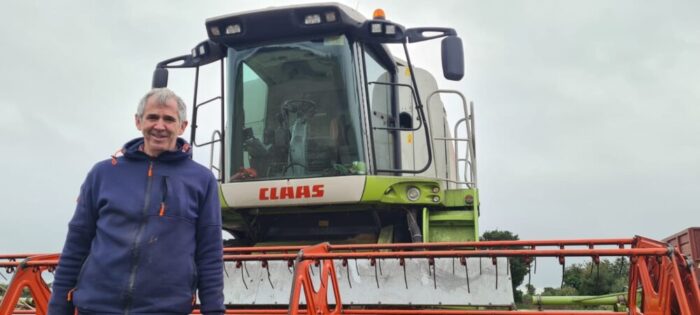
Following a recent visit to Vincent Macken’s tillage farm in Co. Meath, Signpost Tillage Programme Advisor, John Mahon reflects on some of the practical measures taken after the combine stops rolling that greatly reduce the farm’s carbon footprint while enhancing local biodiversity and water quality.
A walk around the farm this autumn highlights the progress made since joining the Signpost Programme and the steps being taken to farm in a more climate smart way while improving the environment.
I recently visited the Signpost tillage farm of Vincent Macken, Brownstown, Navan, Co. Meath. The visit highlighted the many sustainability and climate-smart measures that take place once the combines have stopped rolling and the harvest is gathered. Collectively, these actions greatly reduce the farm’s carbon footprint while enhancing local biodiversity and water quality.
The farm specialises in rotational cereals, oilseed rape and legumes, which fix their own nitrogen and so reduce the overall reliance on chemical nitrogen on the farm. The soil is a typical heavy Meath clay, which can be prone to waterlogging, and the potential loss of nutrients to local waterbodies over winter.
Over recent years, the farm has focused on plant and soil health and increasing on-farm carbon stocks. Since joining the Signpost Programme, overall farm greenhouse gas emissions have fallen by more than half (1.4 t CO₂-eq/ha in 2022 versus 0.6t CO₂-eq/ha in 2024).
Plant and soil health measures
Intensive, precision soil sampling within fields takes place every second autumn, most recently in August. Results feed into the farm’s nutrient management plan (NMP) and allow precision placement of chemical fertiliser each spring. This has cut overall chemical nitrogen use by about 25% during the programme and raised nitrogen-use efficiency from 84% to nearly 100%, so little nitrogen remains in the soil to leach to the local river over the wet autumn/winter. Lime is applied where necessary to further increase nutrient efficiency.
Autumn cover crops
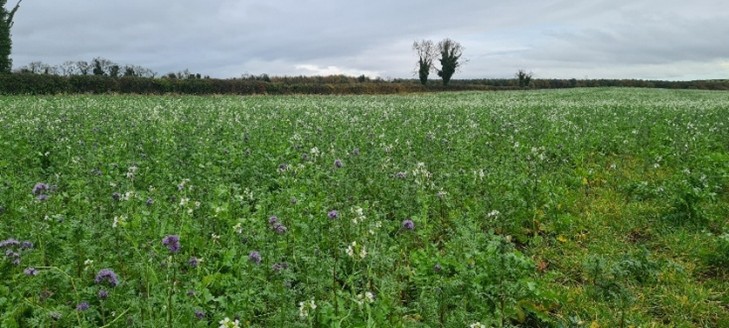
Autumn cover crops are sown on ground destined for spring cropping and have developed well this autumn. Benefits include:
- Early biomass that mops up free nutrients on potentially waterlogging heavy soil, some of which will become available to next year’s crop.
- Enhanced biodiversity – they are full of insects with this mild autumn, and earthworms and other below-ground beneficials.
- Protection of soil structure during these heavy rainfall events by providing surface cover and reducing direct damage.
Straw incorporation
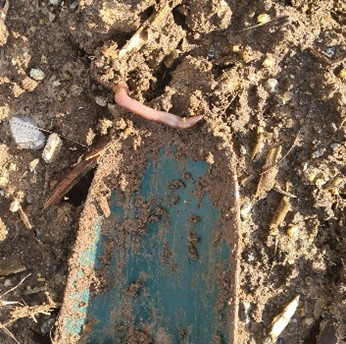
Soil pits dug during the visit showed abundant earthworm activity where the previous crop of wheaten straw had been chopped and incorporated at harvest. The straw feeds soil biology; as it decomposes it improves soil structure, drainage, and trafficability for next season, while at the same time increasing soil carbon.
Non-inversion crop establishment
Non-inversion crop establishment was introduced more than a decade ago and the benefits are clear: extremely friable soil structure at sowing depth, rapid crop establishment this autumn, helping to reduce GHG emissions and better retention of soil carbon.
Organic manure
Recently a trial importing organic manure in the form of local cattle slurry onto winter cereals has begun for 2026. This could further reduce chemical fertiliser needs and increase soil organic matter.
Increasing carbon stocks
As mentioned, straw incorporation is a major contributor to directly returning carbon to the soil. Additionally cover cropping over winter also returns carbon as biomass decays when incorporated back into the soil in spring. Importing organic manures will help increase soil organic matter and carbon over time. While, conservation agriculture methods at establishment prevent carbon losses associated with ploughing.
A major feature on the farm is the amount of hedgerow, which act as carbon storage. Since joining the Signpost Programme, hedgerow management has shifted to allow greater width at the base and extra height, with an occasional hawthorn left uncut every 50-100m.
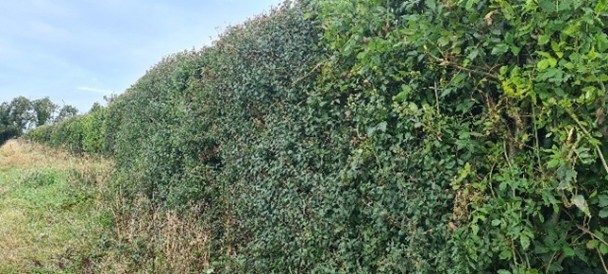
This increases carbon sequestration and greatly benefits the biodiversity using the hedgerows. The hedges had been cut in September by a local contractor and were a shining example of how to manage hedges while also being able to work with machinery on a busy tillage farm.
Additional water quality measures
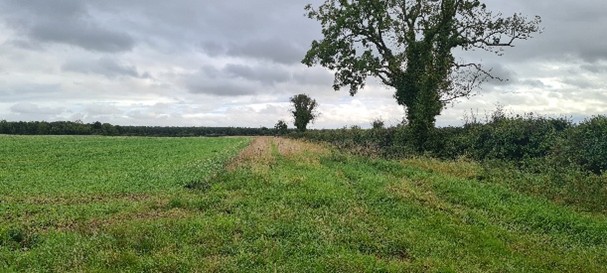
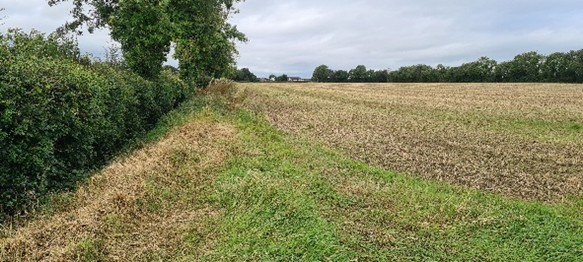
In addition to those measures mentioned, several other initiatives have been taken up specifically at targeting local water quality. These include a minimum 3m mandatory buffer zones (pictured below) alongside the farm’s dry drains; a 12m riparian (pictured above) sown grass sward beside the internal watercourse; earthen bund barriers at three points identified on EPA PIP (Pollution Impact Potential) maps, to intercept overland phosphorus flow during heavy rainfall; Integrated Pest Management (IPM) to reduce pesticide risk to watercourses; use of low-drift nozzles on the sprayer, and a rainwater management plan.
A walk around the farm this autumn highlights the progress made since joining the Signpost Programme and the steps being taken to farm in a more climate smart way while improving the environment. Many of these autumn actions could be replicated on tillage farms nationally to bring about positive change and a greater appreciation of the natural features on our farms.
John Mahon works as a Signpost Programme Tillage Advisor, find out more about the Signpost Programme here.
More from Teagasc Daily: Why this award-winning tillage farmer is making space for nature
More from Teagasc Daily: Identifying biodiversity and heritage preservation improvements
More from Teagasc Daily: Sustainable farming innovations at the Allen family farm