
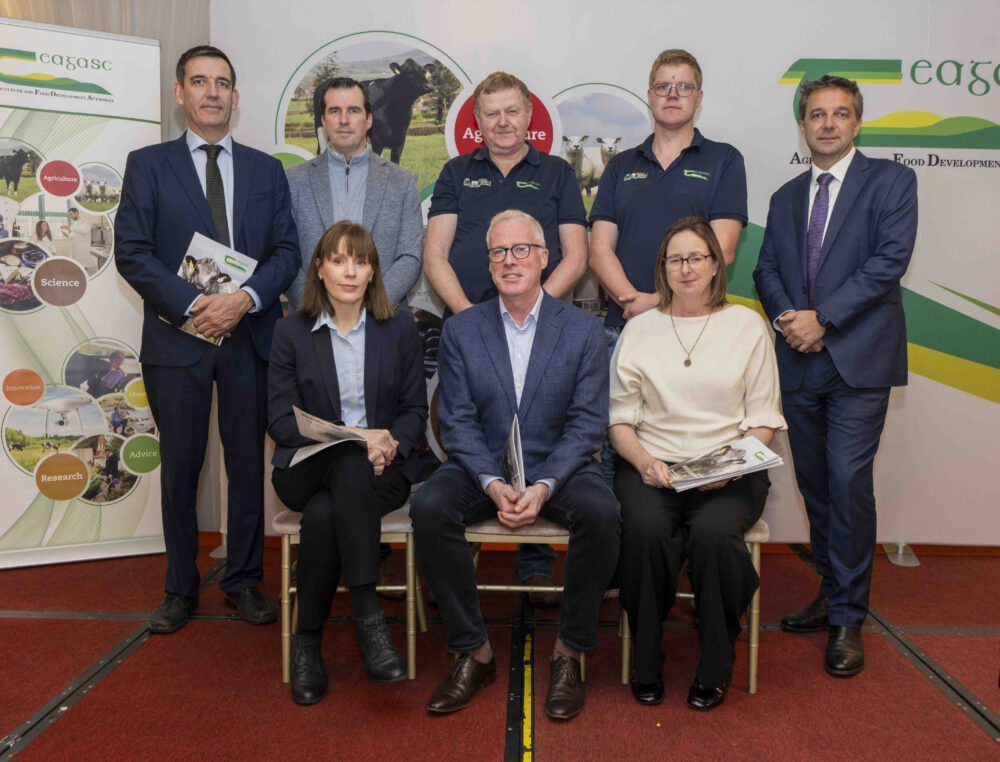
At the Teagasc National Beef Conference, Trever Boland, IFAC, encouraged farmers to take proactive steps now when tax planning, sharing some key opportunities available and the key areas to prioritise investment if funds are available. Read key insights here:
Record livestock prices give Irish suckler and beef farmers the opportunity to invest in their future, their families and their farms.
Profit is what farmers stride for; ultimately the goal of improving genetics, adopting best practice in grassland management, having efficient facilities and operating excellent standards in animal husbandry is to enable the farm to provide a return for the time and capital investment that a farmer makes from year to year.
In 2025, cattle farmers are receiving the highest prices in many years for livestock, both for the sale of live animals and through beef prices received from beef processors. With production costs remaining broadly similar to 2024, this is projected to be a record year for profit on Irish beef farms.
For the first time in a number of years, many suckler and beef farmers are likely to be profitable and have surplus funds available. While these profits are long overdue and recognition of years of investment and dedication, they bring new challenges such as potentially higher income tax bills and regulatory demands such as slurry storage requirements.
To take one taxation example where total sales for the year are up €20,000 on a 20-cow herd, the additional income could lead to an additional tax bill of up to €10,000 for the farmer paying income tax at the marginal rate; (i.e. the highest tax rate plus Pay-Related Social Insurance (PRSI) and the Universal Social Charge (USC)). Of course, higher income for 2025 may also provide opportunities for farm investment over and above what might normally be considered.
Summary:
- In 2025, cattle farmers are receiving the highest prices in many years for livestock sales.
- With production costs remaining broadly similar to 2024, profits on Irish beef farms are expected to increase substantially.
- Increased profitability could potentially lead to higher tax bills and may also provide opportunities for farm investment.
- Farmers are urged to be proactive and optimise reliefs such as stock relief and income averaging to reduce tax liabilities.
- Investments should prioritise health and safety of the farmer and farm families and also improvements in grazing infrastructure.
Early planning is essential
Farmers need to be aware now of the likely farm income in 2025. Given the lower incomes which prevailed on cattle farms in the past than that projected in 2025, many farmers consider tax filing deadlines as the target date for assessing any tax due with little concern in relation to the size of the tax bill.
Quite often many, particularly farmers without off-farm income, found themselves with a low tax bill or indeed a refund. For farmers looking at 2025 income to date and any projected additional income for the remainder of the year, there are possibilities to reduce income tax bills, invest in the farm for the future, invest in family and make the farm a safer place to live and work.
Most farmers on suckler and beef farms will have completed the majority of their sales for the year by the end of November in any year. Therefore, this is an opportune time to review the sales figure for the year to date and compare that figure to sales in prior years.
Likewise, any changes in expenditure should be quantified; although prices have remained broadly stable, levels of input use, such as feed and fertiliser, often fluctuate from year to year. For example, excellent grazing conditions in 2025 may have led to greater fertiliser use. Likewise, there is anecdotal evidence of increases in creep feeding of meal as weanling producers seek to take advantage of the buoyant cattle trade. Overall, though, the level of increase in sales values relative to prior years, is likely to lead to substantially greater profits on most farms.
Tax planning opportunities
Farmers are urged to take proactive steps now. Some options available to farmers include:
- Stock relief
- This relief permits farmers to reduce trading income by between 25 and 100% of the value of any increase in value of stock at the year-end compared to the value at the start of the year. Young trained farmers and farmers in registered farm partnerships can benefit from the increased levels of stock relief which could be very beneficial in reducing tax liabilities.
- Income averaging
- This permits farmers to spread income tax burdens over five years to ease cashflow pressures. This means that one-fifth of the profits for five years is charged to tax for the year.
- Family wages
- Formalising support from family members such that they receive a wage for work on the farm leads to a reduction in tax liabilities while supporting education and living costs. With many family members helping out on farms, whether that is during the summer months at hay and silage harvesting or winter feeding, spring calving and calves or office work, now is the time to consider rewarding this work by formalising a wage to these family members. Revenue rules around PAYE modernisation and employer registration need to be strictly followed and implemented. This investment in family members will allow the farmer deduct the wages as a farm expense and gives the younger generation an added incentive to lend a hand around the farm.
- Pension contributions
- Farmers can use profits to strengthen retirement savings and reduce preliminary tax exposure.
Teagasc Beef Specialist, Catherine Egan spoke to Trevor Boland at the Teagasc National Beef Conference on November 18, watch the video below for a summary of his presentation:
Investing in the farm
Holding on to as much profit as possible is the first investment a farmer should make and using the appropriate stock relief available as described above is a key consideration every farmer should make on a yearly basis. Furthermore, in the case of rising farm profits, using income averaging allows more time to consider future farm investments and limits the tax liability falling due.
Nevertheless, there may be opportunities for investment. Areas that farmers should consider include:
- Improving safety and handling facilities to future-proof operations. Unfortunately, farming has a high accident and fatality rate and so prioritising investments in health and safety on our farms are paramount, all the more so considering that most farms are family-farms operations. Bear in mind that the most important asset on any farm is the farmer and their families. Investments in facilities, training and handling equipment, including maintenance of machinery, should be the first investment on any farm.
- Preparing for slurry storage and regulatory changes. Applying early for TAMS grants and accelerated capital allowances to offset investment costs.
Apart from the above, the most productive investments on any farm are those which enable the farm to achieve more live weight performance from grazed pasture. Investments in reseeding, roadways and other grassland infrastructure such as fencing and water facilities are likely to have a greater return on investment than housing or machinery.
Farmers using increased farm profits now to invest in their own future income has many benefits, not least relief on tax liabilities. Pension contributions remain one of the best methods of reducing a tax liability, while ensuring an additional income in later years, may help ease the transfer of family farms and generation renewal.
Conclusion
The likely increase in profits generated in 2025 are the result of many years work and investment in genetics, breeding, grassland management and improving overall farm performance. Now is the time to manage your tax and cashflow. By investing in your future, family and farm there are opportunities to make your farm safer and more cost-efficient, at the same time as making suckler and beef farming even more enjoyable.
For further insights from the Teagasc National Beef Conference, visit here.
More from Teagasc Daily: Winter feeding: Get your cows breeding earlier next year
More from Teagasc Daily: Myostatin: The benefits and drawbacks
More from Teagasc Daily: The challenge of high beef prices