
Can Ireland’s lost elm trees return to our landscapes?
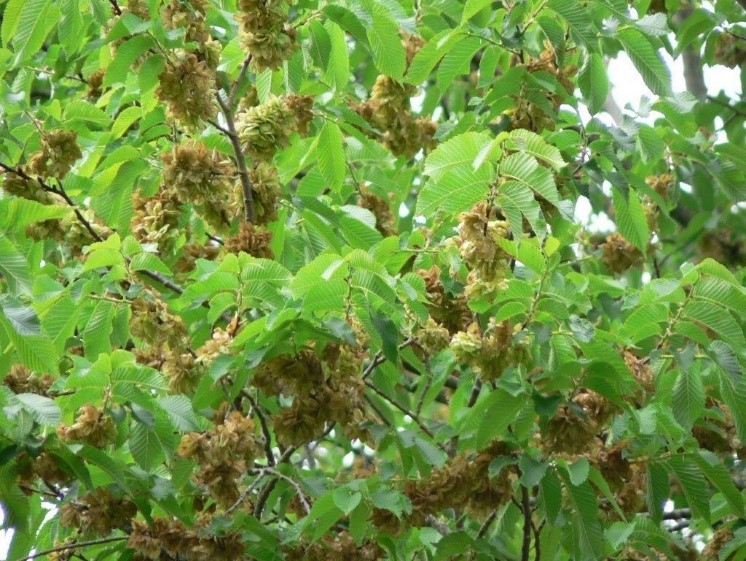
In a recent RTÉ Brainstorm article, Karuna Shrestha, Teagasc Walsh Scholar, and Dheeraj Rathore, Teagasc Tree Improvement Research Officer, discussed their research on the conservation and genetic improvement of ash, elm and other forest tree species in Ireland.
The devastation of elm trees in Ireland due to Dutch elm disease is one of the most striking but overlooked changes in our landscape. Once a familiar feature of hedgerows, roadsides and urban landscapes, healthy elm trees have largely disappeared from Ireland. Their decline is one of the most striking, yet often overlooked, changes in our landscape.
Ireland’s forests and woodlands cover 11.6% of the country’s land area. They play an important role in ecosystem stabilisation, supporting biodiversity, contributing to climate resilience and shaping the character of both rural and urban environments.
Among them, elms (Ulmus spp.), specifically native Wych elms (Ulmus glabra), were once an important and widespread component of the Irish landscape. Thriving in moist, fertile soils, they grew alongside ash, oak, alder and birch in hedgerows, woodlands, and towns.
Their ecological value was equally significant. Elm trees are reported as supporting more than 80 species of invertebrates, including the rare white-letter hairstreak butterfly, as well as specialised lichens such as Anaptychia ciliaris and Bacidia incompta. As one of the earliest trees to flower in spring, elms also provide an important food source for wildlife emerging after winter.
A disease that reshaped landscapes
The decline of elm trees is largely due to Dutch elm disease, one of the most devastating tree diseases recorded in the history. The disease is caused by fungal pathogens, primarily Ophiostoma ulmi and the more aggressive Ophiostoma novo-ulmi and is spread by elm bark beetles (e.g. Scolytus species).
The beetles carry the fungal spores on their body from infected trees to healthy elms while feeding and breeding beneath the bark, introducing the fungus into the tree’s vascular tissue, where it rapidly spreads and blocks water transport. The fungus can also move between trees through interconnected root systems. As one of the earliest trees to flower in spring, elms also provide an important food source for wildlife emerging after winter.
The first epidemic began in the early 20th century, but the arrival of O. novo-ulmi in the late 1960s proved catastrophic. By the late 1980s, most mature elms across Europe, including Ireland, had been lost. Dutch elm disease works by blocking the tree’s vascular system, preventing water transport. Infected trees show yellowing leaves, wilting, and crown defoliation, which are typically observed during mid-summer or early autumn, often progressing rapidly once symptoms appear.
Why elms still survive
Despite this devastation, elm has not disappeared entirely. Many elms persist as young regrowth from root systems, known as suckers. These trees can survive for years, but once they reach around five metres in height, they become vulnerable again to the bark beetle attack and severe reinfection. This creates a repeating cycle of growth, infection and decline. However, a small number of mature elms continue to survive without visible symptoms. These trees are of particular interest, as they may carry natural resistance to the disease.
A path towards recovery
Research has shown that resistance to Dutch elm disease varies among species and even within individual trees of the same species. Among European elms, wych elm (Ulmus glabra) and field elm (U. minor) are generally more susceptible, while European white elm (U. laevis) shows relatively higher tolerance. This variation has driven extensive breeding and research programmes across Europe. In Spain, Ulmus minor (field elm) clones showing resistance have been identified through long-term selection and screening, while similar efforts in countries such as Italy and the Netherlands have produced disease-tolerant clones.
In Ireland, research is now focusing on identifying and conserving surviving elm trees that show signs of resistance. The ElmAsh project, led by Teagasc, is working to locate these rare elm survivors, collect genetic material, and propagate them for further study and genetic conservation. These trees are being screened through long-term field testing to assess their resistance and performance. As part of this effort, a gene bank of putatively resistant elm trees has already been established at Teagasc, forming a valuable foundation for future breeding and restoration.
How you can help
Citizen science is playing an important role in this work. Through the Report a Healthy Elm Tree initiative, people are encouraged to identify and report mature elms that appear healthy. These observations help researchers locate trees that may carry valuable resistance traits.
If you think you’ve spotted a healthy elm, there are a few key features to look for. Elm leaves are simple and serrated, with a distinctly uneven base where the leaf meets the stalk. The bark is rough and deeply furrowed, and the trees flower early in spring before the leaves emerge, producing small reddish-purple flowers followed by winged seeds.

How to identify elms.
By reporting these trees, members of the public can directly contribute to conservation and research efforts, helping to preserve valuable genetic diversity.
While elm may never return to its former dominance in the Irish landscape, collaborative work now focuses on a recovery pathway. By combining scientific research, breeding programmes, and citizen science, it is possible to reintroduce disease-tolerant elms over time. These efforts will not only help restore an important native species but also strengthen the resilience and biodiversity of Ireland’s future forests.