
Cattle slurry a valuable source of N, P & K
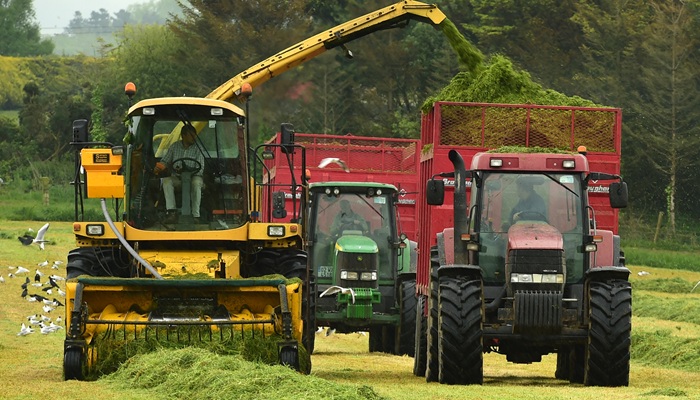
Getting the most from cattle slurry will help ease the impacts of high chemical fertiliser prices in 2026, Mark Plunkett, Teagasc Signpost Programme, tells us how.
Several farm practice changes may be required when making decisions to maximise the fertiliser value of cattle slurry such as where to apply, time of application, application techniques (trailing shoe / band spreader) and rates of applications.
Targeted application of cattle slurry based on soil test results will ensure efficient use of slurry nitrogen (N), phosphorous (P) and potassium (K). The typical value of 1,000 gallons of cattle slurry applied by LESS in springtime has an available N-P-K content equivalent to a 50 kg bag of 9-5-32. The nutrient content of cattle slurry will vary with animal type and diet, and especially with slurry dilution with water (see table 2). Knowing the nutrient content will help ensure that crops receive the planned levels of N, P & K to maximise grass growth for either silage or grazing.
Slurry Phosphorus (P), Potassium (K) & Sulphur (S)
Cattle slurry is an excellent source of P and K fertiliser and should be applied to parts of the farm that have either low soil P or K levels, or to crops with high P and K demands such as grass / maize silage. Targeting these areas will help reduce fertiliser bills and replenish soil P and K reserves.
Silage fields tend to be the furthest fields away from the yard and tend to have lower soil fertility levels plus the largest demand for both P and K. For example, 33m³/ha (3,000 gals/ac) of good quality slurry can supply ~ 30% of first cut silage N requirements and majority of P & K requirements.
In addition, slurry is a valuable source of organic matter / carbon which is a vital nutrient for plants and will increase grass yields by up to 3 bales/acre over chemical fertilisers.
Slurry is a very well-balanced fertiliser as its P to K ratio is 1:6 which is ideal for grass silage crops. While for grazing ground, the correct required P:K balance is 1:2, for example pig slurry has a better P:K ratio for grazing fields than cattle slurry or a fertiliser equivalent of 18:6:12.
Cattle slurry contains smalls amounts of available S and continuous application will help build soils supply. For example, a typical application rate of 33m³/ha will supply ~ 1.0kg S/ha. For grass silage crops, ensure fertiliser N type selected can deliver ~ 15 to 20kg S/ha/cut.
Slurry Nitrogen (N)
The form of N in cattle slurry is ammonium-N and is the same as the form of N as urea fertiliser. This form of N is readily available for plant uptake provided soil and weather conditions are favourable. Applying slurry in springtime on cool, overcast or misty days will reduce N losses and maximise N recovery.
LESS technology improves N recovery by 50%, for example LESS will recover an extra 3 units N/ 1,000gals compared to summer application. Therefore, aim to apply as much slurry as possible in the springtime by LESS to retain more N for grass growth. Spring applied slurry by LESS is worth approximately 3 units of N per 1,000 gallons (worth ~€4 per 1,000 gallons) extra compared to summer application, due to better N recovery at that time of the year (Table 1).
Table 1: Typical available N, P & K values kg/mᶾ for cattle slurry applied by LESS
| Time of application | N kg/mᶾ
(units/1,000gal) |
P kg/mᶾ
(units/1,000gal) |
K kg/mᶾ
(units/1,000gal) |
€/mᶾ*
(€/1,000gal) |
| Spring | 1.0 (9) | 0.6 (5) | 3.5 (32) | €7.20 (33) |
| Summer | 0.6 (6) | 0.6 (5) | 3.5 (32) | €6.4) (29) |
| *Cattle slurry value based on fertiliser N, P & K values in March, 2026 | ||||
Dilution of cattle slurry will improve the N uptake as the slurry will infiltrate faster into the soil compared to thick slurry. Diluted slurry will be washed off the grass faster resulting in reduced grass contamination. Remember that dilution will increase the N efficiency but will reduce the P and K content of the slurry and this needs to be accounted for in balancing crops P and K requirements. Typical cattle slurry has a dry matter (DM) of 6% and a nutrient profile shown in table 2.
Table 2. Available N, P & K values of Cattle at different Dry Matter (DM)% in springtime by LESS application techniques
| Dry matter % (Slurry description) | N kg/mᶟ
(units/1,000 gals) |
P kg/mᶟ
(units/1,000 gals) |
K kg/mᶟ
(units/1,000 gals) |
| 2 (very dilute) | 0.4 (4) | 0.21 (2) | 1.4 (13) |
| 4 (watery) | 0.7 (6) | 0.35 (3) | 2.1 (21) |
| 6 (typical) | 1.0 (9) | 0.5 (5) | 3.5 (32) |
| 7 (thicker) | 1.1 (10) | 0.6 (6) | 4.0 (36) |
| Note – On index 1 & 2 soils reduce slurry P availability by 50% & reduce K availability by 10% | |||
More from Teagasc Daily: Driving farm profitability through effective nutrient management