
Compact calving and grassland management driving profitability in West Cork
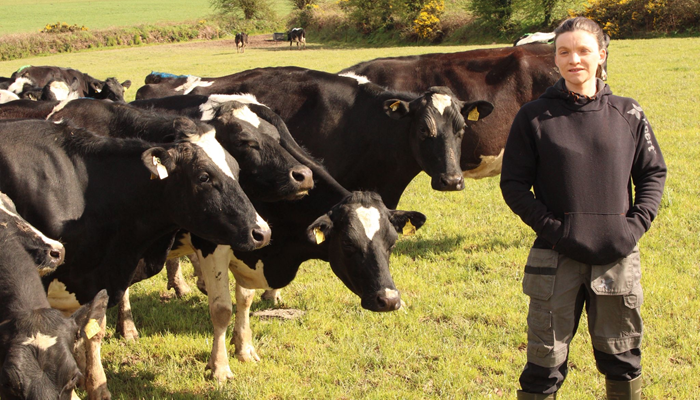
A dairy enterprise growing from strength to strength, built on the cornerstones of compact calving and grassland management, James Daunt, a B&T Dairy Enterprise advisor based in the Teagasc Clonakilty, visits Denise Twomey to find out more about the dairy enterprise.
Denise Twomey farms with her father, Denis, in the townland of Kill, near Crossbarry, Co. Cork. A lifelong farming enthusiast, she attended Clonakilty Agricultural College in 2016 and graduated from the Dairy Herd Management course in 2018.
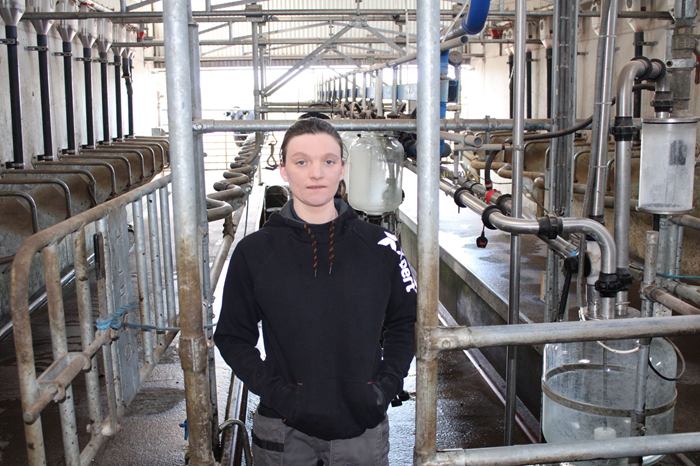
In 2021, she entered a farm partnership with her father, bought the farm in Kill and established a new milking platform while keeping replacements on the original home farm. Since then, the farm has invested in a new milking parlour, new slurry tanks and extra cubicles.
“Farming certainly isn’t easy and there are many challenges we all face,” Denise says, “but I’m proud to be part of an industry that produces nutritious food to a high global standard, sustainably, to feed a growing population.”
Denise and Denis have grown the herd from 17 cows in 2019 to 65 today, with plans to reach around 80 in the near future.
Breeding
Preparing for breeding is a key focus. In 2025, 85% of cows were submitted for artificial insemination within the first three weeks and the overall pregnancy rate after 12 weeks was 92%. Denise uses AI throughout the season – dairy AI for the first three weeks, followed by beef AI.
A simple, disciplined pre-breeding routine underpins that performance. Tail paint is applied three weeks before breeding to check cycling cows; animals that still retain paint at the start of the season are scanned by the vet and managed to get them cycling. During breeding, tail paint is topped up weekly or as required.
Denise uses a team of bulls evenly, selecting sires with a team average EBI above €260 (milk sub-index €75, fertility €100, health +€15) and predicted transmitting abilities of +18kg milk solids, +0.18% protein and +0.26% fat. As a result of improved management and selective breeding, the herd is producing 21% more milk solids than three years ago using the same feed input.
Soil and grassland management
The milking platform is mainly free-draining soil, which suits early turnout. Denise resurfaced the main farm roadway last year to improve access to paddocks. She accepts early grass requires investment – notably early nitrogen applications – but considers this a wise expense to drive spring growth. A portion of the farm is reseeded each year, with fields targeted according to their performance from data on PastureBase Ireland from the previous year.
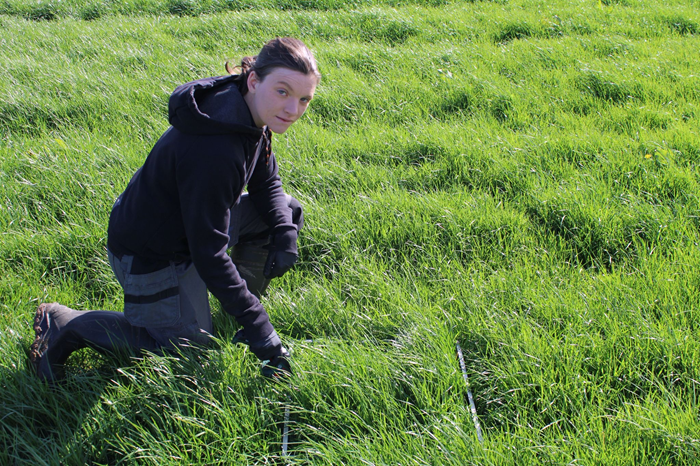
Soil fertility is a priority. 87% of soil samples test at optimum for phosphorus and 75% at optimum for potassium. Lime is applied where required, and soil samples are taken on a four-year cycle so corrective action can be taken promptly. Grass growth has averaged over 12 tonnes of dry matter per hectare in recent years. Denise sees soil fertility as the foundation for quality grass and takes pride in maintaining a leafy sward for her cows.
Denise is a firm believer in walking the farm to keep quality ahead of the cows. She completed 41 grass walks in 2025 and aims to walk weekly, reserving Wednesday mornings for the task.
“Grassland management is very important to me, and I think it’s the main driver of profitability on my farm. Once grass growth increases, I will walk my farm every three to four days,” she says.
She adds that grass is the cheapest feed, and her goal is to grow and utilise as much home-grown grass as possible.
Away from the farm
In her spare time outside farming, Denise keeps active through bouldering – a form of indoor rock climbing that emphasises technique, strength and problem solving. She began four years ago after seeing a clip online and has competed in events around the country.
“I find it’s a great break from the farm and a way to unwind,” she says.
More from Teagasc Daily: Farm to fork in Kilmichael
More from Teagasc Daily: Award winning oats in West Cork