
Farmyard management key to improving water quality
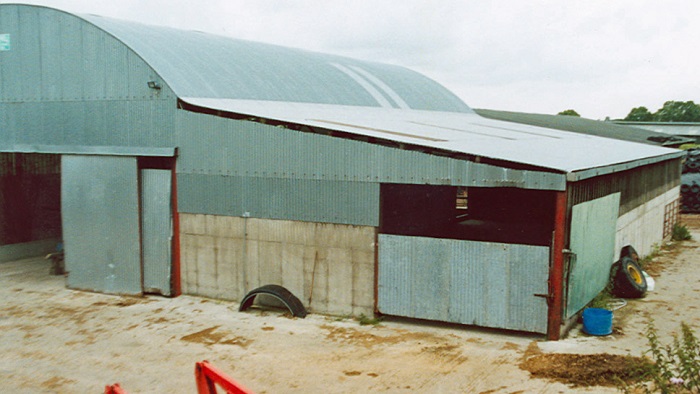
Farmyard management and the segregation of clean and dirty water are key areas farmers must address to improve water quality.
That’s according to Marie Kearney and Deirdre Glynn, Teagasc ASSAP Advisors, who joined Head of Outreach and Innovation at Teagasc, Mark Gibson on a recent episode of the Signpost Series webinar.
Touching on the legislative requirements, Deirdre Glynn noted that 46% of rivers and lakes fail to meet good ecological status, with agricultural nutrient loss identified as the primary pressure source in over 1,000 water bodies.
“For the agricultural sector, compliance is not optional. Under the CAP Strategic Plan, adherence to this legislation forms a cornerstone of the statutory mandatory requirements,” she said.
Meanwhile, Marie Kearney discussed the local authority inspections, of which 4,315 were completed in 2025, an increase of 66% of the year previous. Of these inspections, approximately 43% resulted in non-compliance.
“The main issues seen on farms are uncontrolled farmyard manure runoff, inadequate gutters and downpipes, clean water not being segregated and poor silage management,” Marie Kearney added.
Through the medium of the Signpost webinar, Marie Kearney provided a refresher on the differences between clean and soiled water, noting clean water is defined as rainwater falling on roofs, uncontaminated hardstanding areas and roads that are not exposed to livestock or manure.
Deirdre Glynn explained that soiled water refers to contaminated washings from milking parlours, yards and equipment. However, to be legally classified as soiled water, the liquid must meet two strict laboratory limits.
“It must have a biochemical oxygen demand of less than 2,500mg per litre and a dry matter content below 1%,” she explained.
Given this definition, Deirdre Glynn advised farmers to be conscious where silage is feed in collecting yards or of areas where manure accumulates, as a biological oxygen demand spike could see the resulting material being reclassified as slurry. She also warned that pumping soiled water into a slurry tank results in the entire tank being legally classified as slurry.
“It immediately loses its soiled water status and becomes subject to the full winter closed period,” she said.
Also discussed was the legislation pertaining to soiled water spreading, with Deirdre Glynn noting that milk producers are prohibited from land spreading soiled water from December 1 to December 31. In terms of storage capacity, facilities constructed before 2015 currently require 10 days of storage, while facilities constructed after 2015 require 15 days.
Storage must be sufficient to hold the maximum volume generated during the peak 10-15 day milking period in October, November or January, or for the full 31 days of December where 100% of the herd is being milked, Deirdre Glynn explained.
Two significant changes to soiled water storage requirements that will come into effect on October 1, 2028, were also discussed.
“Crucially now, farmers must prepare for October 1, 2028. First the 10-day allowance disappears, requiring all milker producers to meet the 15-day storage standard. Secondly, the statutory weekly production allowance increases by 42.8%, jumping from 0.21m3 to 0.3m3 per cow per week,” Deirdre Glynn explained.
For more information, the full recording of the Signpost Series webinar is available to watch below:
For more on managing water quality in your farmyard, visit here.
Also read: Teagasc launch a pre-Local Authority Inspection (NAIP) checklist