
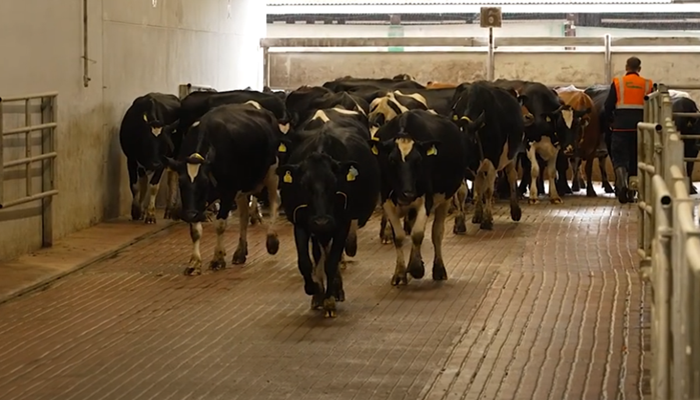
Poor handling is a common and preventable cause of lameness. The good news is that by making a few simple changes to how cows are moved and managed, farmers can make a significant difference.
The final video in the Animal Health Ireland lameness series focuses on a factor that is often overlooked in hoof health: cow handling, Joris Somers, Veterinary Advisor at Tirlán and Ned Dunphy, Irish Cattle Foot Trimmers Association, share some key considerations.
Why cow handling matters for lameness
Stressful handling causes cows to move in ways that increase the risk of hoof damage. Running, slipping, twisting and fighting can all result in lameness. Calm, low-stress movement helps prevent this.
Understanding cow behaviour
To handle cows well, it is important to understand how they perceive their surroundings:
- Sensitive hearing: Avoid shouting, sticks, dogs or noisy quads.
- Wide-angle vision: Cows are sensitive to shadows, sudden movement and contrast between light and dark.
- Herd instincts: Cows prefer to move in groups, and dislike isolation.
- Pace: Cows naturally walk slowly and like to examine their path. Rushing them increases the risk of stepping on stones or slipping.
Practical steps for low-stress handling
- Move cows calmly and quietly, allowing them to walk at their own pace.
- Use backing gates gently in the collecting yard to reduce the holding area, not to force movement.
- Consider installing a Batt-latch, which opens gates automatically, allowing cows to move without being herded.
- After milking, allow cows to return to paddocks promptly rather than waiting in the yard.
Promoting cow flow to reduce lameness
Good cow flow means cows can move easily and smoothly across the farm, without blockages or bunching. This reduces stress and physical strain both on cows and on farmers.
Common obstacles that disrupt flow:
- Narrow or poorly designed exits
- Sharp bends
- Water troughs or drafting gates in high-traffic areas
Ensure facilities are laid out to allow smooth transitions between paddocks, yards and the parlour.
Handling around calving
The period around calving is a high-risk time for hoof damage. Hormonal changes soften the ligaments and connective tissue, including those that support the pedal bone inside the hoof. This makes the hoof structure more vulnerable.
To reduce lameness risk during this period:
- Avoid long walks for freshly calved cows
- Keep cows near the parlour for at least a week after calving
- Provide access to deep, comfortable bedding before and after calving
- Pre-mix groups well in advance of calving to reduce bullying
- Handle these cows especially gently
In and out of the crush
Pay special attention when cows are being handled through the crush. Slips and falls here are common and easily avoided by:
- Moving slowly
- Minimising noise
- Allowing cows to take their time
Key message
Gentle, patient handling is one of the simplest and most effective ways to reduce lameness. Understanding cow behaviour and making small changes in handling techniques can lead to big improvements in hoof health and cow welfare.
Watch the ‘Good cow handling practices for lameness prevention’ video below for practical demonstrations and more tips:
More from the series: Lameness and farm infrastructure
More from the series: Common causes of lameness in dairy herds
More from the series: Why dairy cow lameness matters
More from the series: Hoof care and footbaths for lameness control