
Grass to gas: A win for farmers and the environment

Fiona Thorne, Adriana Ferreira Maluf Braga and JJ Lenehan explore some of the opportunities available in anaerobic digestion and provide an overview of some of the research ongoing in Teagasc, Grange.
Work completed by Teagasc shows that meeting Ireland’s biomethane targets using grass silage and slurry could increase agricultural sector income by about €50 million annually (around 1.25%) and reduce agricultural greenhouse gas emissions by about 2.3%.
Ireland has a target to generate 5.7 TWh of energy from anaerobic digestion by 2030 and agriculture has significant potential to provide the feedstocks to generate this energy while providing an important income stream for Irish farmers.
Anaerobic digestion uses microbes to break down organic materials to produce biogas, which can then be upgraded to biomethane for energy use. Any organic material can be used as a feedstock for anaerobic digestion for the generation of energy but from an agricultural perspective, slurry and silage are the main options.
Using slurry in anaerobic digestion plants can help the sector reduce methane emissions from slurry management which currently make up 10% of total agricultural emissions. While using grass / grass silage as a feedstock can promote land use diversification.
Recent research by Teagasc shows that supplying grass silage to AD plants could compete with some cattle and sheep enterprises, although profitability is heavily dependent on the price paid for silage.
Emissions reductions
Grass-based AD systems could reduce greenhouse gas emissions associated with grass by 50-98%, depending on farm system and the scenario examined. The reductions are primarily driven by the removal of livestock under the different scenarios analysed, which eliminates all emissions from the animal, and manure management.
Scenarios where biological N, from a clover source, is introduced as the main supply for crop growth show the largest reductions in GHG emissions.
Farmers are interested and, when surveyed, showed a willingness at a national level to supply about 175,000 hectares of silage, which is more than the 110,000-130,000 hectares estimated to be needed to meet the 5.7TWh target.
Transport of feedstocks has the potential to be a significant cost in the system but the Teagasc led FLEET project found that most AD plants could source feedstocks from within about 10 to 15km of a plant, helping to keep transport costs and emissions costs down.
Products
The two main products from AD plants are biogas and digestate. The digestate (i.e. the ‘slurry’ that remains after the digestion of the organic material) is a product of AD plants with great potential as an organic fertiliser, helping to reduce agricultural sector emissions by replacing chemical fertiliser.
Digestate has a nutrient content similar to that of the feedstock used to feed the plant, as the anaerobic microorganisms have very low nutrient requirements. Furthermore, the ammonia proportion of the total nitrogen content is higher and, consequently, more available to the plant.
By recycling nutrients from an AD plant back to the land, digestate helps close the loop in the agricultural system, creating a circular economy where co-products become valuable fertiliser resources to produce grass / grass silage for AD plants.
The opportunity
Ireland’s land use is predominantly “grassland” and the immediate opportunity for most farmers would be to supply silage to an AD plant if one is being constructed in the vicinity. There are currently a number of large facilities either under planning or construction and the owner/operators are negotiating with feedstock suppliers.
It is envisaged that more AD plants will be constructed across the country if we are to reach the national biomethane production target and so over time the opportunity to become a feedstock supplier will increase.
The provision of feedstocks for AD plants offers farms a diversification option that uses the existing skillset of all farmers – the ability to grow grass. Producing and selling silage would be attractive to farmers who wish to operate at reduced stocking levels. If a suitable contract price can be agreed, it lowers the risks associated with volatile cattle/beef prices while also reducing the labour requirement on the farm.
In addition, for farmers who are operating under a Nitrates Derogation there could be the opportunity to send surplus slurry for processing at an AD plant. Post digestion, the nutrients in the digestate could be directed as a fertiliser to suitable lands with a nutrient deficit which should allow the “source” farm to comply with Nitrates Derogation requirements.
By recycling nutrients from an AD plant back to the land, digestate helps close the loop in the agricultural system, creating a circular economy where co-products become valuable fertiliser resources to produce grass / grass silage for AD plants.
Research at Teagasc, Grange
An anaerobic digestion (AD) research programme started in Grange in the 2010s, led by Padraig O’Kiely, who was motivated by an interest in assessing alternative uses of grasses. Alongside the AD research programme, an AD plant was proposed for research and demonstration.
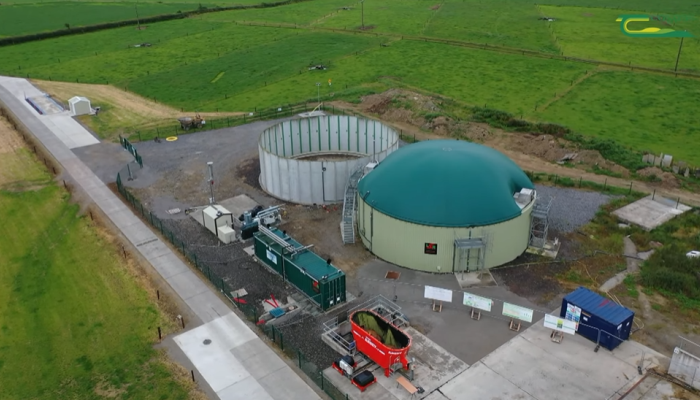
The Grange AD Plant was commissioned and is now producing biogas to meet its own heat needs and to generate data for analysis to optimise operational parameters, improve economic feasibility and sustainability. The AD programme extends now from (1) feedstock assessment, (2) optimisation of operational conditions of AD plants, (3) maximisation of nutrient recovery from digestate, (4) extraction/production of high-value products during the AD process, i.e., chemical compounds and proteins, and (5) desk-based analysis of the opportunities and challenges for an Irish AD sector at farm and sectoral level.
The AD research programme in Grange aims to provide science-based guidance to support the development of a sustainable agri-centric AD sector and promote the circular economy in Ireland.
The above first appeared in the Farming Independent as part of a Signpost Programme update.
For more from the Teagasc Signpost Programme, visit here.
Also read: Teagasc Grange Anaerobic Digestion Programme
Also read: The economic performance and the role of diversification on cattle farms in Ireland