
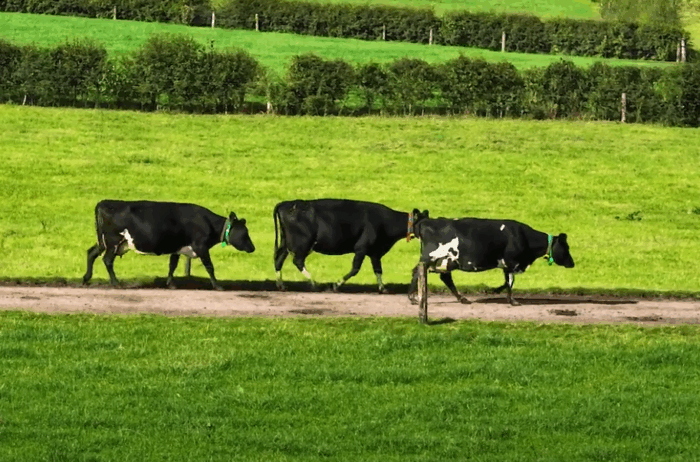
Although the good weather over the summer has contributed to better environmental conditions for lameness control, Head of Dairy Knowledge Transfer, Dr. Joe Patton explains that lameness risks increase significantly as we move into autumn.
Some reasons for this increase in lameness include longer distances to walk where silage ground is back in rotation, wetter conditions in gaps and roads, leaves and debris creating dirtier surfaces, and cows entering the last trimester of pregnancy.
The average lameness rate in dairy herds is 6-8%, but having more than 5% of cows lame at any one time should be considered a herd-level problem. The majority of lameness cases in Irish dairy herds are mechanical in nature, e.g., white line disease caused by injuries from small stones, etc., as opposed to infectious issues such as dermatitis/Mortellaro. This will vary by herd, so it is worth reviewing the type of lameness occurring to identify solutions.
Some steps to reduce lameness are:
- Remove build-up of soil along verges of roadways to allow surface water into fields – just doing this at numerous points along the road helps.
- Cut back overgrowth along roadways that is creating surface pooling/ problem areas.
- Resurface high-risk sections of road, having repaired the base and drainage in advance. Fit non-slip rubber flooring to high-traffic areas/tight turns in the yard.
- Allow extra time for cows to walk on outlying/less frequently used parts of the road network. Use a timed/auto paddock opener if the farm set-up allows, and keep higher-risk animals back from the longer walks.
- If buffer feeding is being done at milking and feed space is tight, hold a maximum of seven to eight cows per feed bay for feeding and allow the rest of the herd directly back to grass – this helps eliminate bullying and reduces lameness as a result.
- Repeat lameness problems are very common in autumn. Bring in the hoof trimmer before late September to check any cows with a history of lameness.
- Regular foot-bathing will not solve mechanical lameness issues but can improve hoof conditions and control infections. Speak to your vet or advisor about a suitable autumn routine for your farm.
For more information on controlling lameness, view the Teagasc Reducing Lameness Guide here.
More from Teagasc Daily: Good cow handling practices for lameness prevention
More from Teagasc Daily: Hoof care and footbaths for lameness control
More from Teagasc Daily: Lameness and farm infrastructure
More from Teagasc Daily: Common causes of lameness in dairy herds