
Maintaining and improving water quality and mitigating climate change – the role of hedgerows
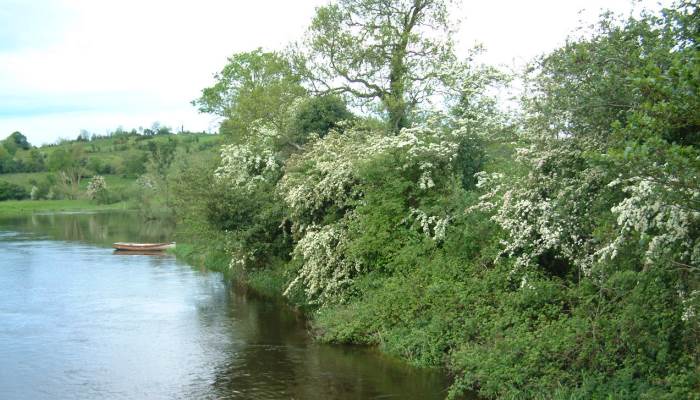
As part of National Hedgerow Week 2026, a partnership between the Heritage Council and Teagasc, we delve further into the role of hedgerows in maintaining and improving water quality and mitigating climate change.
A hedged landscape is good for water quality. The root systems of hedgerows regulate the movement of water, absorbing and recycling nutrients like phosphorus or pesticides, thus reducing the risk of pollution to waterways.
With the Environment Protection Agency (EPA) finding that nearly half of Ireland’s rivers, lakes, canals, estuaries and coastal waters are of “unsatisfactory” water quality, this role hedgerows play is incredibly valuable.
Hedgerows also help to reduce sediment from moving down slope, preventing excessive siltation in waterways which can clog up riverbeds and deteriorate aquatic habitats, stopping salmon and trout from spawning for example.
For supporting water quality, aim for well-structured hedgerows with generous, unsprayed margins that help trap nutrients and sediment before they reach drains and rivers (while also supporting biodiversity).
If planting a new native hedgerow, plant it perpendicular to the main pathways that water tends to flow. A well-placed hedge breaks the pathway to the watercourse. Projects like Farming for Water EIP are supporting farmers to implement measures that improve water quality. Funding is available for over 40 measures, including hedge and tree planting along waterways.
Climate change mitigation
Furthermore, research is increasingly highlighting the role hedgerows can play in climate change mitigation through carbon storage. Preliminary estimates by the EPA suggest that hedgerows and non-forest woodlands have the potential to store carbon, and with an estimated 186,000 hectares of hedgerows across Ireland, this contribution may be significant at a national level.
Note that these estimates exclude potential emissions associated with hedgerow management or disturbance. Teagasc’s Farm Carbon project found that hedgerow management directly affects the amount of carbon that is stored over time.
Intensively managed hedgerows have limited benefits for carbon. Less intensively managed, wider, taller hedgerows that are managed on a cycle contain significantly higher amount of carbon. Thus, less intensive hedgerow management, rejuvenation of older hedges or planting of new hedgerows can enhance hedgerows’ role in carbon storage.
National Hedgerow Week 2026 is a partnership between the Heritage Council and Teagasc.
Click here for more information on National Hedgerow Week 2026.
More from Teagasc Daily: Hedgerows – a lifeline for birds and insects