
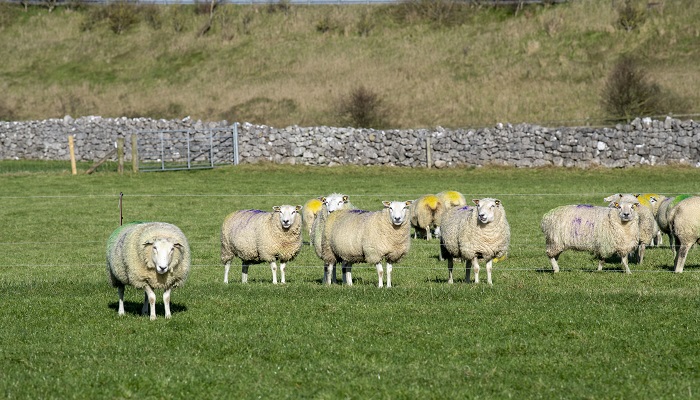
Eamon Patten, Drystock Advisor, Teagasc Ballinrobe, shares some key considerations for managing your sheep flock post mating, focusing on practices for ewes, rams and ewe lambs.
With the days shortening, the next lamb crop is already under way on most lowland flocks. However, this fact is commonly not recognised fully or appreciated until much later in ewe pregnancy. It’s generally recommended to keep mating to 5–6 weeks max, extending past 6 weeks only drags out the lambing season. After mating what sort of management practices should be in place for the different animals?
Ewes – early to mid-pregnancy
- Protect early pregnancy (first 30–60 days) – losses here are most costly. Avoid unnecessary movement, mixing of groups and stressful procedures.
- Keep ewes in a low‑stress environment. Maintain a steady plane of nutrition based on forage quality. Poor grazing/weather can reduce intakes even with good grass covers present. Avoid sudden changes in diet. Embryos are most vulnerable now.
- Do not let ewes lose condition now. Maintain stable BCS from mating to mid‑pregnancy. Across the Teagasc BETTER farms, more thin ewes at scanning were associated with poorer milk, lower twin lamb growth, higher lamb loss, and higher ewe culling. Early identification and action on thin ewes improves lamb growth, reduces mortality and lowers the number of cull ewes.
- Address lameness and parasites early to remove issues that cause condition loss. Any handling and gathering should be very gentle. If carried out appropriately, treatment will have a better outcome than leaving sheep lame or unhealthy.
- Plan vaccinations and mineral supplementation.
- Avoid routine broad‑spectrum drenching on mature ewes unless indicated by evidence (FEC) – consider strategic treatments only.
Rams – end of mating and aftercare
Post mating, rams are often neglected, and this is a false economy. They are the most expensive animal on a sheep farm, so it makes sense to improve their health/longevity.
- When pulling rams: gather and confine them tightly for a few hours (pen or trailer) to reduce fighting, then turn them out together to a fresh field in the evening so they settle and graze rather than fight.
- Health checks: treat for lameness, stomach worms and fluke as needed. This would especially apply to ram lambs as immunity levels will be reduced. Examine brisket and penis for injuries picked up during service. Include rams in the annual clostridial/pasteurella booster plan.
- Recovery feeding: active rams can lose 15–20% BW (10–25 kg) over 5–6 weeks. Aim to rapidly regain condition with ~0.5 kg concentrates/head/day; 25–30kgs concentrate per ram post‑mating is a small cost versus the cost of replacing a ram.
- If out wintered the provision of a dry lie and shelter will greatly increase animal comfort, health, performance and welfare.
Ewe lambs
Ewe lambs have the potential to increase the output of the flock, but they need to be managed carefully to ensure that their subsequent performance is not compromised. They differ from mature ewes in that they need to continue to grow throughout pregnancy and at the same time produce a viable healthy lamb.
- Do not overfeed the ewe lambs after ram turnout as this has a negative effect on embryo survival. Average quality grazing to maintain or just slightly increase body weight is desirable. After lambing they will need extra care.
- If possible, ewe lambs should be run as a separate flock from the time the ram is turned out until they are mated again the following year.
Early embryo loss and late‑pregnancy problems are the single biggest drivers of reduced lamb output, but, many of these losses can be prevented by simple, practical measures. Early pregnancy care should improve the scanning results.
More from Teagasc Daily: Strengthening the understanding of hill grazing