
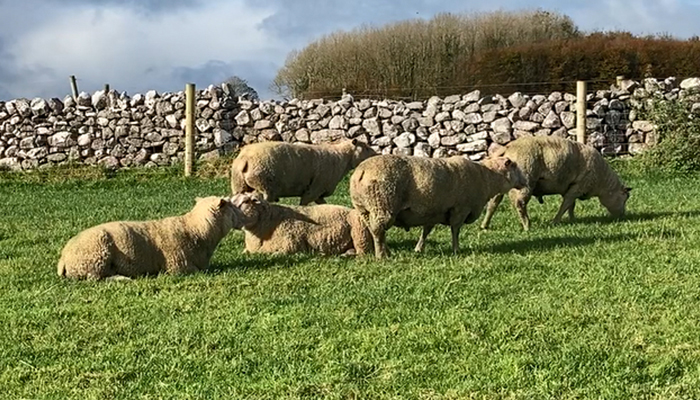
Teagasc Sheep Specialist, Ciaran Lynch shares some key advice on managing rams during the latter stage of the breeding season and post mating, and he shares some key considerations when housing finishing lambs.
As the breeding season progresses into its latter half, it’s vital to guard against ram infertility. Top up raddle using darker colours (green → red → blue → black) and monitor repeat activity. If issues occur, act promptly. Grouping up ewes and swapping rams around is one way to guard against infertility by reducing exposure to an individual ram. Keep a check on rams for injuries/lameness and remove where necessary, even if this is temporary.
Managing rams post mating
Rams are a valuable investment, and good post-mating care supports their longevity and fertility.
- Avoid extending the joining period, particularly with ram lambs, to reduce injury and fighting risk. When regrouping rams, confine them briefly in a tight pen with obstacles to reduce fighting and their ability to charge.
- Address any health issues (internal parasites, lameness, etc.) and any injuries they may have picked up during mating.
- Rams can lose up to 20% of bodyweight, so offer a suitable concentrate (with ammonium chloride) at a rate of 0.5kg/day plus adequate forage.
In the below video, Head of Sheep Knowledge Transfer at Teagasc, Michael Gottstein shares tips on the management of rams post-mating:
Housing finishing lambs
When housing finishing lambs, ensure they are dry, as wet fleeces can take up to a week to dry indoors. Avoid housing lame lambs – separate them until fully treated. Dose for internal parasites before housing, following withdrawal dates carefully. Provide a balanced finishing ration with adequate energy and protein, using good-quality ingredients, and include ammonium chloride to prevent urinary stones – especially in intensively fed ram lambs. If lambs were previously on low concentrate levels, increase feeding rates gradually over 10-14 days to avoid digestive upsets. Always offer roughage, such as hay or straw, to support rumen function. Maintain regular feeding times, constant access to clean water, and monitor lamb behaviour and feed intake.
The above first appeared in the Teagasc Sheep Advisory Newsletter for November/December (PDF).
More from Teagasc Daily: Management tips as the breeding season enters the final phase
More from Teagasc Daily: Strengthening the understanding of hill grazing