
Rainfall creates a tale of two spring barley crops
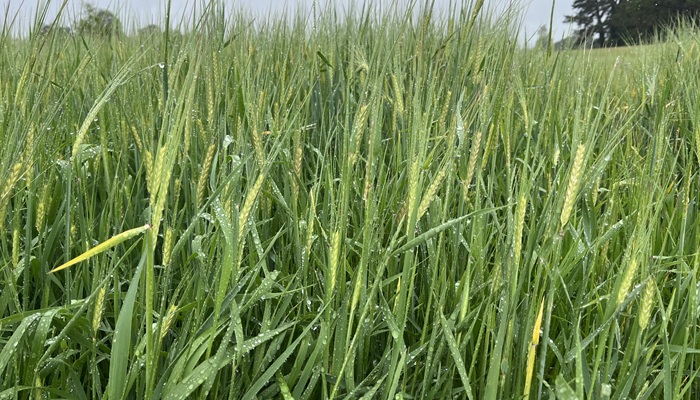
While we are still a long way from harvest, 2026 is already shaping up to be a tale of two spring barley crops, Ciaran Collins, Crops Specialist, looks at the impact and some of the key decisions facing growers.
The key factor driving crop performance this season has been rainfall, with significant differences in moisture availability across the country during April and May resulting in large variations in crop potential.
In areas that received adequate rainfall, particularly in the south of the country, spring barley crops have developed excellent biomass and yield potential. Some crops are exceptionally thick, and some growers are even beginning to enquire about the need for plant growth regulators to reduce lodging risk. In contrast, crops in drier areas are much thinner, with reduced tillering and lower biomass accumulation, resulting in significantly lower yield potential.
According to the latest farming commentary from Met Éireann, soil moisture deficits on well drained soils currently range from 15–18 mm in Cork compared with 43 mm in Carlow. These differences reflect the highly variable rainfall received during April and May. Over this period, Moorepark recorded a combined rainfall total of 115 mm compared with just 62 mm in Oak Park. At the extremes, Cork Airport received 185 mm of rainfall while Dublin Airport recorded only 47 mm.
As a result, crop growth and yield potential are now closely aligned with the rainfall received during the spring. While there is still time for rainfall to improve the prospects of moisture stressed crops, the contrast between different parts of the country is already evident and is likely to remain a defining feature of the 2026 spring barley season.
Disease control
By this stage of the season, most of the major management decisions have already been made. Fertiliser is out, weed control has been completed and the majority of the crop production costs have already been incurred. From this point forward, disease control is the principal management decision remaining.
For crops with high yield potential, the decision is relatively straightforward. These crops have built substantial biomass and dense canopies, creating conditions that favour disease development. Combined with the recent wet weather, disease pressure is expected to increase, and growers should continue to target the recommended fungicide timings.
The decision becomes more difficult in thinner crops with lower yield potential. Growers quite rightly question the return on investment from fungicides and often ask whether it would be better to apply one robust fungicide spray rather than continuing with a two-spray programme.
In my view, it is still preferable to target the two key fungicide timings of late tillering/GS30 and awn emergence. Where yield potential is lower and growers are considering reducing inputs, a better approach is to maintain both fungicide timings rather than relying on a single application. In practical terms, whatever investment is being considered for one robust fungicide spray should instead be divided equally between the two timings. This approach provides protection over a longer period and helps safeguard the yield potential that remains in the crop.
For more tillage management tips, read the Teagasc Tillage Advisory Newsletter for June here.