
Selecting for CBV pays for dairy-beef farmers
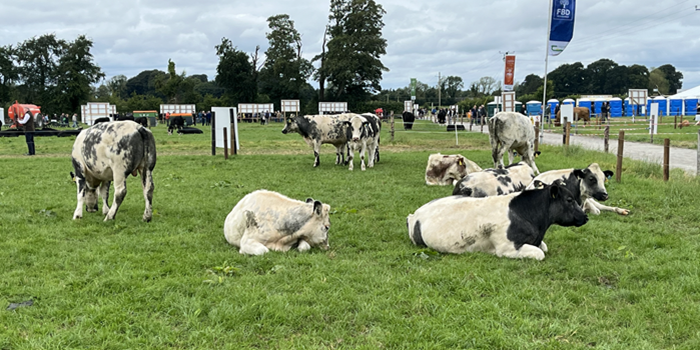
Beef farmers purchasing dairy-beef calves can put more money in their pocket by selecting animals with a higher Commercial Beef Value (CBV).
That was some of the messaging shared with farmers who attended the BEEF2026 Open Day ongoing in Teagasc, Grange, today, July 1.
Providing an overview of the tool, Dr. Cliona Ryan, Teagasc Beef Geneticist, explained: “The CBV is designed to help drystock farmers identify cattle with superior beef merit. It includes traits of economic importance such as carcass weight, conformation and feed intake.”
“In practical terms, a calf with a CBV of €120 should be expected to deliver approximately €75 more profit than a calf with a CBV of €45, assuming similar levels of management. This additional value is generated through higher carcass weight, improved feed efficiency and the potential for an earlier age of finish.”
Dr. Nicky Byrne, Teagasc Researcher, tells us more about the CBV at BEEF2026:
A tool now available on many mart boards and through the ICBF website, Dr. Ryan touched on some of the research work completed at Teagasc Grange showing its success when animals are carried to beef.
“At Grange, high- and low-CBV Angus × Holstein-Friesian steers across three calf-to-beef production systems were compared. Across the systems, high-CBV animals produced carcasses that were, on average, 18kg heavier than their low-CBV counterparts.
“At a carcass price of €6.40/kg, this additional carcass weight is worth approximately €115 per head. The results also showed that high-CBV steers achieved better carcass grades, averaging O+/O= compared with O= for low-CBV animals. A greater proportion of the high-CBV cattle also met carcass specifications.”
Further evidence from the ICBF Beef and Dairy Research Centre in Tully backs up the CBV. Data from Tully showed that cattle in the top 20% for CBV produced carcasses 12kg heavier than those in the bottom 20%, they were also one conformation grade higher at finish and produced a 2.3% higher kill-out percentage. Additionally, the higher-CBV cattle also consumed 0.7kg less dry matter per day, highlighting the role of CBV in identifying more feed-efficient beef cattle genetics.
For further insights on how the CBV might work on your farm, whether dairy or beef, visit here.