
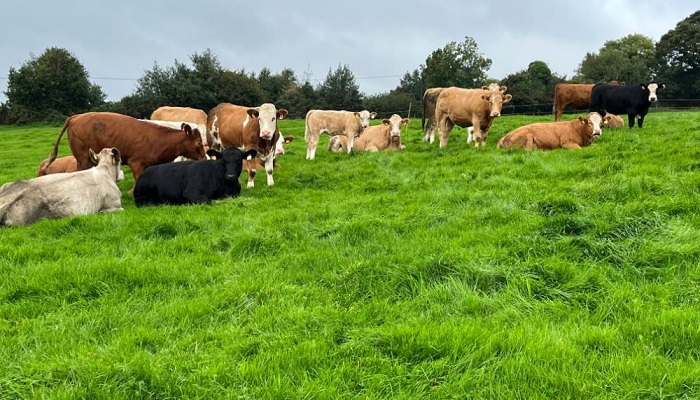
As part of the September Beef Advisory Newsletter, Teagasc Beef Specialist, Catherine Egan shares key guidance on a number of tasks that need to be completed before the winter housing period.
1). Scanning of suckler cows
Bulls should have been removed from most spring-calving herds by mid-July, with scanning happening from four weeks later. This year, it is important to pick out empty cows and target to sell live or slaughter before the winter begins, to help reduce winter forage requirements and build grass for the rest of the autumn.
For more information on scanning suckler cows, visit here.
2). Lime applications
Lime remains the cheapest fertiliser available on farms. Applying lime this autumn will give increased grass growth and improved fertiliser efficiency next year. Refer to your most recent set of soil tests and apply as soon as possible.
Find out more about the benefits of spreading lime here.
3). Build grass covers
Second cuts should be wrapped up, with the last of surplus bales taken in August. The focus of this period is to gradually build pre-grazing herbage mass, targeting covers of 2,000-2,300kg DM/ha in mid-September.
Read key tips on building autumn grass here.
4). Weighing actions
Cows and calves must be weighed for the Suckler Carbon Efficiency Programme (SCEP), with weights uploaded on the Irish Cattle Breeding Federation (ICBF) website within seven days (no later than 5.30pm on November 1).
Read more on the key requirements of the Suckler Carbon Efficiency Programme here.
As part of the National Dairy Beef Weighing Scheme, liveweight data must be recorded and submitted for dairy-beef progeny from the dairy herd, for a minimum of five calves and a maximum of 50 in a herd. All calves must be at least 12 weeks old at the time of weighing. Farmers should also take the opportunity to weigh forward stores at grass. Store cattle, particularly heifers and early-maturing breeds, may be at the stage of laying down fat at the tail head and could be finished off grass with a small amount of concentrates before housing.
5). Dosing and faecal egg testing
Only treat cattle for stomach worms when you know there is a need to treat them. Taking fresh dung samples from suckler weanlings and getting a faecal egg count (FEC) test done is an ideal way to tell whether or not they need to be treated. Once you have established that you have a worm burden on your farm, you can then decide which product to use. Failure to treat worm burdens in either calves or one- to two-year-old stock can have a major effect on thrive.
For more tips and advice, access the full Teagasc Beef Advisory Newsletter here.
More from Teagasc Daily: New 2025 Beef Welfare Scheme: A welcome income boost
More from Teagasc Daily: Feeding concentrates to finish cattle off grass