
Edited By
Damian Costello
Sheep Specialist
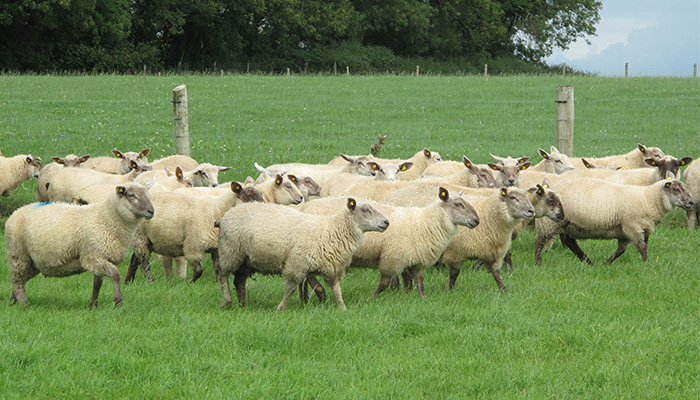
Focused on grassland management, managing ewe body condition and purchasing scheme eligible rams, Sheep Specialist at Teagasc Athenry, Damian Costello shares his August management notes.
Grassland management
Prioritise the best grass available on the farm to lambs and thinner ewes where body condition score needs to be improved before breeding.
It’s also important to focus on building grass reserves for the Autumn/Winter grazing period. The response to fertiliser generally declines in late August/early September so get out early for best results. Aim to apply the last round of chemical fertiliser early in August once conditions are suitable and ensuring you stay within the limits of the farm nutrient management plan.
Focus on body condition score
If you haven’t already done so, the thinner ewes in your flock need to be separated and given access to high quality grass from at least early August if intended for mating in early to mid-October.
The remaining ewes that are in good body condition can be grazed as a follower group after finishing lambs or the thin ewe group.
As rams can lose up to 15% body condition during mating, it is important to assess them in time and plan to build their body condition up to 3.5 – 4.0 at turnout. It may be necessary to supplement grass with a concentrate suitable for feeding to rams to achieve this target.
Purchasing SIS eligible rams
If you have over 150 ewes for payment on the Sheep Improvement Scheme (SIS), you are obliged to complete the genotyped ram action a second time.
Check if 2026 is the year selected to buy your second scheme eligible ram.
Ensure the ram is SIS eligible on the day of purchase using the Sheep Ireland Ram Search facility or from the sale catalogue.
Aside from scheme eligibility, the Sheep Ireland €uroStar ratings provide valuable information.
A ram intended as a terminal sire with high terminal index figures should have lower lambing difficulty and progeny that will grow faster, ultimately being ready for slaughter quicker.
If you choose a high-index ram to breed replacements from, you can expect daughters with lower mortality and higher litter sizes.
It is important, as always, to thoroughly inspect and check all the physical traits of any ram prior to purchase.
Biosecurity for bought in stock
The risk of buying in animals carrying infectious disease or resistant parasites should not be underestimated.
Typically, August is a month when rams, hoggets and store lambs come on to the farm.
A closed flock, where only rams are purchased, significantly reduces this risk but it is important to be aware that sheep taken home unsold from market or those returning from shows can potentially bring back disease to the farm.
Consult with your veterinary practitioner to come up with a set of practical steps to be taken with incoming sheep with the aim of not introducing any new health issues to the flock.
For more information, read: Protect your flock: Have a biosecurity plan for new sheep
How effective are anthelminthic products on your farm?
A group faecal sample is a good indicator of when faecal egg counts are likely to impact on lamb performance and can eliminate unnecessary treatments when faecal egg counts remain below 500 eggs per gram.
Faecal egg counts taken pre and post dosing form a valuable piece of information to check if the three main anthelmintic classes used in Ireland are working on your farm.
Details of how to complete this drench test are available in the video below:
Sheep Ireland LambPlus Elite Multi-Breed €uroStar Ram Sale 2026
The Sheep Ireland LambPlus Elite Multi-Breed €uroStar Ram Sale 2026 takes place on Saturday, August 22 in Kilkenny Mart, Co. Kilkenny. Over 500 rams are expected to be on offer, and all entries will be 5-star on Replacement and/or Terminal Index as well as being genotyped, DNA parentage verified and SIS eligible.
Further details are available on the Sheep Ireland website.
Upcoming event – BETTER Sheep Farm walk
Starting at 6:30pm, a BETTER Sheep Farm Walk will take place on Wednesday, 19 August on the farm of programme participants and organic lowland sheep farmers, Ross and Amy Jackson, Lacka, Carrig, Birr, Co. Offaly, R42 VY98.
Topics to be discussed include farm overview, lamb performance data, diets, parasite control, flock breeding plan and organic farming.