
Straw chopping and incorporation: the basics and the benefits
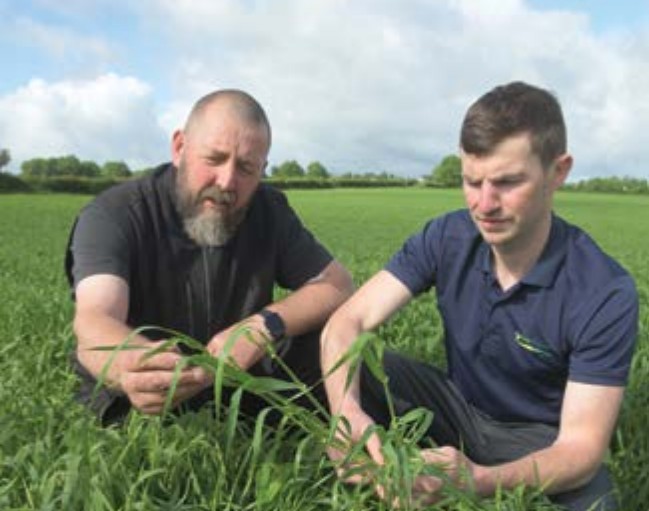
John Mahon, Teagasc Signpost Programme, explores how straw chopping and incorporation can enhance soil health, reduce emissions and improve efficiency.
What is Straw Chopping and Incorporation?
Instead of dumping straw on the ground for baling, a set of knives at the back of the combine chops the straw and spreads it evenly across the stubble. The chopped straw is then mixed into the soil using cultivation tools or a straw rake.
Why do it?
- Builds soil organic matter and returns carbon to the soil, improving soil structure and increasing soil biology.
- Recycles nutrients (mainly potassium, with some phosphorus) back into the field, helping reduce fertiliser bills.
- Helps biosecurity by reducing seed spread on machinery (lower risk of imported weed or herbicide-resistant seed on balers).
- Cuts greenhouse gas emissions by increasing soil organic carbon (estimates of up to ~1.08 t CO₂-eq/ha/yr). Carbon-neutral grain (0 kg CO₂-eq/tonne) can be achieved on Irish farms when straw is incorporated.
- Reduces labour required at harvest for handling straw and allows quicker turnaround for planting cover crops.
Financial support
DAFM annual Straw Incorporation Measure (SIM) – applied for with the BISS application before 15 May each year.
- Eligible crops: Wheat, Barley, Oats, Rye, Oilseed rape
- Payments: €250/ha for cereals, €150/ha for oilseed rape
- Eligible area: 5 ha to 40 ha
Nutrient Value – What You Return to the Soil
Straw is high in carbon (high C:N ratio). This can temporarily lock up nitrogen as it decomposes, so plan your nitrogen fertiliser accordingly for the following crop.
Most of the nutrients returned in straw are potassium (K): Approximately 50% of the K remains in barley and wheat straw. Approximately 65% of the K remains in oat straw.
Phosphorus (P) returned is relatively small (approximately 10%).
The table shows typical P and K returned and an approximate fertiliser value (based on P = €3.76/kg and K = €1.00/kg).
| Crop Type | Crop Yield (t/ha) | P (kg/ha) | K (kg/ha) | Nutrient Value (€ /ha*) |
|---|---|---|---|---|
| Winter Barley | 10.0 | 4.0 | 51 | 66 |
| Winter Wheat | 11.0 | 4.4 | 56 | 72 |
| Winter Oats | 9.0 | 3.6 | 87 | 100 |
| Spring Barley | 7.5 | 3.0 | 50 | 61 |
| Spring Wheat | 8.5 | 3.5 | 57 | 70 |
| Spring Oats | 7.5 | 3.0 | 73 | 84 |
| Winter Oilseed Rape (OSR) | 5.0 | 2.4 | 27 | 36 |
* Monetary value based on market nutrient costs for phosphorus (P) and potassium (K) (April 2026).
P value: €3.76/kg, K value: €1.00/kg
Based on the price of a range of fertiliser products. The values shown do not include the cost of straw chopping and incorporation.
When to Chop and Incorporate
Do it as soon after harvest as soil conditions allow (avoid working very wet soil).
Early incorporation gives microbes and earthworms time to break the straw down before winter.
Delaying incorporation risks slower breakdown, greater pest and disease survival (e.g. slugs), and may interfere with spring fieldwork.
How to Do It – Equipment and Methods
Fit your combine with a straw chopper or knife mill for even chopping and spreading.
Incorporation options:
- Shallow inversion or non-inversion cultivation — choose according to soil type, erosion risk, and your next crop.
- Tine cultivators or discs for shallow incorporation.
- Straw rakes for non-inversion incorporation.
- Ploughing buries residues deeply and slows breakdown. It is not recommended (and is not allowed for SIM applicants).
- Match the method to soil moisture, soil structure, and seedbed requirements.
Practical Checklist – Priority Actions for the Field
1. Set your objective first:
- Build soil organic matter?
- Improve biosecurity?
- Prepare a seedbed?
- Supply bedding for livestock?
2. Ensure the combine has a working straw chopper/knife mill and that the spread pattern is even across the full header width.
3. Choose an incorporation method to suit your soil type and establishment system (shallow inversion or non-inversion).
4. Avoid incorporating when soil is too wet to reduce compaction.
5. Plan nitrogen fertiliser to account for temporary nitrogen immobilisation after adding high C:N straw (reduce or split N applications if needed).
6. Rotate straw incorporation around the farm rather than using the same field every year to reduce pest and disease build-up.
7. Preferentially incorporate lower-value straw crops (e.g. oats, wheat, oilseed rape) over higher-value straw (e.g. barley) where possible.
8. Keep records of:
- Date of chopping/incorporation
- Fields treated
- Method used
- Following crop performance
Use these records to refine future practice.
Troubleshooting and Tips
If you see poor breakdown:
- Check soil moisture and temperature.
- Check whether excessive straw length was left.
- Consider finer chopping or a second shallow pass to improve mixing.
If slug or disease pressure increases:
- Spread residues evenly.
- Avoid heavy clumping.
- Rotate straw incorporation between fields.
- Consider integrated pest management (IPM).
If worried about nitrogen tie-up:
- Plan a higher starter nitrogen application for the following crop.
- Alternatively, use split nitrogen applications.
Monitoring and Measuring Success
- Track crop establishment and yields in fields with and without straw incorporation.
- Test soil organic matter and soil P & K levels periodically to monitor long-term benefits.
- Compare fertiliser expenditure year-to-year on fields where straw is returned.
Experience in South Tipperary
Pat Murphy, from Whitechurch, operates a tillage and calf-to-yearling enterprise on 195 acres of owned and rented land, with 125 acres devoted to tillage. In addition to farming, Pat also provides contracting services.
“We use a Claydon Evolution drill and have established all crops through direct drilling and minimum tillage methods for the past 12 years,” says Pat.
His crop rotation consists of:
- Spring beans
- Winter barley
- Spring barley
- Winter oats
- Winter wheat
- Winter barley
“I see significant benefits from participating in the Straw Incorporation Scheme,” adds Pat. “Once harvesting is complete, we can immediately establish a catch crop without the delays associated with baling and removing straw.”
While the financial incentive provided by the scheme is a welcome bonus, Pat values the practical advantages just as highly.
“We have a better window for sowing and improved management of soil cover.
Before joining the scheme, we would typically chop the straw on oat and wheat headlands. Since incorporating more straw across the farm, we have seen a marked improvement in soil structure, particularly when carrying out spade tests.
These improvements have reinforced my belief in the long-term benefits of returning organic matter to the soil by operating a minimum-tillage system.”