
Study finds barber’s pole worm is widely distributed in sheep flocks
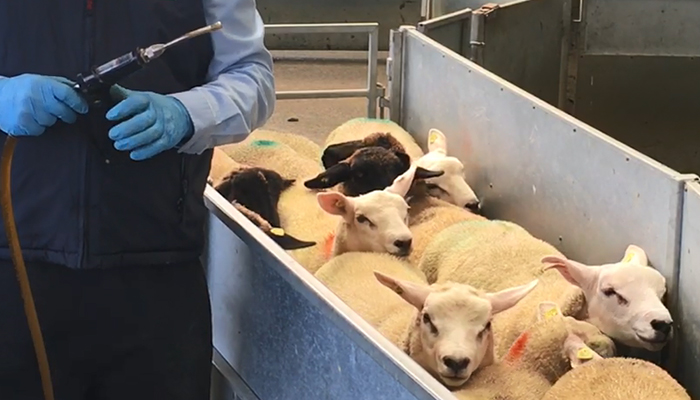
Preliminary findings from a research study underway at Teagasc Athenry have highlighted the distribution of barber’s pole worm (Haemonchus contortus) on Irish sheep farms. The blood-feeding parasite can produce between 5,000 and 15,000 eggs per day and cause significant production losses in affected sheep.
At the Teagasc National Sheep Conference earlier this year, Lauren O’Shea, a Teagasc Walsh Scholar completing her research through Teagasc and University College Dublin, presented early findings from the study which is investigating the occurrence and geographical distribution of Haemonchus contortus (barber’s pole worm) in Irish sheep flocks.
As a production-impacting disease, affected sheep often present with anaemia and bottle jaw, while severe infections can result in death. To quantify its distribution, nemabiome metabarcoding, a DNA-based method that identifies the different worm species present in sheep faecal samples, was used.
Faecal samples from 53 farms across 17 counties were submitted and analysed. This involved culturing the samples and the removal of larvae. DNA was then extracted and amplified using PCR before sequencing was carried out to confirm the presence or absence of H. contortus.
Preliminary findings indicate that H. contortus is widely distributed in Irish sheep flocks, having been detected in 49% of flocks. The results also suggest regional variation. The study also demonstrates that DNA sequencing tools can be powerful for parasite surveillance.
Preliminary results of this study were shared at the Teagasc National Sheep Conference.
For more information on Lauren O’Shea’s research as part of the Walsh Scholars Programme, visit here.