

Edited By
Ciaran Collins
Crops Specialist
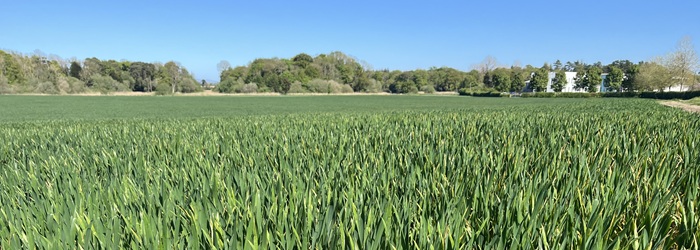
Welcome to the Teagasc May Tillage Management Notes. In this edition, Teagasc Crops Specialist, Ciaran Collins shares key considerations for the month of May, focusing on spring and winter barley, winter wheat and spring bean agronomy.
Key considerations for May
- Spring barley sown in mid-April faces a significantly higher risk of BYDV compared to crops planted in mid-March. The most effective control is a single insecticide application at growth stage 14 (4-leaf stage).
- Prioritise early weed control in spring barley to achieve the most effective results.
- Applying the flag leaf fungicide at full flag leaf emergence is critical for septoria control. Being 7 days early or late can significantly reduce effectiveness under high disease pressure.
- Teagasc experiments on the control of ramularia in barley shows that the best timing for the control comes between GS 45 (boots swollen) and GS 49 (first awns visible).
- The first fungicide on beans should be applied as soon as symptoms are detected, but before the start of flowering.
Spring Barley
Weed control
Later sown crops this season will move through the growth stages quickly. As a result, early weed control is essential to prevent competition before the crop canopy closes. Where required, this timing also allows for the inclusion of a wild oat herbicide from growth stage 12 onwards.
Herbicide resistance to broad leaved weeds is an increasing issue for spring barley growers. Sulfonylurea herbicides (like Cameo, Ally, Harmony, etc.) have reduced effectiveness in some cases.
- Always use an alternative mode of action.
- Make sure the alternative product you’re using has activity on the target weed.
For example, if you suspect resistance in chickweed, don’t rely on sulfonylureas alone. Use a partner product like Fluroxypyr (e.g. Hurler 0.75L/ha) for better control.
Think you have resistant weeds?
If you suspect you have resistant weeds on your farm, contact your local tillage advisor who can arrange resistance testing of your suspect weed.
BYDV
Sowing date remains the single biggest driver of BYDV risk in spring barley, although factors such as field location and the presence of a green bridge should also be considered. In general, crops sown in mid-March are at low to moderate risk (around 1–6% infection), while those sown in mid-April face a moderate to high risk, with infection levels potentially reaching up to 20%.
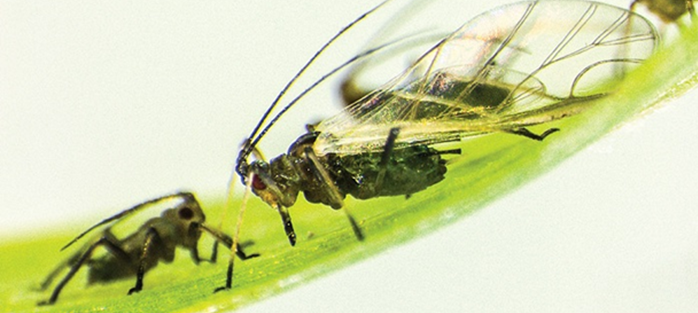
April planted crops are at higher risk of BYDV
While resistance to pyrethroids has been detected in grain aphid populations, other aphid species can also transmit BYDV and remain susceptible. As a result, pyrethroids are generally still providing effective control in the field. The key timing for application is at the 4-leaf stage of the crop, and there is no advantage to applying more than one spray. There are currently no alternative insecticides approved for use in spring barley at this timing, and later applications are unlikely to have a meaningful impact on BYDV control.
Disease control
The average yield response from a two-spray fungicide program in Teagasc trials is 1.3t/ha but can range from 0.5 – 2.75t/ha, depending on season. With the exception of RGT Planet, current spring barley varieties have excellent resistance to disease, but sowing dates and weather conditions needs to be factored when deciding on product choice and rate. Later sown crops will be at the lower end of the yield response from fungicides.
Oak Park trials have shown two half rate fungicides (combined product) will give the maximum economic return. The first fungicide should be timed before growth stage 30.
Table 1: Spring barley disease control strategies 2026
| Target disease | Early/mid tillering
(GS 21 – 23) |
Mid/late tillering
(GS 23 – 29) |
Awn emergence (GS 45 – 49)
Targeting Ramularia |
| High disease pressure eg. RGT Planet | PTZ (Proline or generic) 70% or
Navura 1.0L + Comet 200/LS Pyrac 0.6L or Imtrex 0.7L |
– | Folpet 1.5L
+ Revystar XL 1.0L, Macfare Xpro 0.8L, Elatus Era 0.65L, Avestel 0.7L, Balaya 1.0L + Imperis 1.0L etc. |
| All other varieties | – | PTZ (Proline or generic) 50%
+ Comet 200/LS Pyrac 0.5L |
Winter Wheat
Septoria will be the priority at the flag leaf timing on winter wheat. Accurate timing and alternation of products from the leaf three applications are crucial to management of septoria.
A fully emerged leaf 1 (flag leaf) and leaf 3 (T1) are the key timings. Research has shown that +/- 7 days of a fully emerged flag leaf can make a significant difference in high disease pressure situations.
Folpet should be the first product into the tank. As a multi-site fungicide, it not only helps with disease control but also plays a key role in slowing fungicide resistance.
It is important to alternate fungicides to protect their effectiveness.
- If you used Revystar or Ascra Xpro at the leaf 3 timing, then switch to an Inatreq-based product at the leaf 1 timing.
- Or, if you used Inatreq at the leaf 3 timing, use a different product like Revystar or Ascra Xpro for the flag leaf application.
Important reminder: You can only use Inatreq-based products (Univoq, Aquino, Peacoq, Questar, Jessico One) once per crop – this is a legal requirement.
Table 2: Product choice for control of septoria at flag leaf timing
| Product used at leaf 3 timing | Flag leaf |
| Revystar or Ascra Xpro | Folpet 1.5L
+ Inatreq (Univoq, Aquino, Peacoq, Questar) 2.0L + Azole 100% or Inatreq (Jessico One) 1.7L + Jettano 1.0L |
| Inatreq based product | Folpet 1.5L
+ Revystar XL 1.5L or Ascra Xpro 1.5L |
Winter Barley
The latest stage to safely use a PGR is the awns peeping stage. Terpal 1.2-1.5 L/ha or Cerone 0.6-0.7 L/ha are options but watch latest timing.
The final fungicide needs to be timed at the awns emerging stage. It should consist of an Azole plus a SDHI/Strob and 1.5L/ha of Folpet to assist in the control of ramularia.
Teagasc experiments on the control of ramularia show that the best timing for the control of ramularia comes between GS 45 (boots swollen) and GS 49 (first awns visible). An application of Folpet at GS 59 (ear emergence complete) did not contribute to control. Revystar, Macfare Xpro, Folpet and Prothioconazole based products give some control of ramularia in Teagasc experiments when applied before heading of barley.
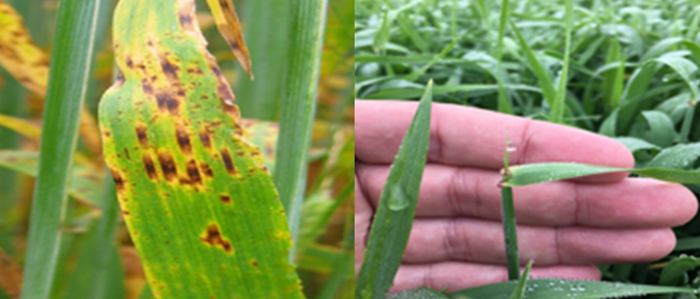
Best timing for the control of ramularia comes between GS 45 (boots swollen) and GS 49 (first awns visible).
Spring Beans
Chocolate spot remains the primary disease risk in spring beans. Later planting and dry weather conditions both help to reduce this risk. The first fungicide should be applied as soon as symptoms are detected, but before the start of flowering.
The main products available are Elatus Era and Signum. Application rates will depend on disease pressure but typically range from 0.5–0.75 L/ha for Signum or 0.66 L/ha for Elatus Era.
A second fungicide application, approximately three weeks later, should be based on prevailing weather conditions and ongoing disease risk. Given the experience of greener, later maturing crops in 2024, reduced rates may be appropriate where crops are late sown and disease pressure remains low.
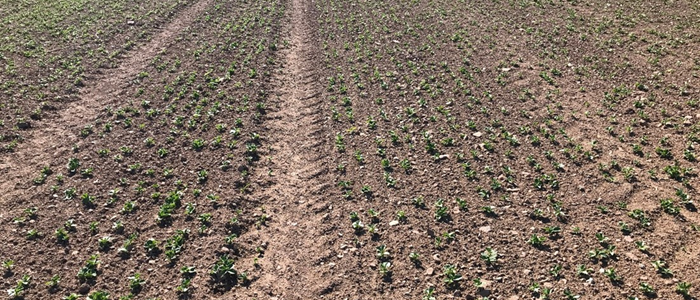
Teagasc Tillage Edge Podcast
For all the latest tillage news the Teagasc tillage podcast is available on the Teagasc website, Apple Podcasts or Spotify. Listen to some recent episodes below:
Keep up to date with Teagasc
Teagasc offers a suite of digital products – ranging from insightful podcasts, trusted eNewsletters, social media, website and mobile app channels – to provide you with the latest news, information and knowledge.