
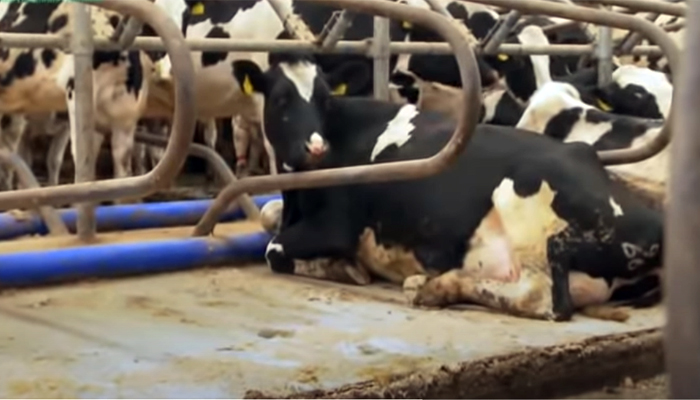
Cubicles are by far the housing system of choice for dairy cows in Ireland. However, it is important to think long term because cubicle houses are typically in operation for over 40 years.
The Teagasc publication ‘Cubicle Housing for Dairy Stock’ highlights why cubicle housing needs to meet three key parameters: (1) adequate space per cow, (2) comfortable and clean cubicles and (3) provide adequate feed space per cow. There needs to be at least one cubicle space available per cow.
Space per cow
The target accessible space is 8m2 per cow, this includes the area of the cubicles themselves and any passageways cows can access. For example, the combined area of the cubicles and passageways in a 100-cow cubicle house would be 800m2.
The design of the house also needs to minimise the risk of bullying, by having more than one route to feed, water etc. Cows do not like rubbing up against each other as they move around the cubicle house. This has become very evident to a number of farmers who have built a slatted tank and feed barrier outside the existing cubicle house and provided cows a spacious environment – most of the cows wanted to exit ‘stage left’ as it were.
Comfortable and clean cubicles
Cows can spend up to 14 hours per day lying down, they will only do this if they have a comfortable place to lie. Cow lying time is important as it facilitates the manufacture of milk, but it also provides for rest and the recuperation of cows during the dry period. A comfortable lying area will also reduce the risk of lameness in dairy cows. It is also important that the cubicles are clean (and easy to clean) to ensure good animal health.
In Ireland, we typically use a concrete surface covered with a mat or mattress. Cubicles need to be cleaned twice per day and the area in contact with the udder needs to be covered with lime or sawdust mixed with lime. This is particularly important when cows are vulnerable to infection – when lactating, in the early dry period and in the period pre calving. It is also important to minimise the risk of infection in the context of reducing the need for anti-microbial dry cow therapy.
Feed space per cow
Cows like to behave as a herd. They all strive to eat together. Inadequate feed space can impact animal health and welfare by creating competition for food resulting in extra pressure on hooves, and risks for pregnant cows etc.
It will also be harder to divide up the herd by body condition score and stage of pregnancy so that cows can be fed accordingly. The recommended feed space is 0.6 to 0.7m per cow depending on barrier design. It may be possible to justify a shed with a lower feed space allocation provided measures are taken to protect cows with lower body condition scores, lower ranking animals in the herd and cows approaching the end of their first lactation that are still growing.
The above article was adapted from the ‘Cubicle Housing for Dairy Stock’ book authored by Tom Fallon, Farm Buildings and Infrastructure Specialist with Teagasc and Francis Quigley, Teagasc Farm Machinery and Milking Machine Specialist.