
Walking crops remains one of the most valuable management tools
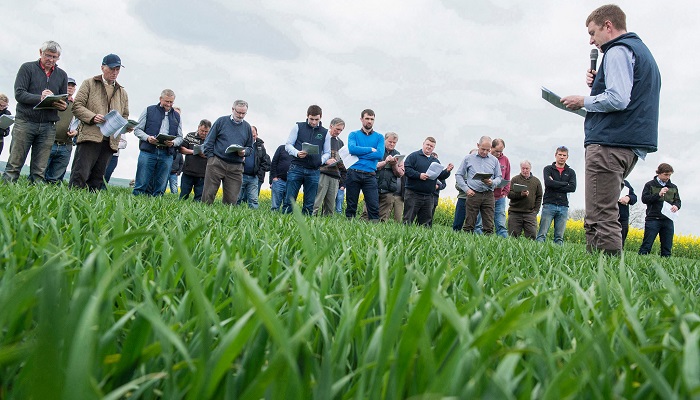
Vital for assessing growth and development, along with identify issues such as grass weeds, nutrient deficiencies or emerging disease problems, Head of Crops Knowledge Transfer, Michael Hennessy writes on the importance of walking your crops regularly.
If you ask a livestock farmer how often they check their cattle, they would probably look at you oddly if you suggested once or twice a month. Most livestock farmers check animals every day to ensure they are healthy, thriving and that no issues are developing.
Tillage farming is no different. Growing crops are the income source for the year ahead and the best tillage farmers walk crops regularly – at least weekly, and often more frequently where fields are close to the yard.
While discussing a crop with a farmer recently, we noticed some thinner patches across a field. The differences were relatively subtle from ground level and not immediately alarming, but there was clearly some variation in crop performance. The farmer then used a small drone to get a better overview of the field. What appeared from above was eye-opening. Distinct zones within the field were immediately visible, showing variations that were difficult to detect while walking through the crop.
Further investigation is ongoing, but low phosphorus availability due to high soil pH and nutrient lock-up is one possible explanation. Slightly different soil types within the field also appeared to influence plant population and establishment.
Technology
Technology such as drones, where used lawfully, can provide valuable insights at this time of year. Equally, many online platforms now provide NDVI or similar satellite imagery, highlighting differences in crop greenness and vigour across fields. These tools can help identify weaker areas and allow farmers to assess whether interventions are possible – either this season or in future crops – to improve overall field performance and increase average yield.
Problematic areas
In some situations, poorer-performing areas may simply reflect lighter soils with lower moisture-holding capacity, where management options are limited. In other cases, heavier or wetter areas may point towards drainage issues that could be corrected. Where differences are unexplained, one of the first actions after harvest should be targeted soil sampling to identify nutrient deficiencies or pH issues. Crop establishment records should also be reviewed to assess whether pests such as slugs or leatherjackets may have played a role.
Patterns running in lines across fields can often be linked to machinery traffic. These can sometimes be positive or negative depending on the circumstances.
For example, on lighter loam soils, good consolidation behind tractor wheels can improve manganese availability, resulting in improved crop growth under the wheelings. In contrast, wheel marks associated with poor growth are often a clear sign of compaction, restricting root development and stressing plants. In the case of manganese deficiency, corrective trace element applications can help quickly. Compaction issues, however, often require changes in management for future crops.
Poorer-performing areas within fields may also benefit from enhanced management over time, including targeted organic manure applications, adjusted seed rates or closer attention to pest control during establishment.
This time of year is ideal for walking crops regularly – not only to assess growth and development, but also to identify issues such as grass weeds, nutrient deficiencies or emerging disease problems before they become more serious.
Tillage Edge podcast
The latest edition of the Tillage Edge podcast covers spring crop management. I spoke with Phillip Harris and his Teagasc Tillage Advisor, John Brophy about current crop management challenges, while Phillip discusses how he is tackling grass weed issues on his farm and the long-term management strategies he has implemented.
Listen in below: