
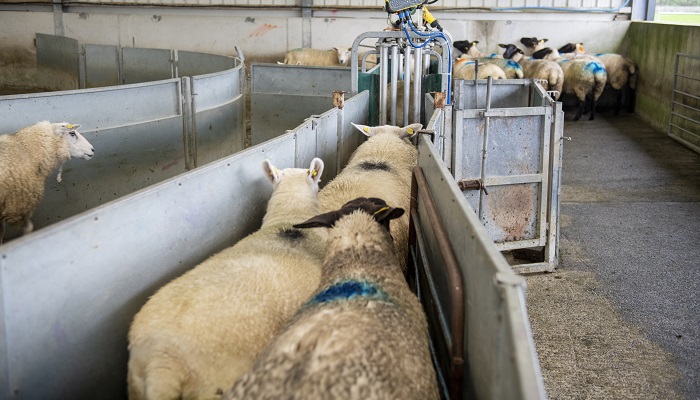
Maintaining body condition in pregnant ewes is the most important job between now and lambing time, Head of Sheep Knowledge Transfer in Teagasc, Michael Gottstein shares some key tips.
Body condition, i.e. the amount of flesh that ewes have, is an important factor in determining the ewe’s ability to rear lambs in the coming year. Why? In early lactation, ewes – if they are to milk to their full potential – need to have sufficient body reserve which they can mobilise.
I often hear farmers talking about allowing ewes to lose a little weight in mid pregnancy ~ 5% of body weight. There is scientific justification for this, provided that the ewe is in good body condition starting out and that the weight loss does not go too far. In practice, however, what we most commonly see is that the already thin ewes get much thinner during mid pregnancy with negative implications for those ewes in early lactation.
At this stage, most sheep flocks have completed mating, and ewes are now entering the mid pregnancy period of the annual cycle. Data collected from farmers participating in the Teagasc BETTER Farm Sheep Programme shows that on balance the body condition of ewes at mating time is the best it will be between that point and lambing.
In most situations, the percentage of thin ewes (ewes with BCS < 3.0) will increase as ewes progress through their pregnancy. The aim of sheep farmers should be to reduce the amount of weight loss in ewes post mating. Thin ewes, in particular, should be separated out post mating for preferential treatment to ensure that they do not deteriorate further.
The reason for all this effort is simple. Research clearly shows that ewes that are in good condition are better mothers, spend more time licking their newborn lambs, have higher quality and quantity of colostrum and produce more milk and therefore rear heavier lambs. In difficult springs (like 2023 and 2024), we have seen that flocks with a large percentage of thin ewes at mating time had much higher levels of lamb mortality the following year.
So, what steps should be taken to maintain ewes in good BCS?
- Feed: the biggest factor influencing BCS is nutrition. Often when grazing out fields / paddocks ewes will be forced to graze too tight or too long in the field / paddock when the forage has disappeared. It is important that once the forage runs out that sheep are given supplementary feeding in the form of either forage or concentrate immediately so as to avoid them burning up body reserves. Remember that this time of year we get much colder and wetter weather which requires ewes to use up more of their energy to keep warm.
- Flock health: internal parasites such as liver fluke and external parasites such as sheep scab and lice should be controlled where they exist to prevent them impacting on ewe performance. Lameness is also a significant and continual problem on many sheep farms. Any condition that causes ewes to be lame will reduce performance and increase body condition loss.
So, plan for improved lamb performance next year by monitoring and maintaining ewe body condition this year. The prize for reducing/eliminating body condition loss on those thinner ewes will be more lambs and faster growing lambs in 2026.
Upcoming event
On December 10th at 8pm, Teagasc will host its Let’s Talk Sheep webinar, which will focus on planning for the winter housing, labour and nutrition. Webinar host Ciaran Lynch, Teagasc Sheep Specialist will be joined by Michael Gottstein and Damian Costello, Teagasc Sheep Specialist.
Find out more and register for the Let’s Talk Sheep Webinar here.
More from Teagasc Daily: Indoor lamb finishing – steps to make it easier
More from Teagasc Daily: Managing rams after mating: Protecting a more expensive asset